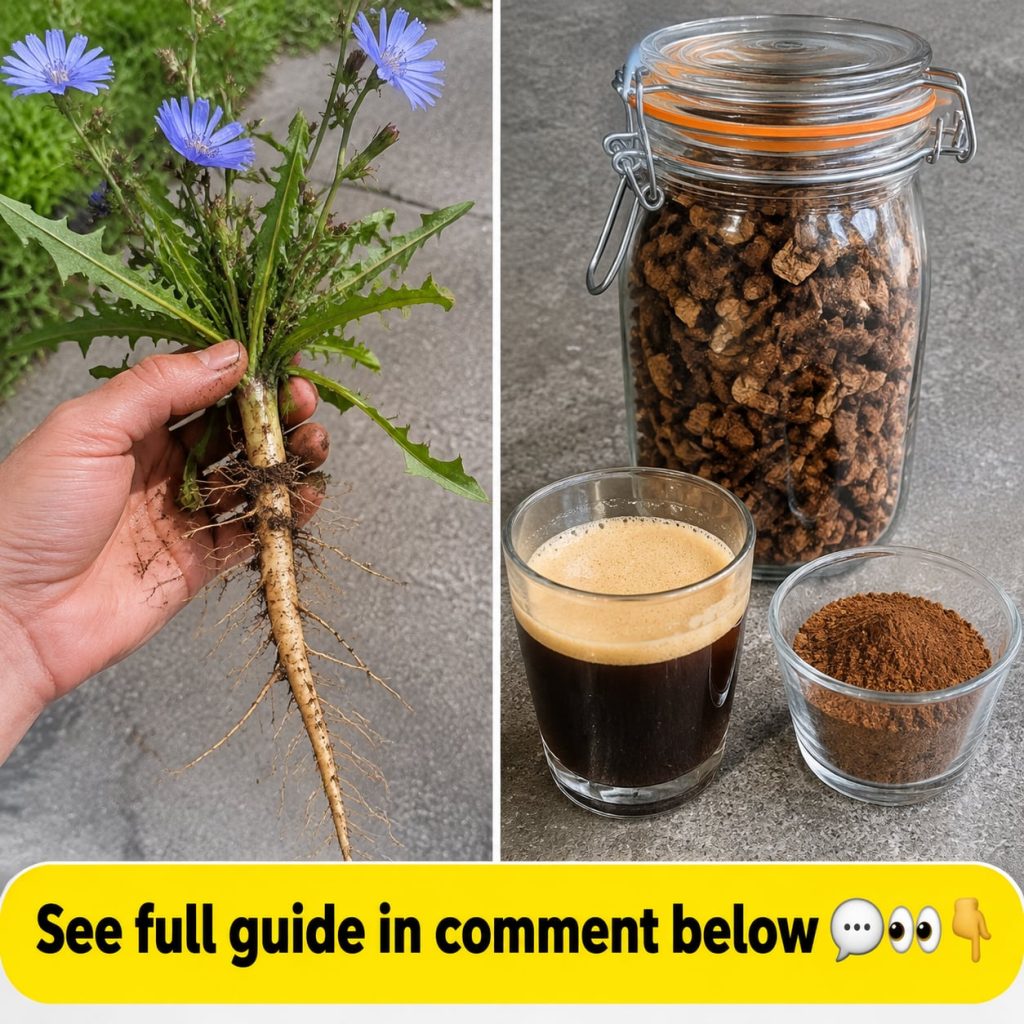
Most people walk past dandelions without a second thought, but the thick taproot underneath is one of the most useful parts of the plant. When it is dug, cleaned, dried, and roasted, it produces a dark, toasty brew that many people enjoy as a caffeine-free alternative to coffee. The process is simple, yet a few preparation details decide whether the drink tastes smooth and rich or sharp and bitter.
What It Is
Dandelion root coffee is a roasted herbal beverage made from the dried, roasted taproot of Taraxacum officinale. It has no coffee beans and no caffeine. Its flavor is earthy, mildly sweet, and nutty, which is why it appeals to people who want a warm morning cup without the strong stimulation of regular coffee.
Ingredients and Approximate Measurements
- 1 to 2 medium dandelion roots per cup of finished brew (fresh weight roughly 10 to 15 grams)
- 1 teaspoon of ground roasted root per cup for a light brew
- 1 to 2 teaspoons of ground roasted root per cup for a stronger brew
- Filtered water, about 240 ml (1 cup) per serving
- Optional: a pinch of cinnamon, a splash of plant-based milk, or a small amount of honey
Formula and Step-by-Step Method
- Harvest. Dig roots in early spring or late autumn when the plant is well established. Choose plants away from busy roads, sprayed lawns, and areas with heavy exhaust.
- Clean. Scrub the roots under cold water. Remove all soil, because grit will ruin the texture of the final brew.
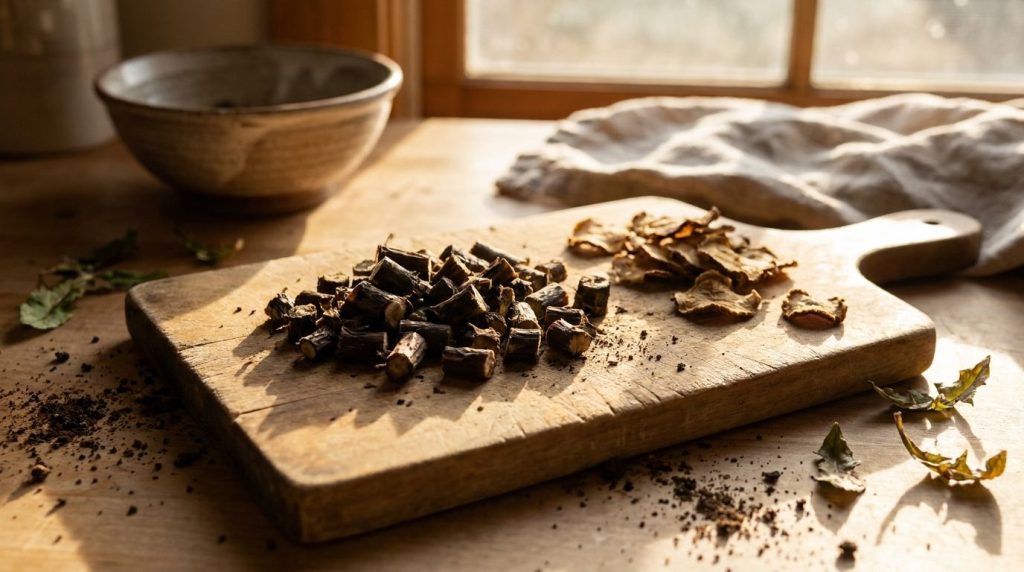
- Chop. Cut roots into pieces about 0.5 cm (1/4 inch) thick so they dry evenly.
- Dry. Air dry the pieces for 1 to 2 weeks in a warm, dry, ventilated room. For faster results, use an oven at its lowest setting, around 90 to 95 C (195 to 200 F), with the door slightly open, for 3 to 5 hours until the pieces snap cleanly.
- Roast. Spread the dried pieces on a baking sheet and roast at 175 C (350 F) for 20 to 30 minutes. Stir every 5 to 10 minutes. Stop when the pieces are deep brown and smell like toasted nuts, but not burnt.
- Cool and grind. Let the roasted pieces cool completely, then grind them in a coffee grinder to a coarse or medium texture.
- Brew. Add 1 to 2 teaspoons of ground root to 240 ml (1 cup) of water. Bring the water to a gentle boil, then simmer for 5 to 10 minutes. Strain through a fine mesh or paper filter.
Fresh vs Dried vs Roasted
| Version | Best Use | Shelf Life | Flavor Profile |
|---|---|---|---|
| Fresh root | Short-term tea or tincture base | Use within 2 to 3 days if refrigerated | Bitter and grassy |
| Dried root | Storage and later roasting | 6 to 12 months in an airtight jar | Mild and woody |
| Roasted and ground | Coffee-style brewing | 3 to 6 months for best aroma | Rich, nutty, and toasty |
How to Use It
Drink the brew warm, after a meal or in the morning as a coffee replacement. Start with a light version so your palate can adjust. Many people find that a longer simmer adds depth, while a shorter steep tastes cleaner.
How Often to Use It
Most people enjoy one or two cups a day. Because the drink is caffeine-free, it can be a practical evening option too. Vary your routine and avoid making it your only daily beverage, since variety keeps your drink habits balanced.
How to Choose and Buy Ingredients
If you do not want to dig your own roots, look for dried dandelion root from reputable herb suppliers. Check for a clean, earthy smell, no mold, and no dusty residue. Buy roasted ground root only if the packaging lists a roast date. Organic labels help when pesticide exposure is a concern.
Storage
Store dried or roasted root in a sealed glass jar away from light, heat, and moisture. A cool pantry works well. Never store the root in a wet container, because moisture encourages mold. Label each jar with the roast date so you can use the freshest batch first.
Practical Tips
- Quick Tip: Roast a larger batch once and store it in small jars. Opening the same jar repeatedly exposes the root to air.
- Did You Know? Dandelion root is often roasted more deeply than coffee beans to bring out its nutty flavor without strong bitterness.
- Best Time to Use It: Brew it in the afternoon or evening when you want a warm, caffeine-free drink.
Common Mistakes
- Harvesting from roadsides or sprayed lawns, where the root can absorb exhaust and chemical residue.
- Skipping the full drying step, which leads to mold during storage.
- Roasting too hot or too long, which makes the brew taste burnt and harsh.
- Boiling the root too vigorously, which pulls out extra bitterness.
- Storing the roasted root in a humid cabinet near the stove.
- Using too much root, which creates a thick, muddy drink.
Cautions and Who Should Avoid It
Dandelion belongs to the daisy family. Avoid it if you have allergies to ragweed, chrysanthemums, marigolds, or other plants in this family. Because dandelion may act on fluid balance and the digestive system, check with a healthcare professional before use if you are pregnant or breastfeeding, have gallbladder or kidney concerns, or take diuretics, blood thinners, lithium, or other prescription medications. Stop use and seek advice if you notice rash, itching, or stomach discomfort. Children should only have it under professional guidance.
Quick Summary
- Best preparation: Dried, roasted, and ground root, brewed as a decoction.
- Best use case: A caffeine-free, coffee-style warm drink.
- Storage: Airtight glass jar, cool and dark, used within 3 to 6 months once roasted.
- When to use: Morning or afternoon as a coffee alternative, one to two cups daily.
- What to avoid: Roadside roots, damp storage, over-roasting, and use if you have daisy family allergies without advice.
FAQ
Can I use fresh or dried root?
Dried root is easier to store and roast. Fresh root works for short-term use but must be dried or roasted for a coffee-style flavor.
How long does roasted dandelion root last?
Stored in an airtight jar away from light and heat, it keeps its best aroma for about 3 to 6 months.
Can I refrigerate it?
Fresh roots can be refrigerated for a few days in a sealed bag. Dried or roasted root should stay at room temperature in a dry, dark place.
Can I freeze it?
Freezing is not necessary for dried root. If you freeze fresh roots, wrap them tightly and use them within a few months.
What part of the plant is best?
The taproot is the part used for roasted coffee-style brews. Leaves and flowers are used separately in other preparations.
Can I reuse the grounds?
A second brew from the same grounds is much weaker. Most people prefer fresh grounds for each cup.
When should I avoid it?
Avoid it if you have daisy family allergies, are pregnant, or take medications that interact with diuretics or blood thinners. Ask a healthcare professional when in doubt.
Conclusion
Roasted dandelion root is a practical, budget-friendly way to enjoy a warm, caffeine-free drink. Careful harvesting, thorough drying, and gentle roasting make the biggest difference in flavor and safety. Start with a small batch, taste as you go, and adjust the roast to suit your preference.
Read more: how to identify safe wild herbs for home use.
You may also like: a beginner guide to drying herbs at home.
See the full guide: caffeine-free herbal drinks for everyday routines.