Most people walk past broadleaf plantain every day without a second look. It grows in lawn cracks, along driveways, and beside doorsteps, yet many herbalists keep it in their home kit. Here is how to identify it safely, turn the leaves into a simple infused oil, and use it with realistic expectations.
What It Is
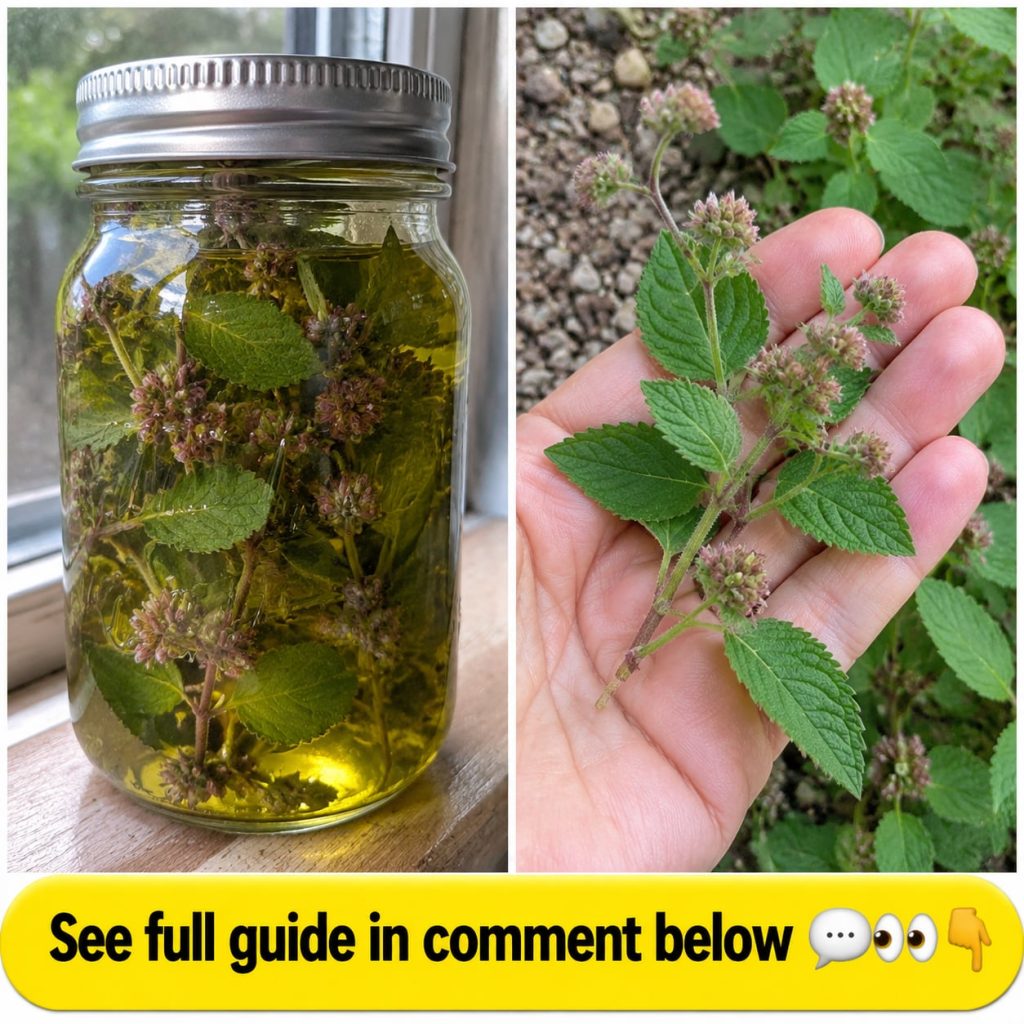
Broadleaf plantain (Plantago major) is a low, rosette-forming weed with wide, oval leaves and long, ridged veins. It is not related to the banana-like plantain fruit. Its leaves have been used in folk preparations for minor skin irritations, and it is one of the easiest wild herbs to find year-round in mild climates.
Ingredients
- 1 cup loosely packed fresh plantain leaves, cleaned and dried for 12 to 24 hours
- 1 cup carrier oil such as olive oil or sunflower oil
- Optional: 1 teaspoon beeswax per 4 ounces of finished oil, for a salve
Approximate Measurements
A ratio of about 1 part dried leaves to 4 parts oil works well for a small batch. Too much plant material can make the oil cloudy and speed up spoilage.
Formula and Recipe
Use roughly 1/2 cup dried plantain leaves with 2 cups carrier oil. This yields a small jar of infused oil for personal use.
Step-by-Step Method
- Harvest leaves from a clean, unsprayed area away from roads and dog routes.
- Rinse gently, pat dry, and let the leaves air-dry for at least 12 hours until they feel crisp, not damp.
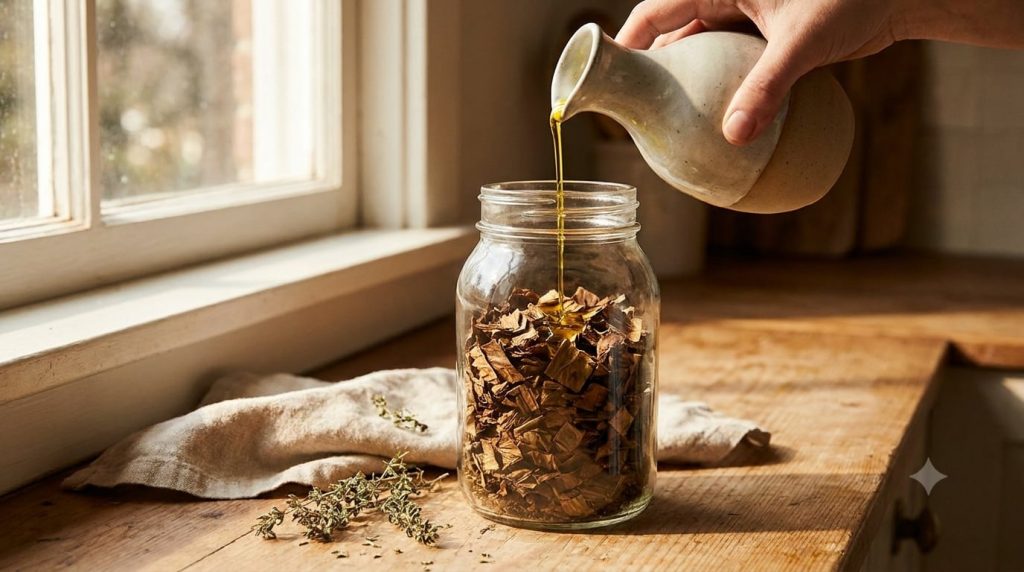
- Chop the leaves lightly and place them in a clean, completely dry glass jar.
- Cover with oil so the leaves are fully submerged by about one inch.
- Set the jar in a warm, dark spot for 2 to 4 weeks, shaking it gently every few days.
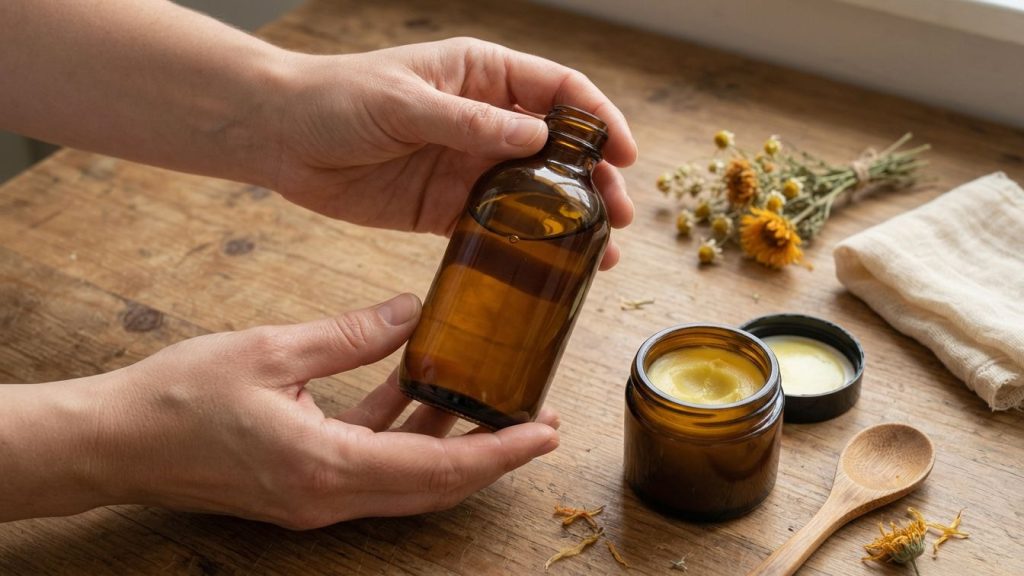
- Strain through a fine cloth or coffee filter into a clean amber glass bottle.
How to Use
Apply a small amount to clean, dry skin on minor, unbroken irritations such as small insect bites or dry patches. Do a patch test on a small area first and wait 24 hours.
How Often to Use
Once or twice daily is typical for a short period. If irritation does not improve or worsens, stop using it and consult a healthcare professional.
How to Buy or Choose Ingredients
If you are not harvesting, choose cold-pressed oils with a recent harvest date and dark bottles. For dried herbs, look for leaves that are green-gray rather than brown or dusty.
Storage
Keep the strained oil in a dark glass bottle in a cool cupboard. Properly dried, strained oil lasts about 6 to 12 months. Discard it if it smells sharp, rancid, or moldy.
Fresh vs Dried vs Wet Preparation
| Version | Best Use | Shelf Life |
|---|---|---|
| Dried leaf infused oil | Skin rub, small batch | 6 to 12 months |
| Fresh leaf oil | Only if fully dried before use | Shorter, higher spoilage risk |
| Plantain tea | Occasional drink, if preferred | Make fresh, refrigerate up to 24 hours |
Practical Tips
Harvest in the morning after the dew dries. Pick younger leaves, which tend to be more tender. Label every jar with the date and the word oil so you do not confuse it with other infusions.
Common Mistakes
- Harvesting from sprayed lawns, roadsides, or areas visited by pets.
- Using damp leaves, which invites mold inside the oil.
- Storing the infusion in a wet or unsterilized jar.
- Skipping the strain step and keeping plant bits in the oil.
- Overusing the oil on broken or deeply irritated skin.
Cautions and Who Should Avoid It
Only harvest plants you can identify with certainty, since some lookalike plants are not safe. Avoid use if you have known allergies to plantain or related plants, and do not apply to deep wounds, burns, or infected skin. Check with a qualified professional before use if you are pregnant, nursing, or managing a medical condition.
Quick Summary
- Best preparation: dried leaves infused in carrier oil for 2 to 4 weeks.
- Best use case: small, unbroken skin irritations after a patch test.
- Storage: dark glass, cool cupboard, 6 to 12 months.
- When to use: once or twice daily for short periods.
- What to avoid: sprayed plants, damp leaves, broken skin, and unknown identification.
FAQ
Can I use fresh or dried leaves?
Dried leaves are safer for oil because moisture is the main cause of spoilage. Fully dried leaves give a more stable result.
How long does the oil last?
Expect about 6 to 12 months in a sealed, dark glass bottle kept cool.
Can I refrigerate it?
Refrigeration can slow down certain changes, but it may thicken the oil. Bring it to room temperature before use.
Can I freeze it?
Freezing is generally not needed. Small amounts can be frozen in an ice cube tray for longer storage, but thaw completely before use.
Which part of the plant is best?
The leaves are the part typically used for oil. Roots and seeds are used in other preparations and are not needed here.
Can I reuse the leaves?
It is best to discard the leaves after straining, since they lose potency and carry more moisture risk.
How often should I use it?
Use it sparingly, once or twice daily for short periods on small, unbroken areas only.
Conclusion
Broadleaf plantain is a practical example of how a common yard plant can become a simple homemade preparation. Careful identification, thorough drying, and clean storage matter more than complicated steps.
You may also like: Read more about identifying safe wild herbs in our full foraging guide.
Related remedy: See the full guide to making herbal salves at home.
Continue with: Learn how to make a simple herbal tea from garden leaves.