If you have spent any time around houseplants, you have probably heard the old tip about dropping a copper penny into a jar of cuttings. Some growers swear it speeds up rooting. Others shrug and say it is just a garden myth. Since pothos is one of the easiest plants to propagate, it makes a great test subject for a simple experiment you can run on your own windowsill.
What the Penny Trick Claims
The idea is that copper may help cuttings form roots faster while they sit in water. Some people believe copper has mild antimicrobial properties that could slow the slimy bacteria and fungi that sometimes cloud propagation water. Others simply like the idea because it is cheap, easy, and fun to try. However, no formal study has proven that a copper coin speeds up root growth in water-grown cuttings. That is exactly why a fair home test is worth doing.
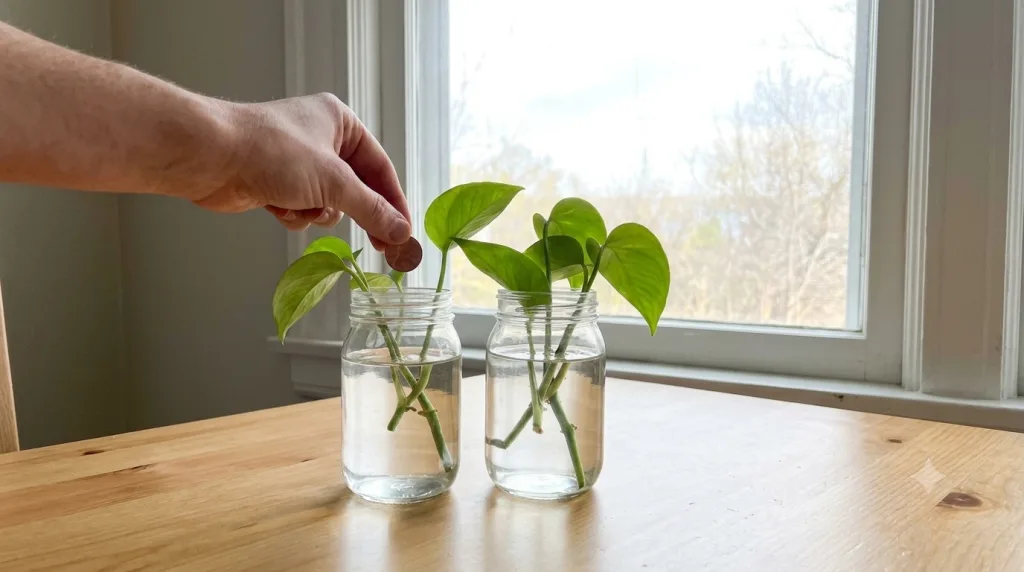
How to Set Up a Fair Side-by-Side Test
A good experiment is simple, and the key is changing only one thing. Here is how to keep your test fair:
- Use two identical clear glass jars of the same size and shape.
- Take cuttings of similar length from the same pothos plant, and make sure each one has at least one node that sits below the waterline.
- Place three cuttings in each jar so the count is equal.
- Fill both jars with fresh water from the same source, at room temperature.
- Drop one clean copper coin into only one jar. Leave the other jar with no coin.
- Set both jars side by side in the same bright spot, away from direct heat sources such as radiators or heating vents.
- Change the water in both jars at the same time, and keep the coin in the same jar throughout.
What to Watch For
Pothos cuttings usually take a few weeks to start producing roots, depending on temperature, light, and the health of the parent plant. Check both jars at the same time each week and take notes or photos. Look for small white root nubs at the nodes, how many roots appear, how long they grow, and whether the water stays clear. Also watch for any cloudiness or slime, since that can signal bacterial growth and affects both jars equally when the water is changed on the same schedule.
Keep your expectations realistic. Three cuttings per jar is a small sample, and one result does not prove anything for every plant or every home. Still, a side-by-side comparison is far more useful than relying on a tip you heard once.
Why a Home Test Is Worth It
Trying a garden trick yourself is one of the best ways to learn what actually works in your own space. Winter indoor growing and regrowing kitchen scraps are both budget-friendly hobbies, and you can get useful answers with materials you already have. Whatever the result, you will come away with better observation habits and a clearer sense of how your plants respond to light, water, and time.
Final Thoughts
The copper penny trick is an inexpensive experiment with no proven results yet. A fair test is simple, low-cost, and fun to share with friends or family. Set up two identical jars, change only the coin, and let your pothos cuttings show you the answer over time.