Your pothos is one of the most forgiving houseplants you can grow, but even tough plants can look tired after a few months in the same pot. Before you reach for another bag of fertilizer, take a look in your kitchen. Dried eggshells and used coffee grounds can add small amounts of nutrients to your potting soil, and they cost you nothing but a little prep time.
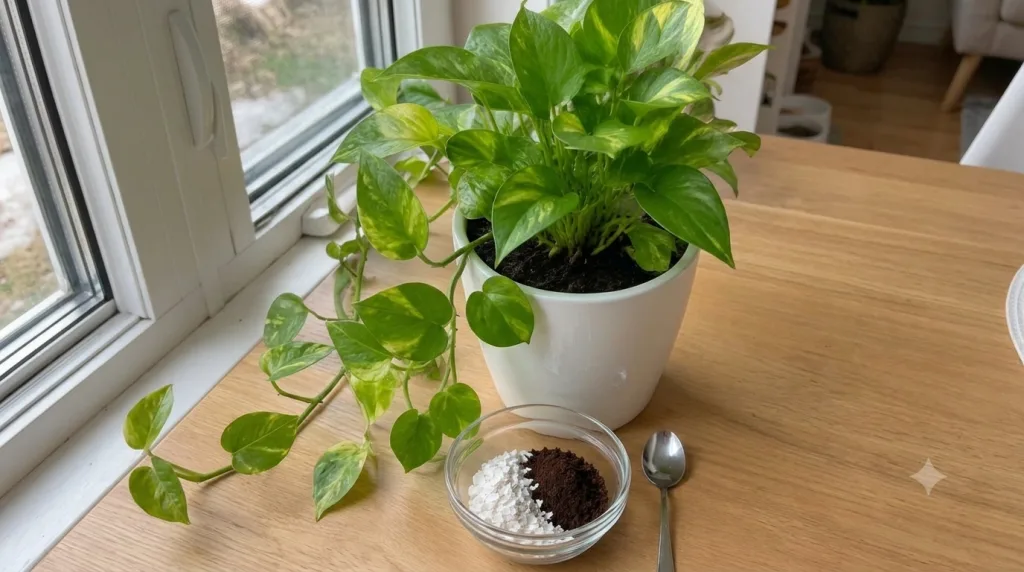
What Eggshells and Coffee Grounds Actually Do
Eggshells are mostly calcium carbonate, which breaks down very slowly in potting soil and releases calcium over many months. Coffee grounds contain small amounts of nitrogen and organic matter, and as they break down they feed the microorganisms that help make nutrients available to plant roots. The results are gentle and gradual, so think of this as a light top-up rather than a replacement for plant food.
Prepare the Scraps First
Raw kitchen scraps can attract pests and mold, so always prepare them before they go near your plants.
- Rinse the eggshells well and peel away any thin inner membrane.
- Dry the shells completely. Let them air dry for several days, or bake them on a tray at about 200°F for 10 to 15 minutes and let them cool.
- Crush the shells into fine pieces with a mortar and pestle or a rolling pin. Smaller pieces break down faster.
- Spread used coffee grounds on a plate until they are fully dry and free of clumps.
- Store the dry mix in a sealed glass jar away from moisture.
How to Apply the Mix
A little goes a long way. For a small pot, one teaspoon of the mix is plenty. Larger pots can handle a few tablespoons.
- Sprinkle the mix in a ring around the edge of the soil, close to the rim and away from the stem.
- Scratch it lightly into the top inch of soil so it sits out of sight.
- Water the plant as you normally would.
Mistakes to Avoid
- Do not pile on thick layers, because they can form a crust that blocks water.
- Do not add wet or fresh coffee grounds, which can grow mold.
- Keep the mix away from the stem and the base of the plant.
- Do not rely on kitchen scraps as your only feeding plan. Coffee used too often can make soil more acidic over time.
Caring for Your Pothos Alongside the Boost
Scraps work best when the rest of your plant care is solid. Pothos grows well in bright, indirect light and likes to dry out slightly between waterings. Let the top inch of soil dry before you water again. Pothos will droop noticeably when thirsty, and it usually bounces back quickly once watered. During spring and summer, a diluted liquid houseplant fertilizer applied about once a month, at half the label strength, can support steady new growth.
A Simple Routine That Works
Apply a spoonful of the dry mix every few months during the growing season, and skip it during the darker winter months when plants grow more slowly. Keep notes on how your plant responds, and adjust as needed. Over time, you will learn what your pothos likes best.
Have you tried using kitchen scraps on your houseplants? Share your experience in the comments below.