Sticky label residue on glass jars is one of those small frustrations that can make a perfectly good jar look unfinished. The paper peels off easily enough, but the leftover glue turns cloudy, gummy, and stubborn. If you want to reuse those jars for pantry storage, craft supplies, or bathroom organizers, here is a simple, practical way to get them clean.
What You Will Need
- A glass jar with a label and adhesive residue
- Warm tap water
- Dish soap, a small squeeze
- A sink or bowl large enough to submerge the jar
- Cooking oil, such as vegetable or olive oil, about 1 to 2 tablespoons
- Soft cloth or sponge
- Plastic scraper or an old credit card (optional, for stubborn spots)
Why This Method Works
Warm water softens the paper and loosens the bond of the adhesive, so the label lifts more easily. Oil is useful for residue because it helps break down sticky glue without scratching the glass. Dish soap then cuts through the oily film so the jar can be washed clean.
Step-by-Step: Removing the Label and Residue
- Soak the jar. Fill a sink or bowl with warm water and a small squeeze of dish soap. Submerge the jar for 15 to 20 minutes. This helps loosen both the paper and the glue.
- Peel the label slowly. Lift one corner gently with your fingernail. Pull the paper down at a low angle rather than straight up, which helps prevent tearing and leaves less residue behind.
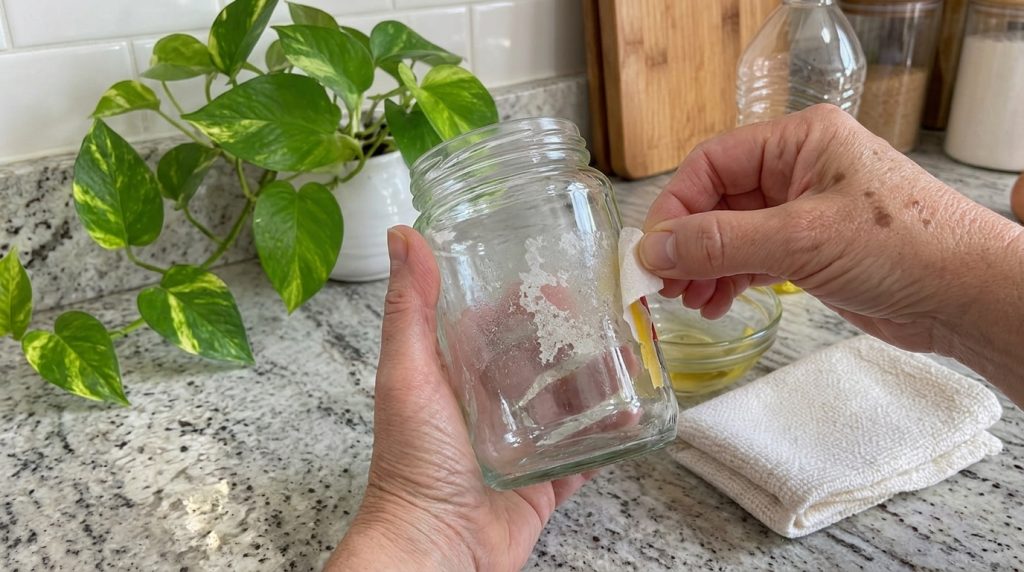
- Apply a little oil. Dry the jar, then rub a small amount of cooking oil onto the sticky spots with your fingers or a soft cloth. Let it sit for 5 to 10 minutes so the oil can soften the glue.
- Scrape gently. Use a plastic scraper or the edge of an old credit card to lift the softened residue. Work in small, light strokes and avoid metal tools, which can scratch glass.
- Wash the jar. Rinse away the oil and loosened glue with warm, soapy water. Use a sponge to remove any leftover film.
- Rinse and dry. Rinse the jar well with clean water and dry it completely with a clean towel before storing or reusing it.
How to Use the Clean Jar for Home Organization
Once the jar is clean and dry, it can be reused for dry goods such as beans, rice, or spices, or for small craft items, cotton swabs, or bathroom supplies. Clean glass also makes it easier to see what is inside, which helps with organization.
What to Expect
Most paper labels come off in a few minutes after soaking. Stubborn residue may take a second round of oil and gentle scraping. Results depend on how old the label is and what kind of adhesive was used, so some very old or heat-set labels may need extra time.
Helpful Tips
- Peel labels while the jar is still warm from the water for easier removal.
- Test oil on a small hidden area first if the jar has a painted or decorated finish.
- Use a soft sponge rather than an abrasive pad to protect the glass.
- Wipe away any oily film thoroughly before storing food in the jar.
Important Notes and Safety
- Do not mix cleaning products. Never combine bleach with vinegar, ammonia, or other cleaners. Use only the simple ingredients listed here.
- Avoid hot water on cracked or thin glass. Sudden temperature changes can crack damaged jars.
- Use caution with sharp edges. Handle broken or chipped glass carefully and discard any jar that is damaged.
- Dispose of oily cloths safely. Oil-soaked rags can be a fire hazard if left in a pile, so wash or throw them away properly.
- Dry jars completely. Trapped moisture can cause odor or mold if the jar is stored with a lid on.
This is general household information based on common cleaning methods. Always check the material and condition of your jars before cleaning, and follow product instructions when using any cleaning supply.