Who else has stood over the stove, spoon in hand, stirring a thick tomato sauce or a hearty soup while the arm gets tired and the bottom starts to catch? If that sounds familiar, you are in good company. Stirring is one of those small jobs that quietly eats up time on a busy weeknight.
Why sauces stick and soups scorch
Thick sauces contain sugars, starches, and small solids that settle on the base of the pot. When the heat is high or the mixture sits still for too long, those particles begin to brown and then burn. A quick stir every minute or two helps, but it is easy to forget when you are chopping vegetables or setting the table.
How an automatic stirrer helps
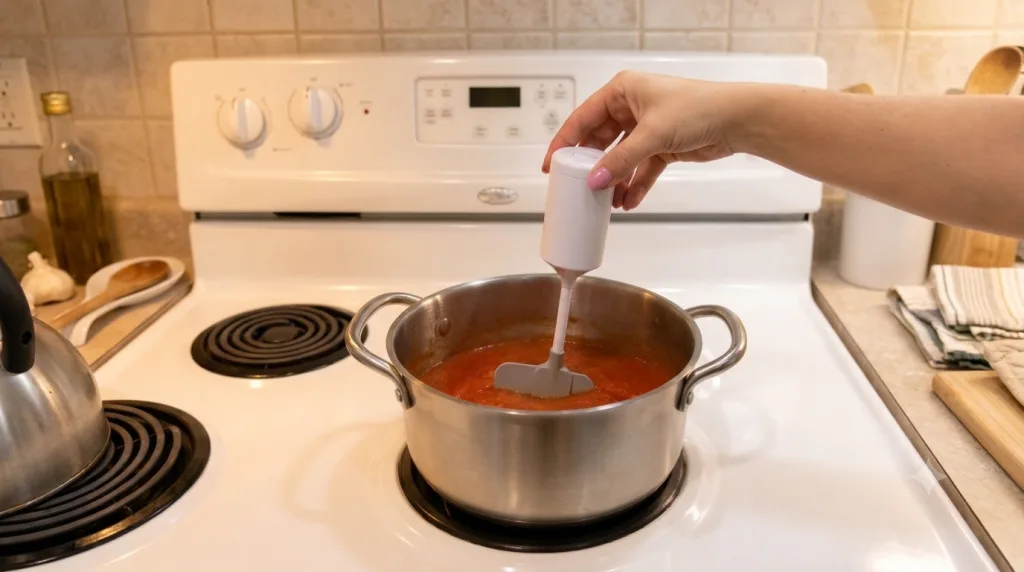
An automatic stirrer sits in the pot and moves its paddle through the food for you. Instead of standing over the stove, you can keep an eye on the rest of dinner. The paddle keeps the mixture moving across the bottom, which is where most sticking begins. It also gives your arm a break, which is a welcome bonus after a long day.
Where it fits in your weeknight routine
- Simmering pasta sauce while you prep a fresh salad
- Stirring a pot of lentil or bean soup
- Keeping a tomato base moving while you wash up
- Cooking a larger batch of sauce for meal prep containers

Tips for getting the best results
- Check that the pot is large enough and that the paddle reaches the bottom comfortably.
- Start on a medium heat and let the sauce come up to temperature gradually.
- Still glance at the pot now and then, especially near the end when sauces thicken quickly.
- Clean the stirrer soon after use so residue does not dry on the paddle.
Is it worth adding to your kitchen?
If you cook sauces, soups, or porridge often, a hands-free stirrer can make everyday cooking feel calmer. It will not replace your attention completely, but it takes the constant hand-stirring out of the process. Have you ever lost a batch of sauce to the bottom of the pot? Tell us in the comments if you would like to see this gadget in action.