Healthy plants start with healthy soil, and fertilizer is one of the simplest ways to support strong roots, lush leaves, and generous blooms or harvests. Yet many gardeners feel confused by the wide range of products on the shelf. This friendly guide explains the most common fertilizer types, how to read NPK numbers, and how to choose the right option for your garden.
Why Fertilizer Matters for Plant Health
Plants pull nutrients from the soil as they grow. Over time, those nutrients get used up, especially in containers, raised beds, and gardens that produce vegetables every season. Fertilizer replaces what is missing so plants can keep growing well. It does not replace good soil structure, proper watering, or adequate sunlight, but it works best alongside those basics.
Understanding NPK Numbers
Most fertilizer packages display three numbers, such as 10-10-10 or 5-1-1. These represent the percentage by weight of three primary nutrients:
- N (Nitrogen): Supports leafy green growth and overall vigor.
- P (Phosphorus): Encourages strong roots, flowering, and fruit development.
- K (Potassium): Helps plants manage water, resist stress, and produce healthy flowers and fruit.
A 10-10-10 blend offers balanced nutrition for general use, while a fertilizer with a higher first number suits leafy crops like lettuce and spinach. Flowering plants and fruiting vegetables often benefit from formulas with a higher middle number.
Organic Fertilizer Options
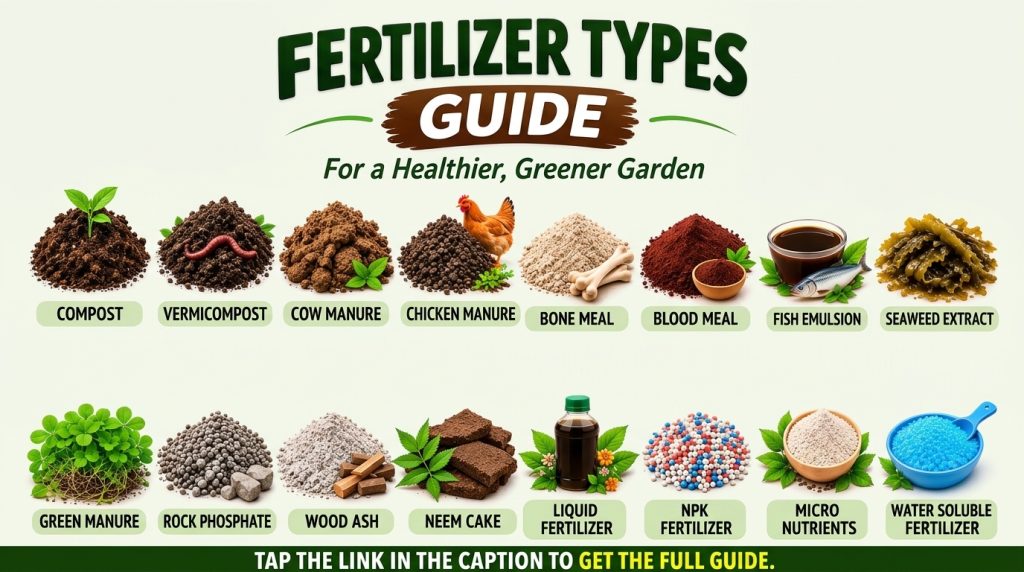
Organic fertilizers come from natural materials and release nutrients gradually as soil life breaks them down. They also improve soil texture and water retention over time. Popular choices include:
- Compost: A rich, all-purpose soil amendment made from decomposed plant matter and kitchen scraps.
- Well-rotted manure: A classic source of nitrogen and organic matter, best aged before use.
- Bone meal: A slow-release source of phosphorus that supports root development and blooming.
- Fish emulsion: A liquid feed that gives a quick nitrogen boost for leafy plants.
- Worm castings: A gentle, nutrient-dense amendment that helps plants absorb nutrients more easily.
Synthetic and Chemical Fertilizers
Synthetic fertilizers, often sold as granules or water-soluble powders, provide nutrients in a fast-acting form. They can be useful when a plant needs a quick correction, but they must be applied carefully. Follow label directions closely, since too much can burn roots and harm soil life. Many gardeners prefer to combine modest synthetic use with organic amendments for a balanced approach.
How to Choose the Right Fertilizer
Start with a simple soil test if you can. It reveals which nutrients are low and whether your soil pH needs adjusting. Then consider what you are growing:
- Leafy vegetables: Look for a higher nitrogen number.
- Flowers and fruiting plants: Choose a formula with more phosphorus and potassium.
- Indoor plants: Use a diluted, balanced liquid feed during the growing season and pause in winter.
- New garden beds: Mix in compost to build soil structure gradually.
Tips for Applying Fertilizer Safely
- Water the soil before and after feeding to protect roots.
- Apply less than the label suggests when in doubt, and increase gradually.
- Keep fertilizer away from stems and leaves to prevent burning.
- Store products in a dry, sealed container out of reach of children and pets.
Bringing It All Together
Fertilizer is a helpful tool, not a magic fix. When you understand NPK numbers, match products to your plants, and build healthy soil with compost and organic matter, your garden becomes more resilient and productive season after season. Start small, observe how your plants respond, and enjoy the steady rewards of a thriving green space.