Embark on a delightful culinary adventure and truly master flaky croissants right in your own kitchen! These timeless French bakery classics are renowned for their delicate, buttery layers and irresistible aroma. While they might seem intimidating, with a clear step-by-step guide, achieving French perfection is within your reach. This article will walk you through every stage, from preparing your ingredients to shaping and baking golden-brown, flaky croissants that will impress everyone.
Croissants are more than just a breakfast pastry; they’re a testament to the art of baking, combining simple ingredients with meticulous technique to create something truly magical. Get ready to unlock the joy of baking and transform your home into a Parisian patisserie!

Essential Ingredients for Perfect Croissants
The secret to incredible croissants lies in high-quality ingredients and precise measurements. Here’s what you’ll need, inspired by the fundamental components highlighted:
- All-Purpose Flour: 500g (approximately 4 cups). This forms the structure of your dough.
- Warm Milk: 200ml (approximately 3/4 cup + 2 tablespoons). Essential for activating the yeast and creating a tender dough.
- Granulated Sugar: 50g (approximately 1/4 cup). Adds sweetness and helps activate the yeast, contributing to browning.
- Active Dry Yeast: 7g (2 1/4 teaspoons). The leavening agent that gives croissants their airy texture.
- Salt: 10g (approximately 1 1/2 teaspoons). Enhances flavor and controls yeast activity.
- Cold Unsalted Butter: 250g (2 sticks). This is the star of the show for creating those signature flaky layers through lamination.
- Large Egg (for egg wash): 1 egg, beaten with a splash of milk or water, for a golden, glossy finish.
Mastering the Dough: Your Step-by-Step Guide
Creating beautiful, flaky croissants is a process that requires patience and precision. Follow these steps carefully to achieve bakery-quality results.
Step 1: Preparing the Dough
- In a large bowl, combine the warm milk, sugar, and active dry yeast. Let it sit for 5-10 minutes until foamy, indicating the yeast is active.
- Add the flour and salt to the yeast mixture. Mix with a spoon or your hands until a shaggy dough forms.
- Turn the dough out onto a lightly floured surface and knead for about 5-7 minutes until it’s smooth and elastic. Avoid over-kneading.
- Place the dough in a lightly oiled bowl, cover it with plastic wrap, and refrigerate for at least 2 hours, or preferably overnight. This initial chilling is crucial for easier handling during lamination.
Step 2: Preparing the Butter Block
While your dough is chilling, prepare your butter block. This block will be carefully folded into the dough to create the layers.
- Place the 250g of cold unsalted butter between two sheets of parchment paper.
- Using a rolling pin, pound and roll the butter into a flat, even rectangle, approximately 18×18 cm (7×7 inches). The goal is to make it pliable but still cold.
- Refrigerate the butter block until firm, at least 30 minutes.
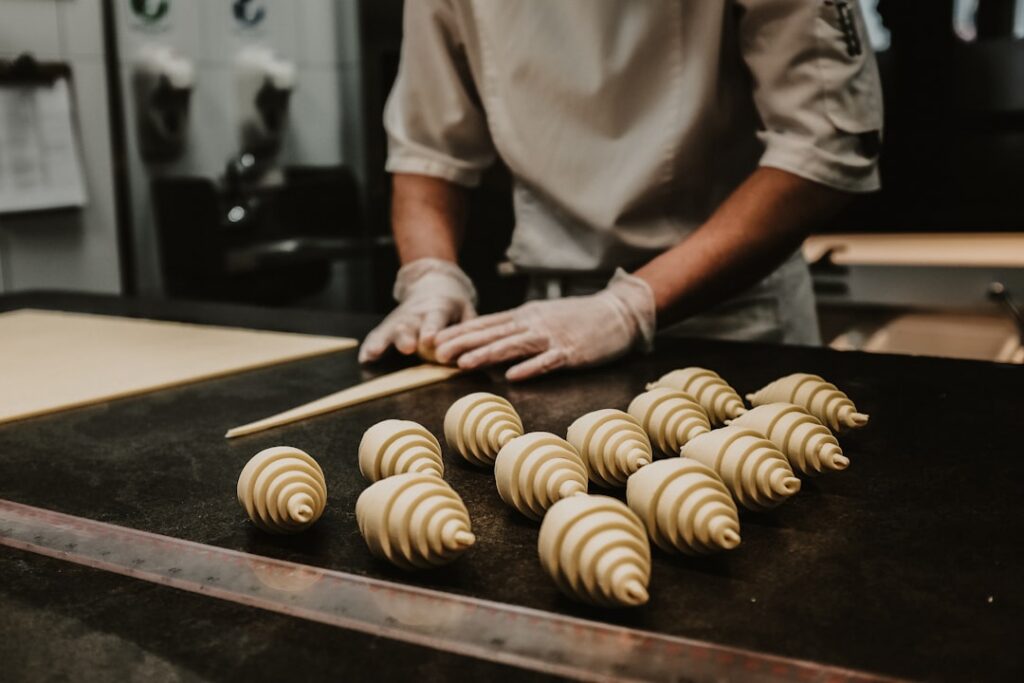
Step 3: The Lamination Process (Turns)
Lamination is the heart of flaky croissants, creating hundreds of thin layers of butter and dough.
- Remove the chilled dough from the refrigerator. On a lightly floured surface, roll it into a rectangle approximately 20×40 cm (8×16 inches).
- Place the cold butter block in the center of the dough, covering the middle third. Fold one side of the dough over the butter, then fold the other side over, enclosing the butter completely. Pinch the edges to seal. This is your first fold.
- Gently roll the dough into a long rectangle again (about 20×60 cm or 8×24 inches).
- Perform a