Dry, tired-looking skin can make you feel like your face needs a little extra care. Many people reach for a simple, affordable moisturizer on busy mornings or cold winter nights, and a homemade version can be a gentle option for occasional self-care.
This DIY skin treatment uses two common ingredients: plain petroleum jelly (often sold as Vaseline) and a small amount of ground turmeric. Petroleum jelly helps lock moisture onto the skin’s surface, and turmeric adds a warm golden color. In this article, you will learn the full recipe, how to make it safely, how to apply it, and how to store it. Please note that this cream is a simple moisturizing treatment. It cannot reverse aging or remove wrinkles.
Beauty Recipe Overview
- Recipe Name: Homemade Petroleum Jelly and Turmeric Moisturizing Cream
- Beauty Category: Facial and body moisturizer
- Suitable Skin Type: Dry or dehydrated skin, not recommended for acne-prone or broken skin
- Preparation Time: About 10 minutes
- Application Time: 10 to 15 minutes
- Total Time: About 25 minutes, including cooling
- Difficulty Level: Easy
- Yield: About 2 tablespoons, enough for 4 to 6 short treatments
- Recommended Usage Frequency: 1 to 2 times per week
- Storage Recommendation: Store in a clean, sealed jar in a cool, dry place and use within 4 weeks
Why You’ll Love This Recipe
- It uses only two accessible ingredients.
- It is quick to make in a small batch.
- It is budget-friendly compared with many specialty creams.
- It is simple to apply to dry areas of the face, hands, elbows, and feet.
- It works well as an occasional treat in a gentle skincare routine.
Complete Ingredients
- 2 tablespoons plain, unscented petroleum jelly (pure Vaseline or a similar product)
- 1/8 teaspoon ground turmeric powder, finely ground and food-grade
Do not add extra turmeric. More turmeric can stain the skin and fabrics yellow. If you have very sensitive skin, you can skip the turmeric and make a plain petroleum jelly moisturizer instead.
Equipment
- Small heatproof glass jar or heatproof bowl
- Small saucepan
- Measuring spoons
- Clean spoon or small spatula
- Small clean airtight jar for storage
- Oven mitt or towel
Step-by-Step Preparation
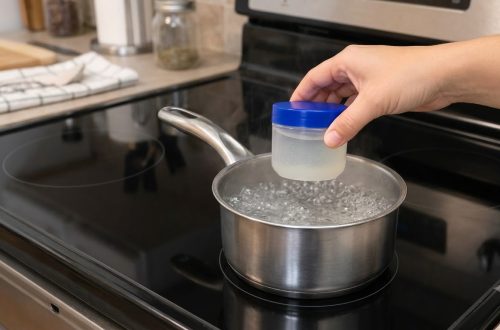
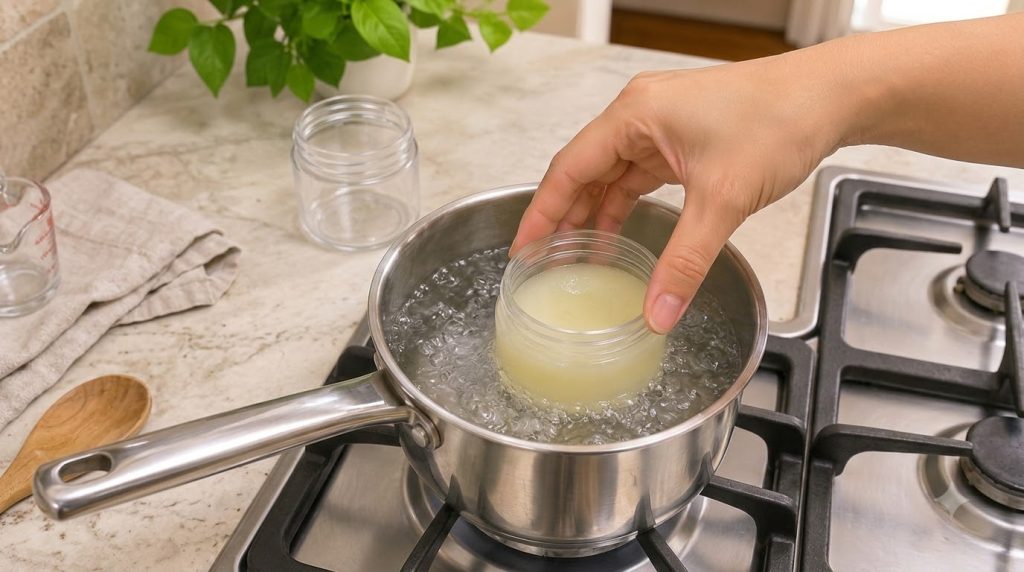
- Set up a water bath. Pour about 1 inch of water into a small saucepan. Heat it until it is simmering with small bubbles, but not a hard, rolling boil.
- Add the petroleum jelly. Place 2 tablespoons of petroleum jelly in the heatproof glass jar or bowl. Set the container in the saucepan so the water surrounds the bottom of the container but does not splash inside it.
- Melt gently. Let the petroleum jelly melt slowly for about 3 to 5 minutes. Stir once or twice with a clean spoon until it becomes a clear, smooth liquid.
- Remove from heat. Use an oven mitt to lift the container out of the water. Dry the bottom of the container before handling it.
- Add the turmeric. Add 1/8 teaspoon of ground turmeric and stir until the color is even. The mixture should look soft golden, not dark orange.
- Cool slightly. Let the mixture cool for about 10 minutes until it is warm but not hot to the touch. Stir again before transferring it.
- Transfer to a clean jar. Pour the warm mixture into a clean, dry, airtight jar. Let it cool completely at room temperature, about 15 to 20 minutes, until it becomes a soft, spreadable cream.
How to Apply the Beauty Treatment
This treatment is best for dry areas such as the cheeks, forehead, hands, elbows, and heels. Avoid the eyes and the inner corners of the eyes. Do not apply it to cuts, scrapes, rashes, or irritated skin.
- Cleanse first. Wash your face or the target area with a mild cleanser and lukewarm water. Pat the skin dry with a clean towel. The skin should be slightly damp or fully dry, not wet.
- Use a small amount. Scoop out about a pea-sized amount for the face, or a little more for hands and feet.
- Warm it between your fingertips. This helps the cream spread more easily.
- Apply a thin layer. Smooth the cream over dry areas with gentle, upward strokes. Do not rub or pull the skin.
- Leave it on for 10 to 15 minutes. Do not leave the treatment on overnight.
- Remove gently. Use a soft tissue or clean washcloth to blot away the excess. Then wash the area with a mild cleanser and lukewarm water. You may notice a faint yellow tint on the cloth, which is normal.
- Finish with a moisturizer. Once the skin is dry, apply your regular fragrance-free moisturizer if you wish.
Ingredient Benefits
Petroleum Jelly
Petroleum jelly is an occlusive ingredient. It forms a thin layer on the skin that helps reduce water loss from the surface. This can help dry skin feel softer and more comfortable. It does not add much water to the skin, so it works best when used on slightly damp skin or as a final layer over a lighter moisturizer.
Turmeric
Turmeric is a spice that contains plant compounds called curcuminoids. It is traditionally used in beauty routines for its warm golden color and its use in some cosmetic products. Laboratory studies have explored its antioxidant properties, but these results do not prove that a homemade turmeric cream will improve skin in a clinically meaningful way. Turmeric can also stain the skin and may cause irritation or allergic reactions in some people.
Recommended Frequency
Use this cream one to two times per week. Skin that is sensitive or easily irritated may do better with once a week. Stop using it if you notice redness, itching, burning, or stinging. Avoid combining it with harsh exfoliants, strong acne treatments, or retinoids on the same day, because this can increase irritation. Because turmeric can stain, use the treatment in the evening or when you are not planning to wear light-colored clothing or makeup right away.
Expert Beauty Tips
- Use less than you think. A thin layer works better than a thick one and is easier to wash off.
- Keep the cream away from your eyes. Apply it carefully around the eyebrows and cheekbones, and avoid the eyelids.
- Warm the cream between your fingers. Warm fingertips help the cream spread smoothly without tugging the skin.
- Apply to damp skin. Lightly damp skin helps hold moisture better after the cream is applied.
- Use a clean spoon every time. Dipping fingers into the jar can add bacteria and shorten storage time.
- Protect your skin from the sun. Moisturizing treatments do not replace sunscreen. Use a broad-spectrum sunscreen during the day.
Safe Recipe Variations
- Plain petroleum jelly version: Skip the turmeric and use only 2 tablespoons of petroleum jelly. This is a gentler choice for people who want to avoid staining or who have sensitivity to spices.
- Small oatmeal boost: For dry hands only, you may stir in a very small amount of finely ground plain oats after the mixture has cooled slightly. This is not recommended for the face, and the mixture should be used within a few days because oats can introduce moisture and microbes.
- Foot balm version: Use the same base for dry heels and elbows, but do not add extra spices or essential oils. Essential oils can irritate the skin and are not recommended in this recipe.
Storage and Shelf Life
Petroleum jelly has very little water in it, so this cream is more stable than fresh, water-based homemade products. Still, the turmeric powder and any contact with fingers, dust, or moisture can introduce contamination. Store the cream in a clean, dry, sealed jar away from heat and direct sunlight. Do not refrigerate it, because cold temperatures can make the texture hard and may encourage condensation when the jar is opened.
Use the cream within four weeks. Discard it sooner if it smells sour, looks discolored beyond the normal golden tint, shows mold, or changes texture. Never add water, aloe gel, fruit, milk, or honey to this batch, because these ingredients can spoil quickly. Make small batches so you can use them fresh.
Safety Precautions
- Patch test first. Apply a small amount to the inside of your forearm or behind your ear. Wait 48 hours. If you notice redness, itching, bumps, or swelling, do not use the cream on your face.
- Avoid eye contact. If the cream gets into your eyes, rinse them gently with clean lukewarm water.
- Do not use on broken skin. Cuts, burns, cracked skin, and infected areas need proper care from a healthcare professional.
- Stop if irritation occurs. Wash the area with a mild cleanser and stop using the cream if redness, burning, or itching continues.
- Be careful with heat. Melt petroleum jelly over gentle, indirect heat only. Never leave melting wax or jelly unattended, and never heat it directly over a flame.
- Seek medical advice for ongoing skin problems. If you have eczema, psoriasis, persistent rashes, or other ongoing skin conditions, talk with a doctor or dermatologist rather than relying on a homemade treatment.
Common Mistakes to Avoid
- Using too much turmeric. This can stain skin and fabric. Stick to 1/8 teaspoon.
- Leaving the cream on overnight. Long contact can trap oil and sweat and may increase the chance of irritation. Keep the treatment to 10 to 15 minutes.
- Overheating the petroleum jelly. High heat can make the mixture unpleasant to handle and increase burn risk. Use a gentle water bath.
- Storing the cream for too long. Even a simple homemade product can change over time. Make a fresh small batch when needed.
- Assuming natural ingredients are always safe. Turmeric and other natural ingredients can still cause allergic reactions or irritation.
Frequently Asked Questions
Is this cream suitable for sensitive skin?
It may be suitable for some people with sensitive skin, but turmeric can irritate sensitive skin. A patch test is essential, and the plain petroleum jelly version may be gentler.
How often can I use it?
Use it one to two times per week. Do not use it every day unless a healthcare professional advises you to do so for a specific skin concern.
Can I make it in advance?
Yes, you can make a small batch and store it in a clean, sealed jar for up to four weeks. Keep it in a cool, dry place.
Should I refrigerate leftovers?
No. Store the cream at room temperature in a cool, dry place. Refrigeration is not necessary for this petroleum-based cream and can change its texture.
Can I replace one of the ingredients?
You can skip the turmeric, but do not replace the petroleum jelly with oils that may spoil faster or with water-based ingredients unless you are prepared to make a fresh, single-use batch.
What should I do if my skin becomes irritated?
Stop using the cream immediately, gently wash the area with a mild cleanser, and avoid other strong products on that area. If redness, swelling, or discomfort lasts, contact a healthcare professional.
Can this recipe replace my regular skincare products?
No. This cream is best used as an occasional moisturizing treatment alongside your regular cleanser, moisturizer, and sunscreen.
Conclusion
This homemade petroleum jelly and turmeric cream is a simple, budget-friendly way to add extra moisture to dry areas. With only two ingredients and a short water-bath method, you can make a small batch in about 25 minutes.
Remember to use gentle heat, a light layer, and a patch test before trying it on your face. Used once or twice a week as part of a gentle routine, it can help your skin feel softer and more comfortable. Enjoy caring for your skin in a calm and consistent way!