Did you know your morning cup of coffee might not dehydrate you as much as you think? Many everyday food and drink habits come with confusing advice, and it can be hard to know what is truly supported by science. Let’s take a friendly, curious look at some of the most common wellness myths and sort them into what is fact and what is still a myth.
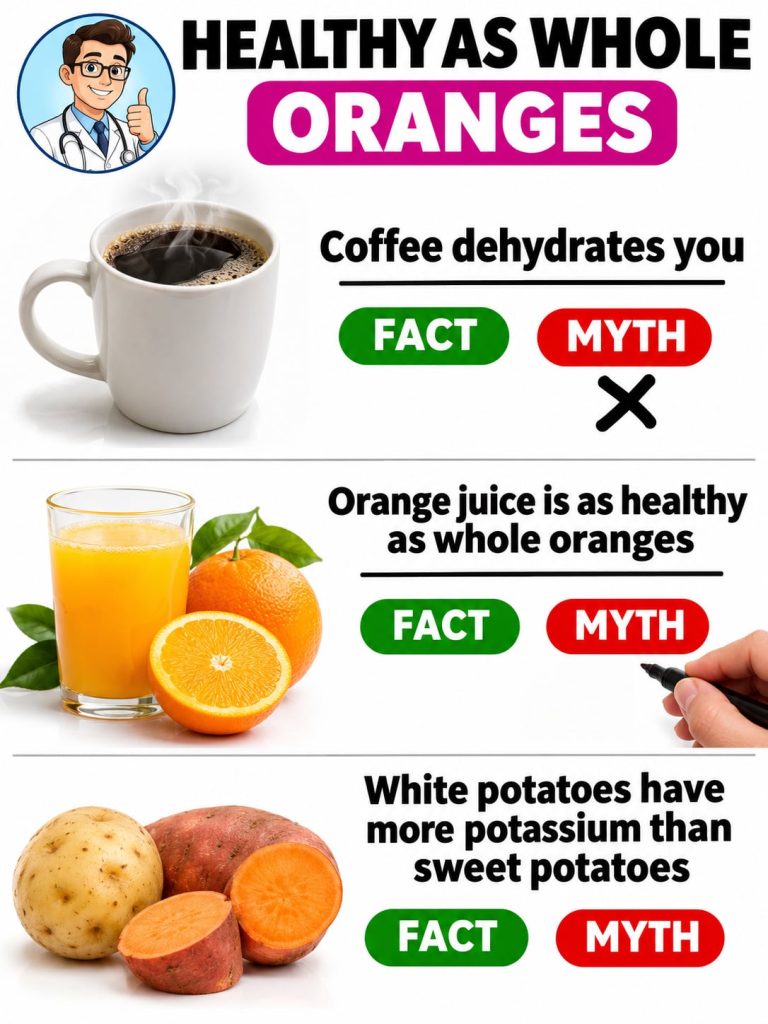
Myth 1: Coffee Always Dehydrates You
This is one of the most repeated claims about coffee. Coffee does contain caffeine, which has a mild diuretic effect, meaning it can increase urine output for a short time. However, research generally shows that moderate coffee intake still contributes to your daily fluid intake. For most healthy adults, a regular cup of coffee does not cause meaningful dehydration.
Verdict: Mostly a myth. Coffee counts toward your fluids, especially when enjoyed in moderation.
Myth 2: Orange Juice Is as Healthy as Eating a Whole Orange
Orange juice offers vitamin C and other nutrients, which makes it a refreshing choice. Still, juice usually lacks the fiber found in the whole fruit, and it can contain a fair amount of natural sugar in a small serving. Whole oranges help you feel fuller and slow down how quickly sugar enters your system.
Verdict: Partly true. Juice has nutrients, but whole fruit is often the better everyday choice.
Myth 3: Gluten-Free Foods Are Automatically Healthier
Gluten-free is essential for people with celiac disease or gluten sensitivity, but it does not automatically mean a food is more nutritious. Many gluten-free packaged products are made with refined starches and added sugars or fats. Reading labels and focusing on whole foods is a more reliable approach.
Verdict: Myth for most people. Gluten-free is a dietary need for some, not a general health upgrade.
Myth 4: Detox Teas Cleanse Your Body
Detox teas are popular, but your liver and kidneys handle detoxification naturally. Some detox teas contain laxative herbs that may cause discomfort or dehydration. A simple herbal tea, such as ginger or peppermint, can be a pleasant part of a balanced routine without making big promises about cleansing.
Verdict: Myth. Your body already has built-in systems for detox.
Myth 5: Potatoes Are Unhealthy
Potatoes often get blamed for weight gain, but they provide potassium, vitamin C and fiber, especially when eaten with the skin. The way they are prepared makes a big difference. Boiled or baked potatoes with herbs and vegetables are very different from heavily fried options.
Verdict: Mostly a myth. Preparation and portion size matter more than the potato itself.
Myth 6: Eggs Should Always Be Avoided
Eggs are a source of high-quality protein, B vitamins and other nutrients. For many healthy people, eating eggs in moderation fits well into a balanced diet. Individual needs can vary, so anyone with specific health concerns may want to check with a qualified healthcare professional.
Verdict: Myth for many people. Eggs can be a useful part of a healthy breakfast.
Key Takeaways for Everyday Wellness
- Coffee in moderation can still count toward your daily fluids.
- Whole fruit offers fiber that juice often lacks.
- Gluten-free is important for certain people, but not automatically healthier.
- Your body has natural detox systems, so be cautious with big cleansing claims.
- Potatoes and eggs can be healthy when prepared simply and eaten in balanced portions.
Build Healthy Habits With Simple Choices
Healthy living is usually about consistent, sensible choices rather than strict rules. Start with whole foods, enjoy your favorite drinks in moderation, and pay attention to how your body responds. Your own comfort, preferences and any health guidance you have received should guide your decisions.
Which of these myths surprised you the most? Share your thoughts in the comments and keep exploring natural, balanced habits that work for your everyday routine.