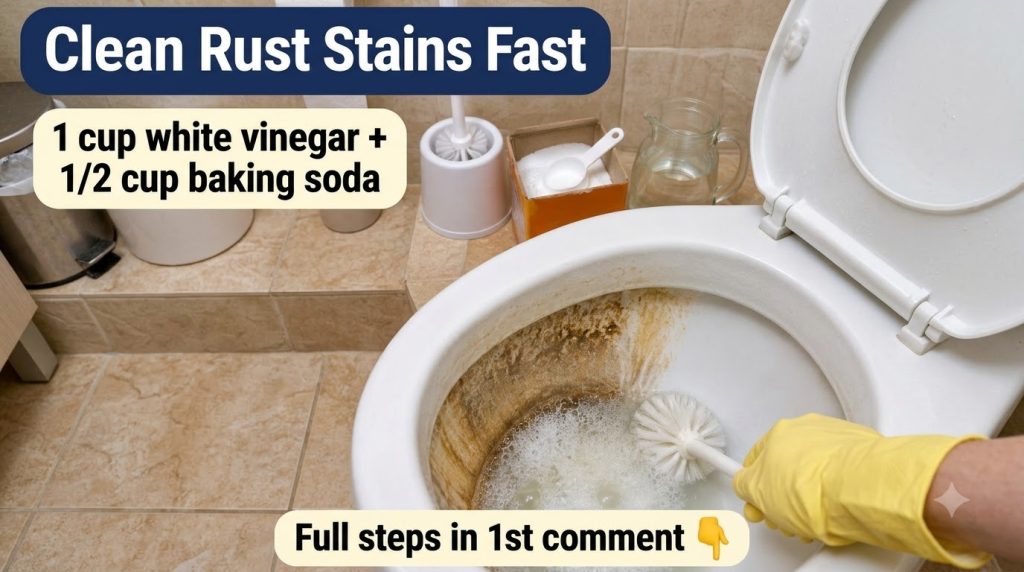
Few bathroom chores are as frustrating as a toilet bowl with rust-colored rrings and chalky mineral buildup along the waterline. The good news is that most of these stains respond well to a simple, repeatable routine. This guide walks you through a practical deep clean using a toilet bowl cleaner and a gentle baking soda paste for the tougher marks, so you can get the bowl looking noticeably fresher without guesswork.
What You Will Need
Cleaning Supplies
- 1 bottle of toilet bowl cleaner labeled for limescale, rust, or hard water stains
- 1/2 cup baking soda
- Water, added slowly to make a thick paste (about 2 to 3 teaspoons)
Tools
- Toilet brush with firm bristles
- Non-scratch scrub pad or an old toothbrush
- Rubber gloves and eye protection
- Small mixing bowl
Why This Method Helps
Mineral and rust stains form when hard water and iron leave deposits that build up in thin layers over time. Toilet bowl cleaners are formulated to loosen these deposits, while the foam helps the product cling to the stained area for longer. Baking soda adds gentle abrasion, which helps lift stubborn spots that a liquid alone may not remove. Used together in separate steps, they cover both the chemical and the physical side of the job.
How to Make It
- Put on rubber gloves and make sure the room has fresh air, such as a cracked door or a running fan.
- Flush the toilet once and let the bowl drain as much as possible. Remove standing water with a cup if needed so the cleaner can reach the stains.
- In a small bowl, mix the baking soda with water a little at a time until you have a thick, spreadable paste. It should hold its shape on a spoon.
- Keep the baking soda paste and the toilet bowl cleaner in separate containers. Do not combine them or mix either one with other household cleaners.
How to Use It
- Scrub the stained waterline with the baking soda paste using a non-scratch pad or old toothbrush. Work in small circles, focusing on rust rings and chalky buildup.
- Rinse the paste off by flushing once, then apply toilet bowl cleaner under the rim and along the waterline following the product label directions.
- Let the cleaner sit for the time listed on the bottle, usually 10 to 30 minutes. Avoid flushing during this time so the product stays in contact with the stains.
- Scrub again with the toilet brush, paying close attention to the stained areas near the waterline, then flush.
- If a few marks remain, repeat the paste step on those spots only, then rinse thoroughly.
What to Expect
Light stains and fresh buildup often lift after one round of cleaning. Older rust rings and hard mineral layers may need two or three rounds spread over several days. Plan on a deep clean that improves the bowl steadily rather than a single instant transformation. Consistent weekly cleaning keeps stains from returning as quickly.
Helpful Tips
- Clean the bowl while the water is low so the product stays in contact with the stains.
- Use a dedicated toilet brush and keep it in its holder to dry between uses.
- Test the paste on a small hidden spot if your bowl has a glaze or finish you are unsure about.
- Keep the baking soda paste fresh. Make only as much as you need for one session.
Important Notes and Safety
- Never mix toilet bowl cleaner with bleach, vinegar, ammonia, or any other cleaning product. Some combinations release harmful fumes.
- Wear gloves and eye protection, and keep the bathroom ventilated during and after cleaning.
- Keep all cleaning products out of reach of children and pets, and store them in their original labeled containers.
- Avoid harsh abrasive pads or scouring powders on glossy porcelain, since they can dull the finish over time.
- If stains return quickly or are deeply etched into the surface, a plumber or professional cleaner can advise on the next steps.