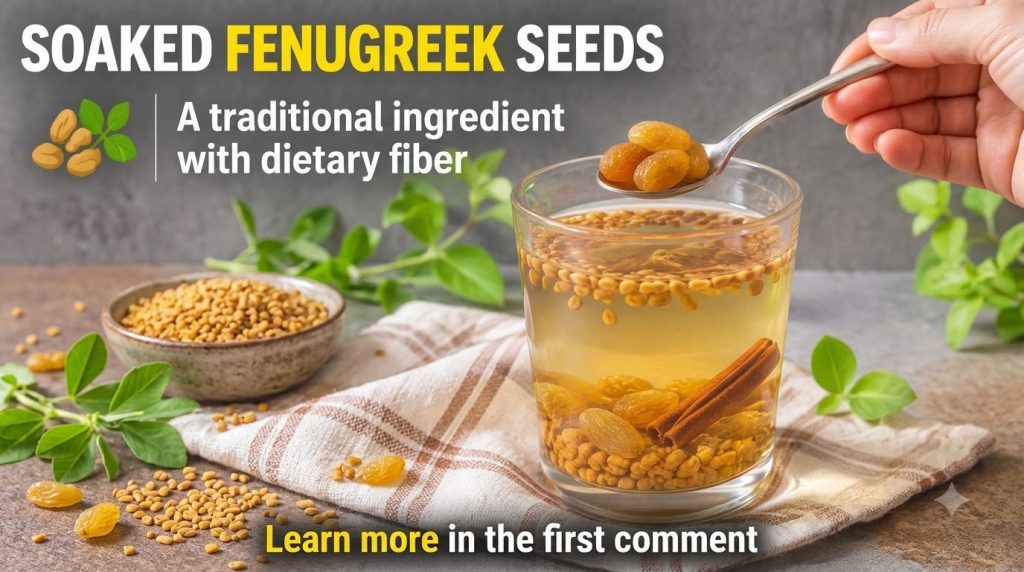
Social media is full of simple drink recipes promising dramatic results for hair, skin, and energy. A mix of soaked fenugreek seeds, golden raisins, and a cinnamon stick is one of them. It looks appealing, and it is easy to make at home. But before you add it to your daily routine, it helps to separate what the ingredients offer from what the internet often claims.
What Is in This Drink?
Each ingredient brings something different to the glass:
- Fenugreek seeds: A good source of plant protein, soluble fiber, and minerals such as iron. Fenugreek has been studied for its effects on blood sugar and appetite, and it is a traditional ingredient in many cuisines.
- Golden raisins: Provide natural sugars, potassium, and dietary fiber, which support digestion and steady energy.
- Cinnamon: Contains plant compounds with antioxidant activity and adds flavor without added sugar.
- Water: Supports hydration, which is essential for circulation, skin, and overall body function.
What Does the Science Say About Hair Health?
Hair is built mostly from a protein called keratin, and healthy growth depends on a steady supply of nutrients. Research has linked several nutrients to hair health, including protein, iron, zinc, and certain B vitamins. A deficiency in any of these can contribute to thinning or shedding.
However, there is no strong clinical evidence that soaking fenugreek and raisins in water produces measurable hair growth. Most research on fenugreek and hair involves small studies, topical preparations, or limited sample sizes. A drink cannot be expected to change hair growth in a fixed number of days.
Realistic Expectations for Hair Growth
Hair grows slowly, usually about 1 centimeter per month on average. Growth rate varies with age, genetics, hormones, and overall health. Many changes in hair appearance take several months to become visible, and the hair cycle itself can take years.
- Hair shedding can be caused by stress, illness, medication, hormonal changes, or nutritional gaps.
- Sudden or patchy hair loss should be evaluated by a healthcare professional.
- Consistent habits such as balanced meals, adequate sleep, and gentle hair care tend to matter more over time.
A Balanced Approach to Hair-Friendly Nutrition
Instead of relying on a single drink, focus on a varied diet that includes:
- Lean proteins such as eggs, fish, legumes, tofu, and poultry
- Iron-rich foods such as leafy greens, lentils, and fortified grains, paired with vitamin C for better absorption
- Zinc sources such as seeds, nuts, and whole grains
- Colorful fruits and vegetables for antioxidants and fiber
Safety Notes Before Trying Fenugreek
Fenugreek is generally well tolerated in food amounts, but it is not suitable for everyone. People who are pregnant or breastfeeding, those with nut or legume allergies, and anyone taking diabetes medication or blood thinners should speak with a doctor before using it regularly. Stop use and seek advice if you notice digestive discomfort, rash, or other unusual symptoms.
The Bottom Line
This drink can be a pleasant, nutrient-rich addition to a balanced diet, but it is not a proven solution for hair growth. For healthy hair, focus on adequate protein, key minerals, good hydration, stress management, and gentle styling. If you are concerned about hair loss, a healthcare provider or dermatologist can help identify the cause and recommend evidence-based options.