Unlock the power of nutrition and lifestyle to take control of your health! Type 2 diabetes, while often considered chronic, can often be managed and, in some cases, even put into remission through dedicated lifestyle changes. This empowering guide outlines practical nutrition and daily habits that may help you manage and potentially reverse type 2 diabetes. Start your journey towards better health today with these clear, actionable steps.
Understanding Type 2 Diabetes Reversal
Reversing type 2 diabetes typically means achieving and maintaining normal blood sugar levels without medication. This is often accomplished through significant dietary changes, weight loss, and increased physical activity, which can improve insulin sensitivity and reduce the burden on the pancreas. It’s a journey that requires commitment but offers profound rewards for your long-term health and vitality.
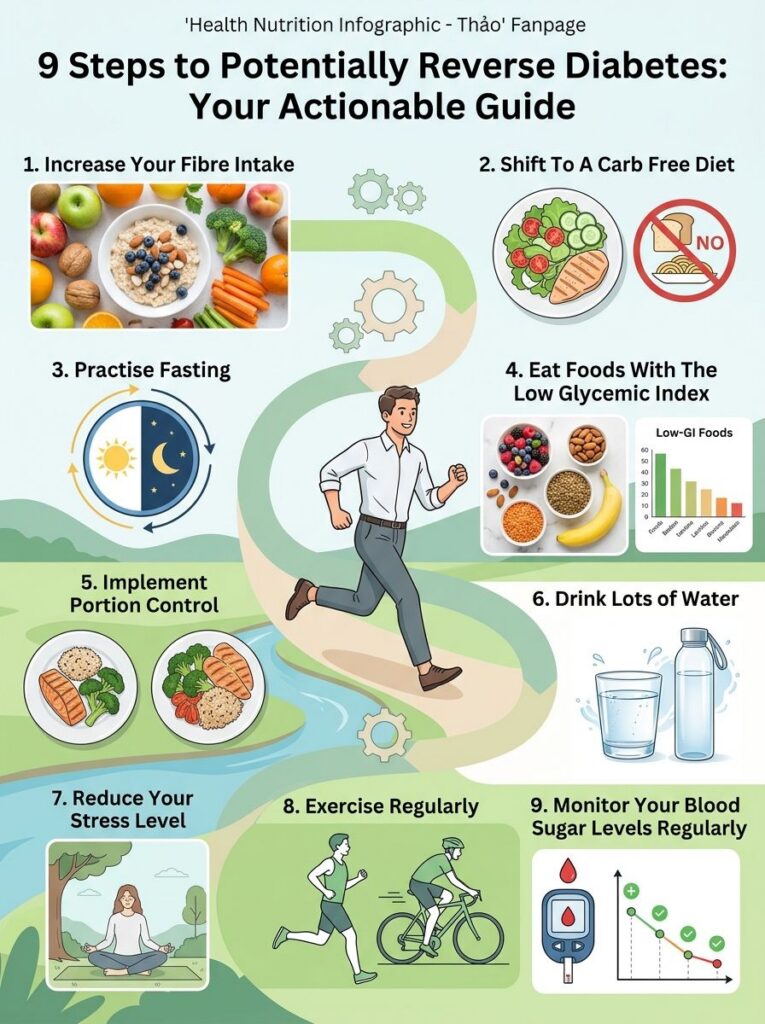
The 9 Actionable Steps to Potentially Reverse Type 2 Diabetes
1. Embrace a Low-Carbohydrate Eating Plan
Carbohydrates are the primary macronutrient that raises blood glucose. Reducing your intake of sugary foods, refined grains, and starchy vegetables can dramatically improve blood sugar control and insulin sensitivity.
- Focus on: Non-starchy vegetables, leafy greens, lean proteins, and healthy fats.
- Limit: Bread, pasta, rice, potatoes, sugary drinks, and desserts.
- Why it works: Lower carb intake means less glucose entering your bloodstream, reducing the need for insulin and giving your pancreas a much-needed break. This can lead to improved insulin sensitivity over time.
2. Incorporate Intermittent Fasting
Intermittent fasting (IF) involves cycling between periods of eating and voluntary fasting. This approach can help lower insulin levels, promote weight loss, and improve insulin sensitivity.
- Common methods: The 16/8 method (fast for 16 hours, eat within an 8-hour window), or the 5:2 method (eat normally 5 days a week, restrict calories significantly on 2 non-consecutive days).
- Why it works: By extending the time between meals, your body uses its stored glucose (glycogen) and then switches to burning fat for energy. This reduces insulin spikes and can reset your body’s response to insulin.
3. Prioritize Lean Proteins
Protein is essential for building and repairing tissues, and it has a minimal impact on blood sugar levels compared to carbohydrates. It also helps you feel full and satisfied, which can aid in weight management.
- Excellent sources: Chicken breast, turkey, fish (salmon, cod), eggs, tofu, lentils, and lean beef.
- How to integrate: Include a source of lean protein with every meal to support muscle mass and satiety.
4. Boost Your Intake of Healthy Fats
Healthy fats are crucial for hormone production, nutrient absorption, and long-term satiety. They don’t spike blood sugar and can help stabilize glucose levels when consumed with carbohydrates.
- Good choices: Avocados, olive oil, nuts (almonds, walnuts), seeds (chia, flax), and fatty fish like salmon.
- Benefits: Fats slow down digestion, contributing to a feeling of fullness and helping to prevent overeating.
5. Load Up on Non-Starchy Vegetables
These vegetables are packed with vitamins, minerals, and fiber, but are low in carbohydrates. They provide bulk to your meals without significantly impacting blood sugar.
- Examples: Broccoli, spinach, kale, bell peppers, zucchini, green beans, and cauliflower.
- Recommendation: Aim to fill half your plate with non-starchy vegetables at each meal. The fiber helps slow sugar absorption and supports gut health.
6. Engage in Regular Physical Activity
Exercise is a powerful tool for improving insulin sensitivity and helping your body use glucose more efficiently. It also contributes to weight loss and overall cardiovascular health.
- Types of activity: Combine aerobic exercises (walking, jogging, cycling, swimming) with strength training (lifting weights, bodyweight exercises).
- Goal: Aim for at least 150 minutes of moderate-intensity aerobic activity per week, plus two or more days of strength training.
7. Master Stress Management Techniques
Chronic stress can elevate blood sugar levels by triggering the release of hormones like cortisol, which increases glucose production. Finding effective ways to manage stress is vital.
- Strategies: Practice mindfulness meditation, deep breathing exercises, yoga, spending time in nature, or engaging in hobbies you enjoy.
- Impact: Reducing stress can lead to more stable blood sugar levels and better overall well-being.
8. Optimize Your Sleep Quality
Poor sleep can disrupt hormone balance, leading to increased insulin resistance and higher blood sugar levels. Prioritizing restful sleep is a cornerstone of diabetes management.
- Tips for better sleep: Establish a regular sleep schedule, create a dark and quiet sleep environment, avoid screens before bed, and limit caffeine and alcohol in the evening.
- Goal: Aim for 7-9 hours of quality sleep per night.
9. Regularly Monitor Blood Sugar & Work with Your Healthcare Provider
Tracking your blood sugar levels provides invaluable feedback on how your body responds to different foods and activities. This data allows you to make informed adjustments to your lifestyle plan.
- Importance: Regular monitoring helps you understand your patterns and make proactive changes.
- Professional guidance: Work closely with your doctor, registered dietitian, or certified diabetes educator. They can provide personalized advice, adjust medications as needed, and ensure your reversal efforts are safe and effective.
Your Journey to Better Health
Potentially reversing type 2 diabetes is a significant achievement that can profoundly improve your quality of life. By consistently implementing these nine steps, you’re not just managing a condition; you’re reclaiming your health and building a foundation for a vibrant future. Remember, consistency and patience are key, and every small step forward is a victory.
Which step will you prioritize first? Start small, stay consistent, and celebrate your progress!