Yellow foods have a cheerful presence on the plate, and they have long held a special place in traditional Eastern dietary thinking. In that framework, each color is linked to a part of the body, and yellow is associated with the spleen. This guide explores the yellow foods shown in our reference chart, explains what traditional food philosophy says about them, and shows how their nutrients can fit into a balanced, everyday diet.
What the Yellow Food Tradition Means
In traditional Eastern nutrition, food is often grouped by color, flavor, and the body systems it is thought to support. Yellow foods are traditionally associated with the spleen, an organ that in this framework is linked to digestion, energy, and the processing of what we eat. It is important to understand that this is a traditional association and not an established medical fact. Modern nutrition science does not use spleen-based categories, but it does recognize that colorful, minimally processed plant foods supply fiber, vitamins, and antioxidants that support overall wellness.
Yellow Foods Featured in the Chart
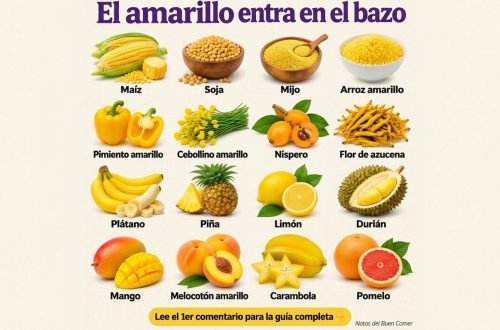
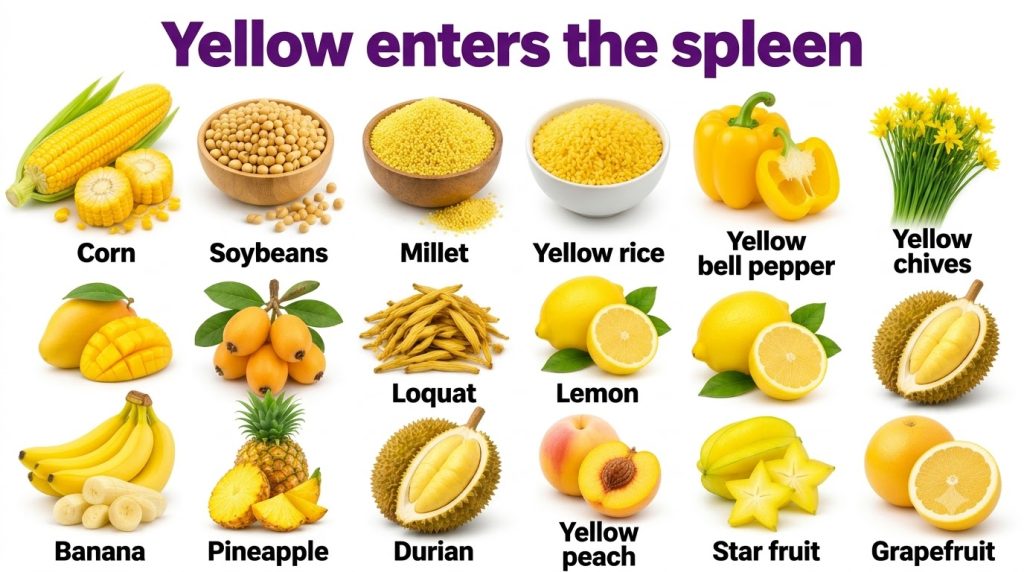
The chart brings together a wide variety of yellow foods from grains, vegetables, and fruits. Here is a closer look at some of the most useful ones:
- Corn and millet: Whole grains that provide complex carbohydrates and dietary fiber, helping to sustain steady energy through the day.
- Soybeans: A plant protein source that also supplies fiber, iron, and magnesium, making it a valuable choice for vegetarian and flexitarian diets.
- Yellow bell pepper: Rich in vitamin C, which supports immune function and helps the body absorb plant-based iron.
- Banana and pineapple: Naturally sweet fruits with potassium and fiber, useful as a satisfying snack or breakfast addition.
- Lemon and grapefruit: Citrus fruits that offer vitamin C and flavonoids, and that brighten the taste of many dishes without added salt.
- Mango and yellow peach: Fruits that contain vitamin A precursors and vitamin C, supporting skin and eye health.
How to Add More Yellow Foods to Your Day
Building a yellow-rich eating pattern does not require a complicated plan. Consider these simple, practical steps:
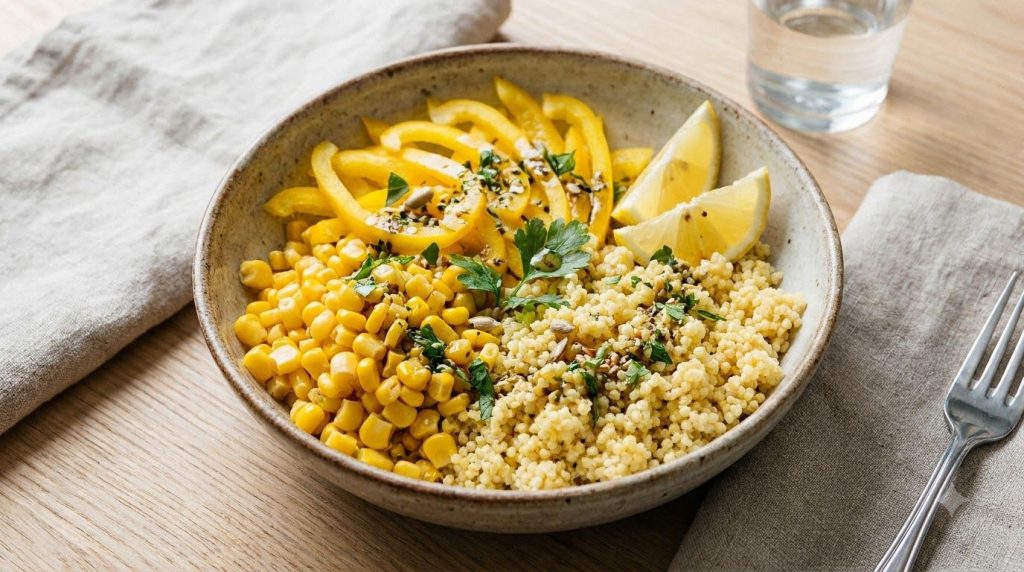
- Swap refined white rice for yellow or whole-grain millet a few times a week.
- Add sliced yellow bell pepper to salads, stir-fries, or omelets for crunch and color.
- Keep fresh bananas, pineapple chunks, or mango cubes on hand as healthy snacks.
- Squeeze fresh lemon over steamed vegetables or grilled fish instead of reaching for heavy sauces.
- Include soybeans in soups, salads, or grain bowls to boost plant protein.
Tips for Mindful, Balanced Eating
Color variety is a helpful habit whether or not you follow traditional food frameworks. Aim to fill half your plate with vegetables and fruits of different colors, choose whole grains more often, and pay attention to portion sizes. If you have a medical condition, are pregnant, or take medication, please speak with a qualified healthcare professional before making significant dietary changes.
The Bottom Line
Yellow foods offer a delicious mix of fiber, vitamins, and minerals that can enrich your daily nutrition. Whether you value them for their traditional meaning or simply for their taste and nutrient content, adding more sunny-colored ingredients to your meals is a positive step toward a healthier, more colorful diet.