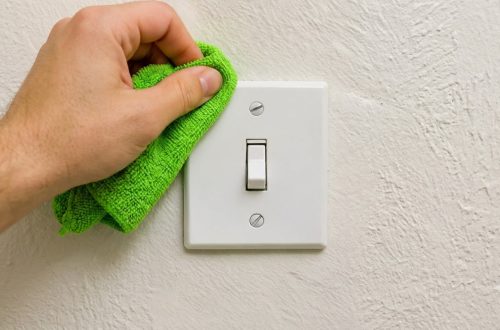
Light switches are among the most touched surfaces in any home, yet they often get skipped during a regular clean. Every time someone flips a light on or off, fingers leave oils, dust, and smudges behind. Over weeks, that layer builds up into the grimy look that makes a clean room seem less clean. The good news is that cleaning switches is quick, cheap, and easy to do with supplies you probably already own.
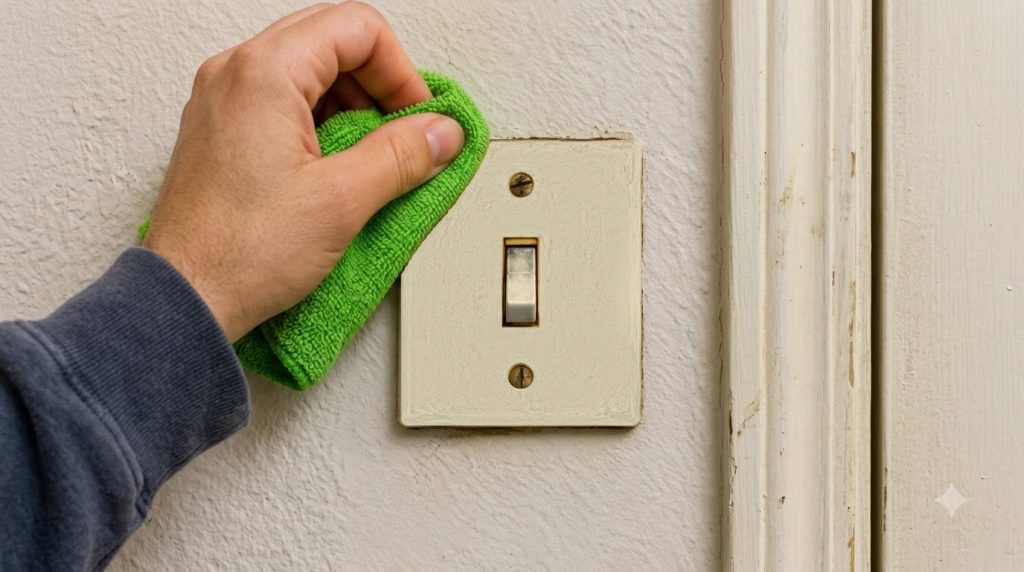
What You Need
This method uses a simple mild cleaning mixture. You will need:
- 1 cup warm water
- 1 teaspoon dish soap
- 1/2 teaspoon baking soda
- A clean microfiber cloth
- A cotton swab
- A second dry clean cloth
Stir the water, dish soap, and baking soda together until the baking soda has mostly dissolved. Baking soda is mildly abrasive, so it helps lift stubborn marks, but it should be used with gentle pressure only.
Step-by-Step Instructions
Step 1: Turn Off the Power
Before you wipe around the toggle or the screws with anything damp, switch off the power at the breaker that controls that light or outlet. Water and electricity are a dangerous mix, and turning off the circuit is the safest choice. If you only want to wipe the flat outer plate and you are certain the cloth will stay barely damp, you still have the option to switch off the breaker for extra peace of mind.
Step 2: Dampen the Cloth, Never the Switch
Dip the microfiber cloth into your mixture, then wring it out thoroughly. The cloth should feel damp, not wet and dripping. Never spray cleaner directly onto a switch plate, because liquid can seep behind the plate and into the switch mechanism.
Step 3: Rub the Plate in Small Circles
Starting at the top of the plate, rub the surface using small, gentle circles. Move slowly across the whole plate so the cleaning solution loosens oils and fingerprints. Fold the cloth to a clean section as it picks up dirt. Avoid pressing hard, especially on painted or glossy finishes, since too much force can dull the surface.
Step 4: Work Around the Toggle and Screws
The toggle and the edges around the screws collect the most grime. Wrap a cotton swab in a little of the damp cloth, or dip the swab very lightly into the mixture and squeeze out the excess. Carefully clean around the toggle, the gaps, and the screw heads. Keep the swab barely damp so no liquid runs inside the switch.
Step 5: Dry the Plate
Once the plate is clean, go over it with a dry clean cloth. Drying removes any leftover film and prevents water spots. Make sure the plate is completely dry before you restore power at the breaker.
Safety Tips
- Never let liquid run into the switch or the wall opening.
- Keep the cloth damp, not wet.
- Turn off the breaker before cleaning around the toggle with anything damp.
- Do not use harsh chemical cleaners, bleach, or abrasive pads on switch plates.
- Test the mixture on a small hidden area first if the plate has a special finish, such as matte paint, wood, or metallic coating.
Frequently Asked Questions
Why are my switch plates yellowed?
Yellowing often comes from age, sunlight, or cooking fumes and cigarette smoke that settle on the surface. Regular cleaning removes the grime that sits on top of the plate, but it may not reverse yellowing that has changed the plastic itself. In that case, the plate may look better after cleaning, but it may still look dull. Replacing the plate is an inexpensive option if the color bothers you.
How often should I clean light switches?
For most homes, wiping switch plates every two to four weeks is a reasonable schedule. Homes with children, pets, or frequent cooking may benefit from a quick wipe every week. Light switches in hallways and kitchens usually need attention more often than those in rarely used rooms.
Can I use a spray cleaner on switches?
It is better not to. Spray can enter the gaps around the plate and reach the electrical parts. A damp cloth gives you more control and keeps moisture where you want it.
Final Thoughts
Cleaning light switches will not transform a room, but it does remove the everyday grime that many people overlook. With warm water, a little dish soap, a pinch of baking soda, and a careful technique, you can keep switch plates looking tidy with very little effort. Make it part of your regular cleaning routine, and you will likely notice the difference every time you reach for the light.