Fresh berries picked from your own back step taste nothing like the clamshells at the grocery store. The good news is you do not need a large yard, raised beds, or a farm to enjoy them. A basic 5-gallon bucket, drilled for drainage and filled with the right mix, can support many productive berry plants for years.
The catch is that containers dry out faster than garden soil, hold water poorly if drainage is wrong, and can cook roots in full afternoon sun. Once you understand those limits, buckets become one of the most flexible ways to grow fruit. You can move them to chase sun, protect them from late frost, or set them up on a patio, balcony, or driveway edge. This guide walks through the setup, the ten berries that do well in buckets, the mistakes to avoid, and how to adjust for your climate.
Why Five-Gallon Buckets Work for Berries
Most berry plants have fairly shallow, fibrous root systems, which is why they adapt well to containers. A 5-gallon bucket gives roots roughly 12 inches of width and 12 to 14 inches of depth, enough room for a strawberry crown, a young blueberry, or a dwarf raspberry to establish without becoming root-bound too quickly.
Containers also let you control the growing medium. Berries are picky about soil chemistry, especially blueberries, cranberries, and lingonberries, which prefer acidic conditions. Growing in a bucket lets you match the mix to the plant instead of fighting heavy clay or alkaline soil.
Setting Up Your Bucket Correctly
Start with a food-grade bucket that has never held chemicals. Drill six to eight holes, about one-quarter to one-half inch wide, evenly across the bottom. Lift the bucket on bricks, pot feet, or a plant stand so water can drain freely. A bucket sitting flat on wet ground will stay soggy and invite root rot.
Fill the bucket with a quality potting mix, not topsoil or garden soil. Topsoil compacts in containers, drains poorly, and can carry weed seeds and disease. For most berries, mix one part compost into two to three parts potting mix. For blueberries and cranberries, use a mix formulated for acid-loving plants, or blend in pine bark fines and peat-based media to bring the pH into the range of about 4.5 to 5.5.
- Leave about 1 to 2 inches of space between the mix and the rim for watering.
- Water until it drains from the holes, then check again after an hour, since potting mix can settle.
- Use a moisture meter or push a finger about 2 inches down. Water when it feels dry at that depth.
- Move buckets on a dolly if possible. Full buckets are very heavy.
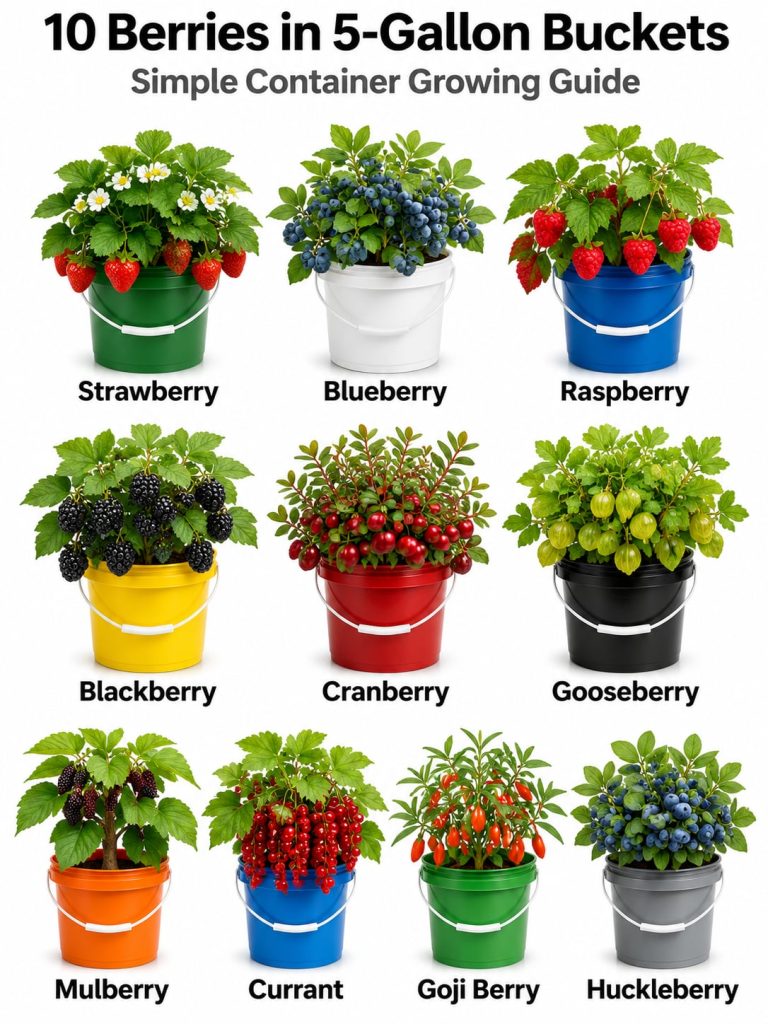
The 10 Berries That Thrive in Buckets
1. Strawberries
Strawberries are the easiest starting point. Plant them with the crown, the thick part where leaves meet roots, sitting just at soil level. Burying the crown can cause rot, while exposing roots can dry them out. Everbearing and day-neutral cultivars are usually the best choices for containers, and three to four plants fit comfortably in a single 5-gallon bucket. Hardy in most of the U.S., strawberries are generally grown in zones 3 to 9. Remove runners during the first season if you want larger plants and more fruit.
2. Blueberries
Choose a dwarf or compact highbush cultivar such as those labeled for containers. Plant it in acidic mix and water with rainwater or low-alkaline water when possible. Blueberries perform best with a second cultivar nearby for cross-pollination, although some compact varieties set fruit on their own. Highbush blueberries are usually grown in zones 4 to 7, while rabbiteye types suit warmer zones. Mulch the surface with pine needles or shredded bark to hold moisture and help keep the mix acidic.
3. Raspberries
Everbearing raspberries produce on first-year canes, which means you can cut them to the ground in late winter for a single fall crop, or leave them standing for a summer crop on older canes. Plant one dwarf or primocane-fruiting variety per bucket. Give it a small stake or trellis, because canes grow tall and can flop when loaded with fruit. Raspberries generally grow in zones 3 to 8 and need plenty of sun and airflow.
4. Thornless Dwarf Blackberries
Compact thornless blackberries, such as cultivars labeled for patio or container use, are far more pleasant to harvest than older thorny types. Give them a sturdy support and tie canes as they grow. Blackberries need consistent moisture during fruit set, so check buckets daily in summer heat. Most are suited to zones 5 to 9, and cold-hardiness varies by cultivar.
5. Red Currants
Red currants produce tart, jelly-ready fruit on compact, upright shrubs. They need winter chill, so they are best in colder areas, typically zones 3 to 7. Plant in a bucket with good drainage and provide afternoon shade where summers are hot. Prune in late winter, removing older wood so new canes stay productive. Watch for leaf spot and mildew, and keep the canopy open so air moves through.
6. Gooseberries
Gooseberries are hardy and productive, usually grown in zones 3 to 8. Their thorny branches make them a challenge in tight spaces, so choose thornless cultivars when available. American powdery mildew is the biggest concern, so pick mildew-resistant varieties, plant them where air circulates, and avoid crowding. Thin the center of the bush each winter to keep light and airflow moving.
7. Lingonberries
Lingonberries are low, evergreen shrubs with glossy leaves and tart red fruit. They are generally hardy in zones 2 to 7 and grow best in acidic, consistently moist mix. Because they stay compact, they work well in shallow containers and on cooler patios. They tolerate partial shade better than many berries, but still need steady moisture and good drainage.
8. Honeyberries
Honeyberries, also called haskap, are cold-hardy shrubs that fruit early in the season, often zones 2 to 7. Plant at least two cultivars that bloom at the same time for good pollination. The fruit is blue and oblong, with a tart, blueberry-like flavor. Water regularly, feed lightly in spring, and prune out crowded or old canes after harvest.
9. Cranberries
Cranberries are a fun addition for acid-loving growers. Most cultivars are hardy in zones 2 to 6, and they need acidic mix that stays evenly moist without standing in water. Their trailing habit makes them good for shallow containers. Harvest is best in late summer through fall, when berries turn deep red. Protect plants from strong winter winds when needed.
10. Aronia (Chokeberry)
Aronia, or black chokeberry, is one of the most adaptable berry shrubs and is commonly grown in zones 3 to 8. Its glossy fruit is very high in antioxidants and is best cooked, juiced, or dried. Choose a compact cultivar, since many shrubs can reach 4 to 6 feet tall. Prune lightly in late winter to keep the bush productive and open.
Common Mistakes and How to Avoid Them
The most common error is overwatering. Buckets with no drainage holes or with holes blocked by mix will stay wet, and roots will suffocate. Tip the bucket briefly to check drainage and clear holes with a stick if needed.
Second, many growers use garden soil. It compacts quickly in containers and can slow drainage. Stick with a light, peat- or coir-based potting mix. Third, planting blueberries or cranberries in neutral mix is a frequent mistake. If leaves turn yellow between the veins, the plant may be struggling with high pH, and an acid-forming fertilizer designed for acid-loving plants can help.
Finally, do not let berries dry out during flowering and fruit set. Irregular watering can cause small, misshapen fruit and drop blossoms. Water deeply, then let the top inch dry slightly before watering again.
Adjusting for Your Climate and Season
USDA zones measure winter cold tolerance, not summer heat, rainfall, or microclimate. In zones 3 to 5, keep buckets in a sheltered spot or move them into an unheated garage or shed during hard freezes, though many cold-hardy berries need that winter chill to set fruit well. In zones 6 to 8, afternoon shade often helps prevent heat stress in containers. In zones 9 and warmer, choose heat-tolerant cultivars and expect faster drying, so check moisture daily in summer.
Plant in spring after your average last frost date, when soil in the bucket has warmed. Local cooperative extension offices can provide frost dates and recommended cultivars for your area, which is especially helpful for blueberries, currants, and honeyberries.
Start Small and Build Your Berry Collection
You do not need all ten berries on day one. Start with strawberries and one blueberry this season, learn how your buckets drain and dry, and add a raspberry or blackberry once you are comfortable. Each season teaches you something about light, water, and timing that no guide can fully replace.
Save this guide, pick your first bucket, and plant one berry this weekend. Once you taste the first fruit picked from your own containers, you will understand why so many home growers keep expanding their berry patch one bucket at a time.