Understanding which foods can impact your insulin resistance and metabolic health is a powerful step towards a healthier, more vibrant you. Insulin resistance, a condition where your body’s cells don’t respond effectively to insulin, can lead to higher blood sugar levels and, over time, increase the risk of serious health issues like Type 2 diabetes, heart disease, and other metabolic syndromes. The good news? Your daily food choices play a crucial role in managing and even improving your metabolic health.
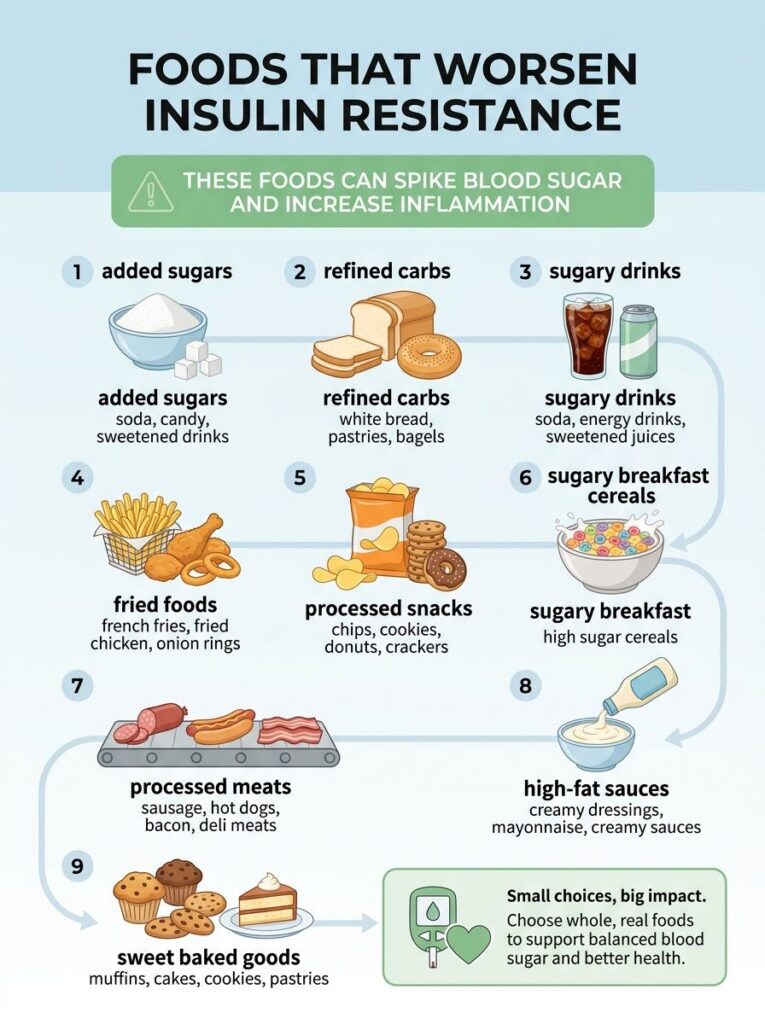
This comprehensive guide will delve into nine common culprits that can worsen insulin resistance, spike blood sugar, and increase inflammation within your body. By becoming aware of these foods and understanding their impact, you can make informed decisions that support balanced blood sugar and foster overall wellness.
The Culprits: 9 Foods to Reconsider for Better Metabolic Health
Many of the foods we commonly consume can inadvertently contribute to insulin resistance. These often share characteristics such as high sugar content, refined carbohydrates, unhealthy fats, and processed ingredients. Let’s explore them in detail:
1. Sugary Drinks (Sodas, Sweetened Teas, Fruit Juices)
- Why they’re problematic: These beverages are loaded with added sugars, particularly high-fructose corn syrup, which can lead to a rapid spike in blood sugar. Frequent spikes demand a high output of insulin from the pancreas, eventually fatiguing the insulin-producing cells and contributing to insulin resistance. They also offer little to no nutritional value, making them ’empty calories’ that contribute to weight gain, a major risk factor for metabolic issues.
- Examples: Regular sodas, sweetened iced teas, energy drinks, fruit juices (even 100% fruit juice can be high in natural sugars without the fiber found in whole fruit).
2. Refined Grains (White Bread, Pasta, Pastries, White Rice)
- Why they’re problematic: Refined grains have been stripped of their fiber, bran, and germ, which contain essential nutrients and help slow down sugar absorption. Without this fiber, refined grains are quickly broken down into glucose, causing a rapid rise in blood sugar and a subsequent insulin surge. Over time, this constant demand on the pancreas can lead to insulin resistance.
- Examples: White bread, bagels, white pasta, many breakfast cereals, pastries, cakes, white rice.
3. Fried Foods (French Fries, Fried Chicken, Onion Rings)
- Why they’re problematic: Foods cooked at high temperatures in unhealthy oils (like vegetable or seed oils) often contain trans fats and advanced glycation end products (AGEs), both of which are highly inflammatory. Chronic inflammation is a significant contributor to insulin resistance and metabolic dysfunction. The combination of refined carbohydrates (often found in batters) and unhealthy fats creates a double whammy for your metabolic health.
- Examples: French fries, fried chicken, fried fish, onion rings, many fast-food items.
4. Processed Snacks & Sweets (Candies, Cookies, Cakes, Chips)
- Why they’re problematic: These convenient foods are typically high in added sugars, unhealthy fats (often trans and saturated fats), and refined carbohydrates, while being very low in fiber and essential nutrients. This combination promotes inflammation, leads to significant blood sugar fluctuations, and contributes to excess calorie intake, which can lead to weight gain and worsen insulin resistance.
- Examples: Packaged cookies, cakes, candy bars, potato chips, crackers made with refined flours.
5. Processed Meats (Hot Dogs, Bacon, Deli Meats)
- Why they’re problematic: Processed meats often contain high levels of saturated fat, sodium, and preservatives (like nitrates), which have been linked to increased inflammation and a higher risk of insulin resistance and Type 2 diabetes. Studies suggest that regular consumption of processed meats can negatively impact insulin sensitivity.
- Examples: Hot dogs, bacon, sausages, deli slices (ham, turkey, salami), cured meats.
6. Artificial Trans Fats (Margarine, Some Processed Baked Goods, Fast Food)
- Why they’re problematic: While less common now due to regulations, artificial trans fats (partially hydrogenated oils) are incredibly harmful. They increase bad cholesterol (LDL), decrease good cholesterol (HDL), and significantly promote systemic inflammation, directly interfering with insulin signaling and increasing the risk of insulin resistance and heart disease.
- Examples: Certain margarines, some commercial baked goods, frozen pizzas, coffee creamers. Always check ingredient labels for ‘partially hydrogenated oil’.
7. Excessive Saturated Fats (High-Fat Dairy, Fatty Cuts of Meat)
- Why they’re problematic: While not all saturated fats are equal, an excessive intake, particularly from red and processed meats and high-fat dairy, can contribute to insulin resistance. These fats can promote inflammation in fat tissue and the liver, impairing insulin’s ability to regulate blood sugar effectively.
- Examples: Full-fat dairy products (whole milk, high-fat cheese), fatty cuts of red meat, butter (in large quantities).
8. Sweetened Breakfast Cereals
- Why they’re problematic: Many popular breakfast cereals are essentially desserts disguised as a healthy start to the day. They are often high in added sugars and refined grains, leading to a rapid blood sugar spike shortly after consumption. This sets off a cycle of energy crashes and cravings, contributing to poor metabolic control throughout the day.
- Examples: Most children’s cereals, many adult cereals marketed as ‘healthy’ but high in sugar.
9. Alcohol (Especially Excessive Consumption, Sugary Mixed Drinks)
- Why they’re problematic: While moderate alcohol intake might have some specific benefits, excessive alcohol consumption can significantly impair liver function, leading to insulin resistance. Many alcoholic beverages, particularly mixed drinks, cocktails, and certain beers, are also high in sugar and empty calories, contributing to blood sugar dysregulation and weight gain.
- Examples: Sugary cocktails, heavily sweetened liqueurs, excessive consumption of beer or wine.
The Underlying Mechanism: Blood Sugar Spikes and Inflammation
The common thread among these nine food categories is their ability to either rapidly elevate your blood sugar, induce chronic inflammation, or both. When your blood sugar spikes, your pancreas releases insulin to move glucose from your blood into your cells for energy. If this happens too frequently or intensely, your cells can become less responsive to insulin’s signal – a state known as insulin resistance.
Furthermore, many of these foods contribute to systemic inflammation. Chronic, low-grade inflammation is a silent enemy, damaging cells and tissues throughout your body, including those involved in insulin signaling. This creates a vicious cycle where inflammation worsens insulin resistance, and insulin resistance can, in turn, contribute to inflammation.
Small Choices, Big Impact: Embracing Whole, Real Foods
The good news is that reversing or preventing insulin resistance often comes down to making conscious, positive food choices. As the infographic wisely states, “Small choices, big impact. Choose whole, real foods to support balanced blood sugar and better health.”
Prioritizing whole, unprocessed foods is your best strategy. This includes:
- Abundant Vegetables: Leafy greens, cruciferous vegetables, and colorful varieties.
- Lean Proteins: Fish, chicken, beans, lentils, and lean cuts of meat.
- Healthy Fats: Avocados, nuts, seeds, olive oil.
- Whole Grains: Oats, quinoa, brown rice, whole-wheat bread (in moderation).
- Fruits: Berries, apples, and other fruits, consumed in their whole form to benefit from fiber.
By focusing on these nutrient-dense options, you provide your body with the fiber, vitamins, minerals, and antioxidants it needs to function optimally, stabilize blood sugar, reduce inflammation, and improve insulin sensitivity.
Conclusion
Your journey towards better metabolic health doesn’t require perfection, but rather consistent, informed choices. By being mindful of the 9 foods discussed – those that frequently spike blood sugar and increase inflammation – you empower yourself to make dietary adjustments that truly support your body’s natural balance. Remember, every small, conscious decision to choose whole, real foods over processed alternatives contributes to a bigger, positive impact on your overall health and well-being.