Chia seeds are one of the most popular additions to a healthy diet, and many people soak them before eating. A common question is whether to use milk or water. The answer depends on your goals for texture, calories, fullness and digestion. This guide explains what changes, what stays the same, and how to choose.
What Happens When Chia Seeds Soak
Chia seeds are rich in soluble fiber. When they meet liquid, the outer layer absorbs it and forms a soft, gel-like coating. This is why chia pudding thickens within 15 to 30 minutes, or overnight in the fridge. The gel forms with water or milk, so the basic benefit of soaking is the same either way.
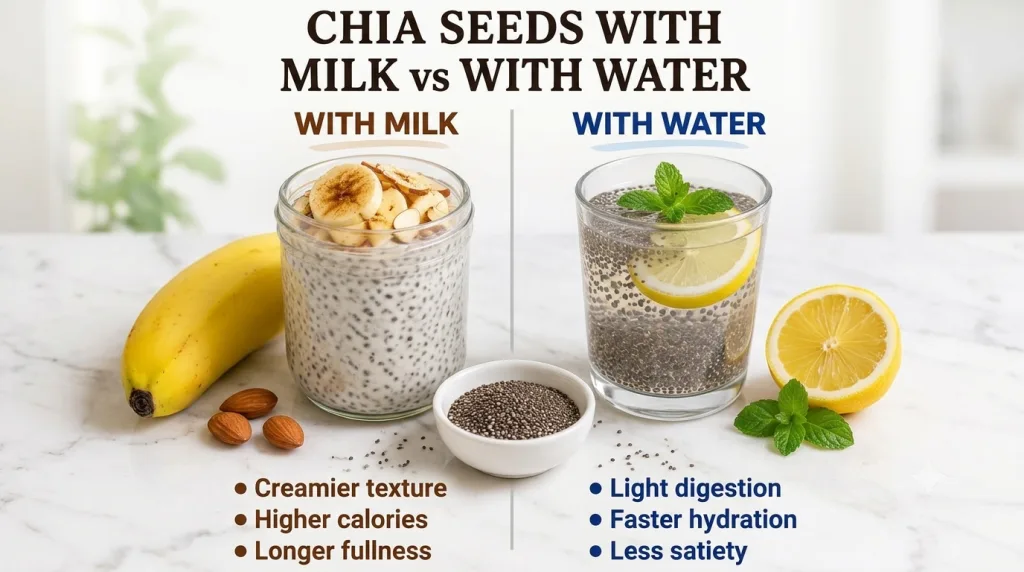
Chia Seeds Soaked in Milk
Milk changes both the taste and the feel of chia seeds. Its protein and fat give the mixture a rich, creamy texture that many people find more satisfying, especially for breakfast or dessert-style bowls.
- Creamier texture: Milk makes a smooth, thick pudding that feels indulgent.
- Higher calories: A cup of dairy milk adds calories, protein, and calcium. This can be helpful for active people or those who need more energy, but it matters if you are tracking intake.
- Potentially longer fullness: The extra protein and fat in milk may slow digestion and help you feel full for longer. The effect varies from person to person.
Chia Seeds Soaked in Water
Water is the simplest choice. It adds no calories or fat, so the seeds stay the focus of the dish. The result is lighter and less rich, but it still forms a gel that gives fiber and volume.
- Lighter option: Water adds no calories, which suits those managing their weight or following a low-calorie plan.
- Lighter texture: The gel is thinner and less creamy, which some people prefer when they want a clean taste.
- Gentle on digestion for some: Many people find water-soaked chia easy to digest, though individual tolerance varies. Drink enough fluid overall, because fiber needs water to move smoothly through the gut.
Which Should You Choose?
Choose milk if you want a creamy, filling breakfast and your calorie needs are higher. Choose water if you want a lighter snack or are watching calories. Either choice gives you fiber, omega-3 fats and the same gel-forming benefits. Many people use a mix, such as water with a splash of milk or plant-based milk, to balance flavor and calories.
Simple Tips for Soaking Chia Seeds
- Use about 2 to 3 tablespoons of chia seeds for each cup of liquid.
- Stir well in the first few minutes to prevent clumps.
- Refrigerate overnight for the thickest texture.
- Add fruit, nuts or cinnamon for flavor without relying on sugar.
- If you are new to chia seeds, start with a smaller amount and increase slowly while drinking enough water.
The Bottom Line
Milk and water both work well for soaking chia seeds. Milk gives a creamier, more calorie-dense result, while water keeps the dish light. Pick the option that fits your taste, your energy needs and your health goals, and enjoy chia seeds as part of a balanced diet.