Couch stains from spilled coffee, snack crumbs, or muddy shoes can make a favorite seat look worn long before it is. Professional upholstery cleaning works well, but it is not always practical for a quick spot treatment. A basic homemade cleaner made from dish soap, white vinegar, and baking soda can help lift light to moderate stains from many fabric sofas when used carefully.
What You’ll Need
Cleaning Ingredients
- Mild dish soap (a few drops to about one teaspoon, depending on how much solution you make)
- White vinegar (a small splash, roughly one tablespoon)
- Baking soda (about one tablespoon)
- Warm water (about one cup)
Tools
- A small glass or ceramic bowl
- A soft scrub brush or clean sponge
- A clean white cloth or towel
- A small spoon for mixing
Why This DIY Can Be Useful
Dish soap helps loosen oily and food-based residue so it can lift from fibers. White vinegar is mildly acidic and can help break down some everyday stains and odors. Baking soda adds gentle scrubbing texture and helps absorb odors as the surface dries. Together, these ingredients make a mild cleaner that is far easier on the budget and on the household than many commercial products.
How to Make It
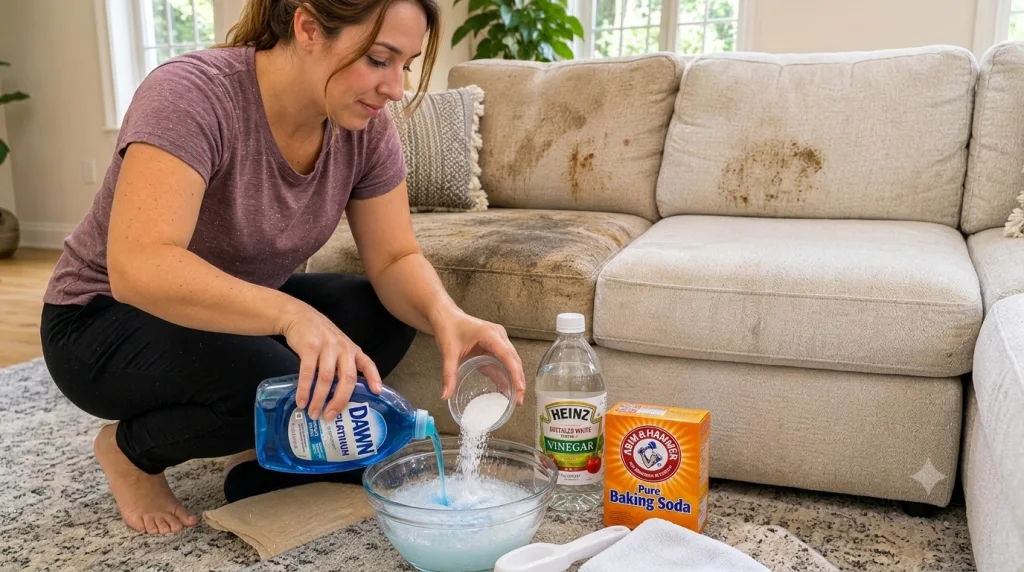
- Pour about one cup of warm water into the bowl.
- Add a few drops of dish soap and stir gently until the water is only lightly sudsy. Too much soap can leave residue that attracts dirt.
- Add a small splash of white vinegar and stir again.
- Sprinkle in about one tablespoon of baking soda. It may fizz slightly, which is normal. Stir just until combined.
- Let the mixture sit for a minute so the fizzing settles. Use the suds and liquid for cleaning, and make only as much as you need for one session.
How to Use It
- Vacuum the cushion or area thoroughly first so loose crumbs and dust do not get ground into the fabric.
- Test the solution on a hidden spot, such as the underside of a cushion or a seam allowance, and let it dry completely before moving on.
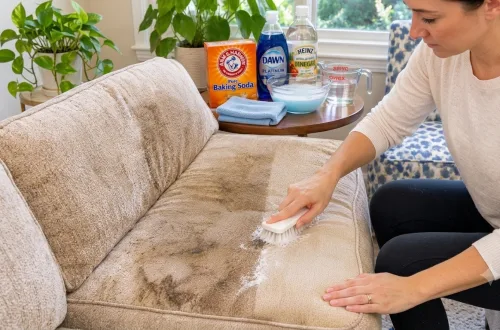
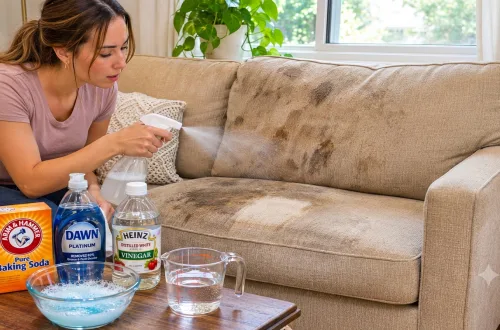
- Dip the brush or sponge into the suds, not the liquid, and squeeze out most of the water. Excess moisture is the main cause of water rings and soaked cushion cores.
- Work on one small area at a time using gentle circular motions. Start at the outer edge of the stain and move inward so it does not spread.
- Wipe the area with a clean, barely damp cloth to remove soap residue.
- Press a dry white towel onto the area to absorb extra moisture. Do not rub hard.
- Let the sofa air dry fully before sitting on it. Open a window or run a fan if possible to speed up drying.
What to Expect
This method works best on fresh or light stains and on fabric sofas with a sealed or durable finish. Older, set-in stains may fade rather than disappear completely, and some stains may need more than one gentle pass. The fabric should look cleaner and fresher once it dries, but it is wise to keep expectations realistic rather than assuming a perfect result on every stain.
Helpful Tips
- Blot spills right away whenever possible. Fresh stains respond much better than dried ones.
- Use a lighter hand than you think you need. Less moisture usually means faster drying and fewer odors.
- Mix small batches so the solution does not sit around and lose its usefulness.
- Rinse your brush or sponge often so you are not spreading dirt back into the fabric.
Important Notes and Safety
- Always check the manufacturer’s cleaning code on the sofa tag. A code marked W means water-based cleaners may be used, while S means solvent-based cleaners only. If the tag says S or X, skip this recipe and consider a professional cleaner.
- Patch test in a hidden area first, especially on silk, linen, leather, or delicate colored fabrics.
- Never mix vinegar or dish soap with bleach or other cleaning products. Doing so can create harmful fumes.
- Do not oversaturate the cushion. Soaked foam can take a long time to dry and may develop odor or mildew.
- Store any leftover solution in a clearly labeled container and use it within a day, since it is not meant for long-term storage.
- Keep the cleaning area ventilated, and keep children and pets away while the fabric is drying.
With a gentle hand and a little patience, this simple homemade cleaner can help refresh everyday sofa stains without the harsh chemicals. Start small, test first, and your seating will look fresher in no time.