Winter is the quietest season in the garden, but it is also one of the best times to see what is living on your trees. A small grey smudge on bark can look like dried mud or old putty, and it is easy to walk right past. That smudge may be a spotted lanternfly egg mass. Dealing with it before spring growth begins can ease a serious pest problem, and it takes only a few minutes per tree. Here is how to identify these masses, remove them safely, and understand what removal can and cannot accomplish.
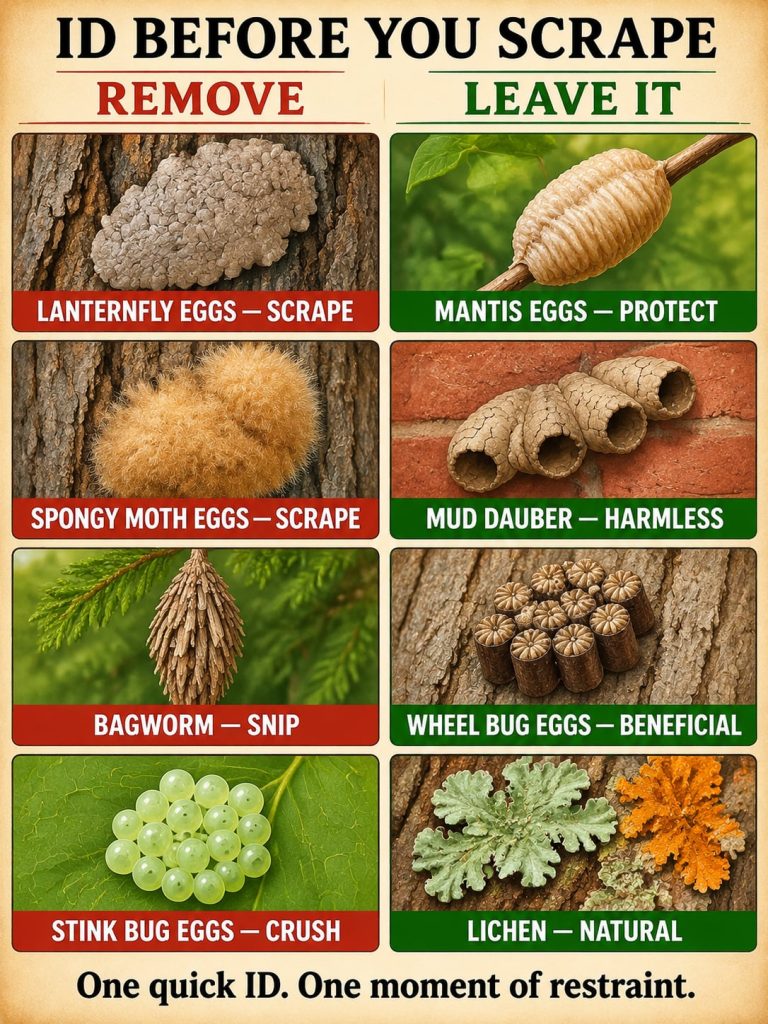
What Is a Spotted Lanternfly Egg Mass?
The spotted lanternfly (Lycorma delicatula) is an invasive planthopper native to parts of Asia. It was first detected in the United States in Pennsylvania in 2014 and has since spread across several Eastern and Midwestern states. Its preferred host is tree of heaven (Ailanthus altissima), but it also feeds on grapevines, maples, black walnut, and many ornamental and fruit plants. Feeding on sap weakens plants over time, and the sticky honeydew it produces can attract sooty mold.
Adult females lay eggs in fall, usually from September through December, depending on local temperatures. Each mass typically holds 30 to 50 eggs, sometimes a few more, and is covered by a protective coating that dries into a grey, mud-like layer. In much of the Northeast and Mid-Atlantic, the eggs hatch from late April through May, and the young nymphs begin feeding on plant sap right away.
How to Tell It Apart
- Fresh masses are grey-tan and look slightly smooth or glossy when new.
- Older masses dry out, crack, and may show small exit holes where nymphs emerged.
- A mass is roughly 1 inch long and about half an inch wide, and it often sits in a neat, layered patch.
- Check tree trunks, branches, stone walls, outdoor furniture, vehicles, grills, and stacked firewood.
- Gypsy moth egg masses are fuzzy and tan, with a sponge-like texture. Spotted lanternfly masses are smoother and look more like plaster.
If you are not sure what you are looking at, take a clear photo and contact your state department of agriculture or cooperative extension office before scraping.
Why Removal Matters, and Its Limits
Scraping a mass removes dozens of eggs in one motion, which is one of the most direct steps a homeowner can take. Removing masses early means fewer nymphs in spring, and fewer nymphs means less sap loss and less pressure on nearby trees and vines.
The number of insects you prevent depends on how many masses are in your area and how many you find. Think of removal as one part of a whole-property plan. It reduces the population in your yard, but it does not guarantee that your property will be free of lanternflies, especially if nearby properties still have masses.
Step-by-Step: Safe Egg Mass Removal
- Wear gloves and eye protection. Have a sealable plastic bag or small container ready before you start.
- Scrape the mass off the bark with a plastic card, putty knife, or old credit card. Hold the bag open beneath the mass so eggs drop directly into it rather than onto the ground.
- Add enough rubbing alcohol (70 percent isopropyl) or hand sanitizer with at least 60 percent alcohol to saturate the contents. Seal the bag and let it sit for at least 48 hours before disposal.
- Check the bark, cracks, and nearby structures. Masses often cluster in sheltered spots, so inspect the same tree from several sides.
- Avoid cutting into the bark. Scraping lightly is enough, and wounds can invite other problems.

Common Mistakes to Avoid
- Waiting until spring. Nymphs are harder to control once they begin feeding and moving, so winter inspections are the easier window.
- Scraping without a container. Eggs that fall onto the ground can hatch if they are not destroyed.
- Ignoring masses on vehicles, trailers, and firewood. These are common ways the insect spreads to new areas.
- Reaching for pesticides before confirming identification. Use least-disruptive methods first, and follow label directions and state guidance for any insecticide.
- Assuming every grey patch is a lanternfly mass. Compare it with the features above before acting.
Regional Timing Across the United States
Spotted lanternfly is established in parts of the Eastern and Midwestern United States, and its range continues to change. Many affected areas fall within USDA zones 5 through 8, but remember that USDA zones measure winter cold tolerance, not insect activity. Local temperatures, elevation, and urban heat islands all affect when eggs are laid and when they hatch.
In warmer southern areas, egg laying may stretch later into the season, while colder northern regions often finish earlier. Fall and early winter are good times to scrape masses, and late winter before hatch is another useful window. Your state department of agriculture and local extension office can tell you current reporting requirements and recommended methods for your area.
Protecting Your Yard Beyond Egg Masses
Inspect trees and vines regularly, not just once. Look at the trunks, branches, and any objects stored outdoors. Before moving firewood, outdoor furniture, or yard equipment, check it for masses and remove any you find. Tree of heaven is an invasive host, and removing it is often recommended, but cutting it without guidance can trigger vigorous sprouting, so ask your extension office for the right approach. Sticky bands can trap some nymphs and adults, but they are a monitoring aid rather than a complete solution.
Make It a Winter Routine
Set aside 15 minutes each weekend in late fall and winter to check one or two trees. Keep a sealable bag and a plastic scraper by the back door so you can act the moment you spot a mass. Your reward is a calmer spring garden, healthier trees, and the confidence that you are doing your part to protect the plants around you. Start with your largest tree this weekend, and you will be surprised how quickly the habit becomes a satisfying part of your seasonal routine.