Planting seeds at the right depth is one of the simplest ways to give your vegetables a strong start. Plant too shallow and seeds can dry out or wash away; plant too deep and tender sprouts may run out of energy before they reach the light. This guide walks you through a practical depth reference, so you can plant with confidence in your own garden or raised bed.
Why Planting Depth Matters
Every seed carries enough stored energy to push through the soil and reach daylight, but only within a certain range. The general rule is that a seed should be covered by roughly two to three times its own diameter. Small seeds such as lettuce need only a light dusting of soil, while larger seeds like squash or potatoes need deeper cover to stay steady and moist.
Getting depth right also helps with germination rates, even watering, and protection from birds and pests. When seeds are placed evenly and at the correct depth, your rows will emerge more uniformly and be easier to thin and care for.
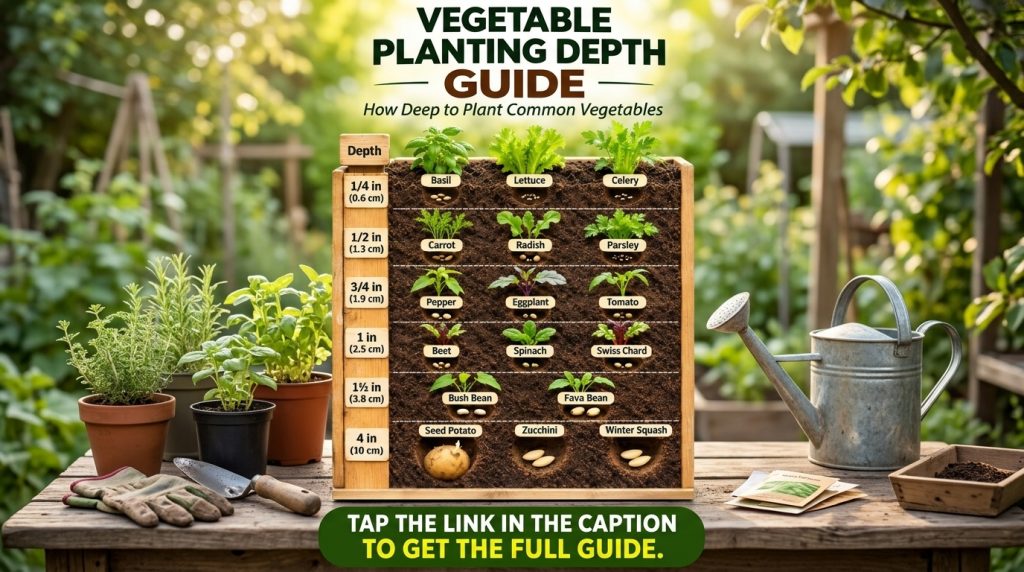
Shallow Planting: 1/4 to 1/2 Inch
Tiny seeds need light to germinate in many cases, so they should be sown very shallowly. These seeds are best covered with a thin layer of fine compost or vermiculite.
- Lettuce and spinach
- Basil and other herbs
- Carrots (lightly covered)
Keep the surface consistently moist with a fine mist until sprouts appear. Drying out is the most common reason shallow sowings fail.
Medium Planting: 1/2 to 1 Inch
Many common garden vegetables thrive at this moderate depth. It provides enough cover to keep seeds moist while still allowing sprouts to break through easily.
- Peppers and tomatoes started from seed
- Beans and peas
- Cucumbers and beets
Deeper Planting: 1 to 2 Inches
Larger seeds and transplant-style starts benefit from deeper cover. Zucchini and squash seeds, for example, are sturdy enough to push through a firmer layer of soil.
- Zucchini and squash
- Corn
- Sunflowers
Very Deep Planting: 2 to 4 Inches
Potatoes and some bulb or tuber crops are planted much deeper. Their eyes or seed pieces need solid soil around them to develop strong roots and tubers as the plant grows.
- Potatoes (seed pieces about 4 inches deep)
- Garlic cloves
- Onion sets, placed carefully at proper depth
Tips for Planting Success
- Check the seed packet first, since it often lists the recommended depth.
- Use a ruler or a marked stick to measure depth consistently.
- Water gently after sowing so seeds settle without washing away.
- Label each row so you remember what you planted and when.
- Thin seedlings once they are a few inches tall to give the strongest plants room to grow.
Adjust for Soil and Weather
Heavy clay soils hold water and can crust over, so sow slightly shallower and keep the surface loose. Sandy soils drain quickly, which may call for slightly deeper planting and more frequent watering. Cool spring weather slows germination, so be patient and avoid overwatering.
Start Your Planting Plan
Use this depth guide as a starting point and keep notes on what works in your own garden. Over a season or two, you will build a reliable routine for growing healthy vegetables from seed. Happy planting!