Many gardeners assume that every vegetable needs rich, dark, heavily fertilized soil to thrive. In reality, some crops handle lean ground far better than others. Understanding which vegetables tolerate poor soil can save time, reduce frustration, and help you plan a more practical vegetable patch, especially if your yard has compacted clay, sandy patches, or soil that has been depleted over years of growing.
Why Soil Quality Changes the Harvest
Soil provides water, air, nutrients, and physical support for roots. Rich soil is usually loose, well drained, and full of organic matter, which supplies steady nutrition. Poor soil may be sandy, heavy, low in organic matter, or short on certain nutrients. Not every plant reacts to these conditions in the same way. Some vegetables grow dense foliage and need plenty of nitrogen, while others develop strong roots and produce well even when fertility is modest.
Vegetables That Often Tolerate Lean Soil
Based on common gardening experience, several vegetables are more forgiving when soil is not especially rich:
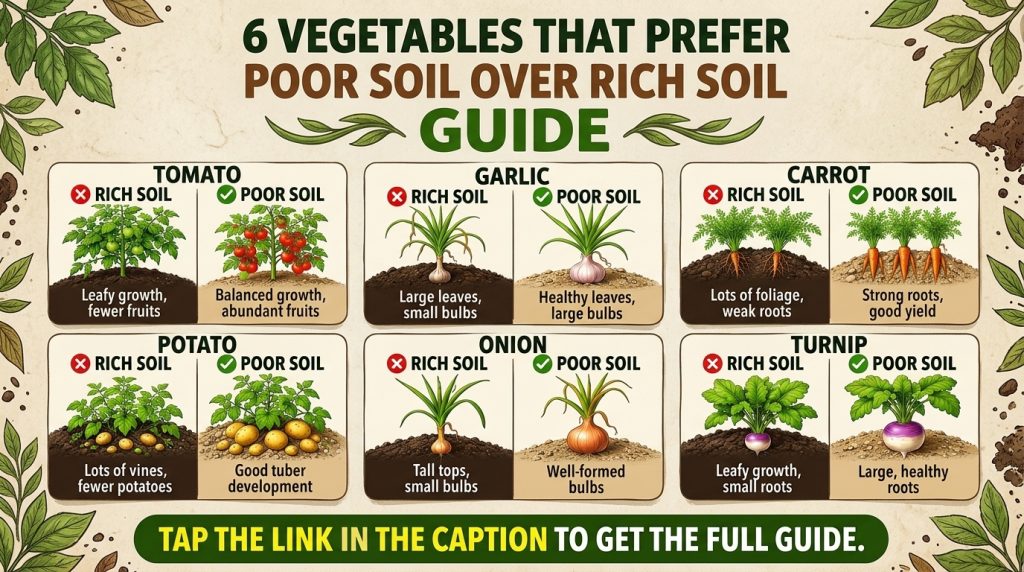
- Carrots: Loose, sandy soil helps roots grow straight. Overly rich soil high in fresh manure can cause forked or stunted roots.
- Turnips: These fast-growing roots usually perform well in moderate soil and can be harvested young for a mild flavor.
- Garlic: Garlic prefers well-drained ground, and bulbs often form well in average soil that does not stay waterlogged.
- Onions: Onions appreciate good drainage and are generally satisfied with moderate fertility, though they still respond to some organic matter.
Results depend on your climate, variety, and watering habits, so it is worth observing your own garden over a season or two.
Vegetables That Usually Need Richer Soil
The infographic style can make it sound as though every crop performs well in poor ground, which is not accurate. Tomatoes and potatoes, for example, typically reward gardeners who build up fertility. Tomatoes are heavy feeders that benefit from compost and balanced nutrition, and potatoes need loose, fertile soil to form good tubers. Poor soil can still produce a harvest, but yields and plant health are often better when these crops are given organic matter.
Practical Ways to Improve Difficult Soil
If your garden soil is lean, you do not need expensive products to begin improving it. Consider these gentle, organic steps:
- Test your soil with a basic kit or local extension service to understand pH and nutrient levels.
- Add well-rotted compost each season to build structure and gradually add nutrients.
- Mulch with straw, leaves, or shredded bark to protect moisture and support soil life.
- Grow cover crops in the off-season to add organic matter and protect bare ground.
- Match each crop to the conditions you have, planting lean-soil favorites in sunny, well-drained spots.
Simple Organic Compost Idea for Tomatoes
For gardeners who want to feed heavier crops such as tomatoes, a homemade compost mix is a practical option. Combine finished compost with aged leaves and kitchen scraps that have been properly composted, then work a modest layer into the planting bed before transplanting. Water consistently and avoid overfeeding, since too much fertilizer can encourage leafy growth at the expense of fruit.
Final Thoughts
Vegetables that love poor soil can be a valuable part of a practical garden, especially for beginners and anyone working with challenging ground. At the same time, improving your soil over time with compost and mulch will benefit nearly every crop. Start with a few tolerant vegetables, observe how they perform, and build from there. A little patience with your soil often leads to a healthier, more productive garden.