Autumn is one of the best times of year to divide perennials. As the weather cools and growth slows, plants can focus their energy on developing strong roots before winter arrives. Dividing overgrown perennials also gives you healthier plants and free extras to fill new spaces in your garden.
Why Divide Perennials in the Fall?
Many perennials grow in clumps that become crowded over time. When the center of a clump dies out or the plant stops flowering well, division is often the answer. Fall division works well for many perennials because the soil is still warm enough for roots to grow, while the air is cool enough to reduce stress on the plant.
Dividing perennials also helps you:
- Rejuvenate older plants that have become woody or sparse
- Control the spread of vigorous growers
- Multiply favorite plants at no cost
- Improve air circulation, which can reduce some common disease problems
When Is the Best Time to Divide?
Timing depends on your climate and the plant type. In general, aim for early to mid-autumn, roughly six weeks before the ground freezes in cold regions, or during a cool, cloudy period in milder areas. Spring-flowering perennials are often best divided after they finish blooming in late summer or early fall, while many fall-blooming plants are better left until early spring.
Tools You Will Need
You do not need expensive equipment to divide perennials successfully. Gather these basic supplies before you begin:
- A sharp spade or garden fork
- A sharp knife or pruning saw for tough roots
- A bucket or tarp to hold the divisions
- Pruners and gloves
- Compost or a balanced organic fertilizer for replanting
- Water for soaking the new plantings
Step-by-Step: How to Divide Perennials
1. Water the Plant a Day Before
Moist soil makes digging easier and helps protect the roots. Water the plant thoroughly the day before you plan to divide it.
2. Cut Back the Foliage
Trim the stems to about one-third of their height. This reduces water loss while the plant recovers. Leave enough foliage for the plant to keep producing energy.
3. Dig Around the Clump
Insert your spade or fork well outside the edge of the clump and lever the plant gently out of the ground. Work slowly to keep as many roots intact as possible.
4. Separate the Divisions
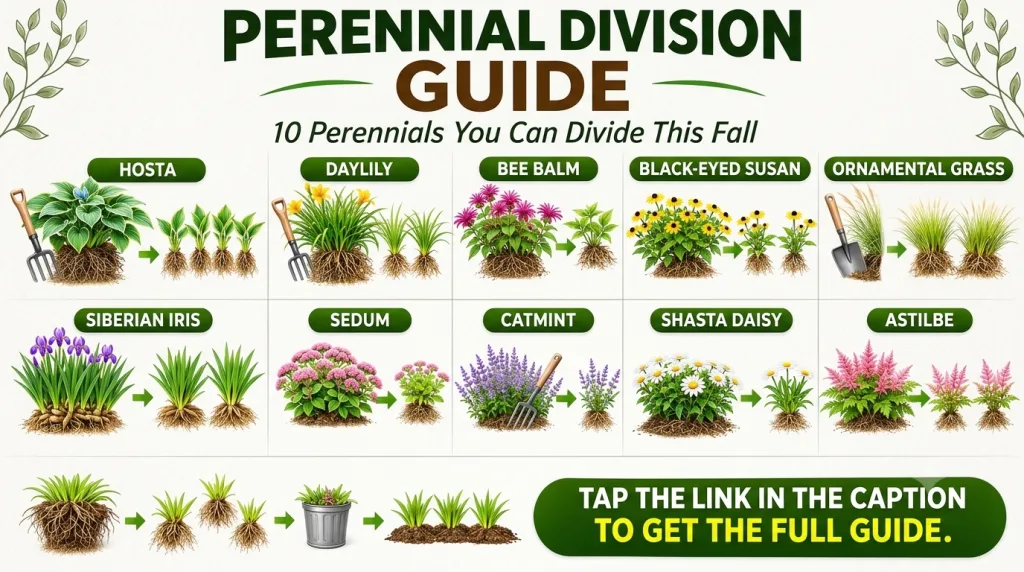
Shake or wash away loose soil so you can see how the roots connect. Pull healthy sections apart by hand where possible. For dense, woody clumps, use a sharp knife or two garden forks placed back to back to cut through the center.
5. Select the Healthiest Sections
Keep divisions that have firm roots, healthy shoots, and visible growth points or buds. Discard any sections that are soft, rotten, or heavily infested with pests. Each division should have several strong shoots to establish well.
6. Replant Promptly
Plant divisions at the same depth they were growing before, or slightly shallower in heavy soil. Space them according to the mature size listed for each plant. Add a little compost to the planting hole, then firm the soil gently around the roots.
7. Water and Mulch
Water deeply to settle the soil and remove air pockets. Spread a layer of organic mulch, such as shredded leaves or straw, to help insulate the roots and retain moisture through the cooler months.
Ten Perennials Suited to Fall Division
Many popular perennials respond well to division in autumn. Common choices include daylilies, hostas, asters, coneflowers, bee balm, phlox, ornamental grasses, sedum, peonies (in some regions), and Shasta daisies. Each has slightly different timing needs, so check plant-specific guidance for your area before digging.
Common Mistakes to Avoid
- Dividing too late, leaving too little time for roots to establish before frost
- Making divisions too small, which slows recovery
- Letting roots dry out during the process
- Planting too deep, which can lead to rot or poor flowering
- Skipping the watering step after replanting
Final Thoughts
Fall perennial division is a rewarding task that refreshes your garden and gives you more plants for free. With the right timing, a few simple tools, and gentle handling, you can revive tired clumps and create new displays next season. Take your time, enjoy the process, and watch your garden grow stronger with each division.