Annual vegetables are wonderful, but replanting every spring can quickly become a chore. Perennial vegetables offer a different rhythm: plant them once, care for them well, and they return year after year with little fuss. For gardeners who want more harvests with less seasonal work, perennial vegetables are a rewarding choice.
What Makes a Vegetable Perennial?
A perennial plant lives for more than two years. Its roots, crowns, or underground storage organs survive winter or dry seasons and send up new growth when conditions improve. Many perennial vegetables are harvested from the same plant season after season, which means less bed preparation and more time enjoying your harvest.
Popular Perennial Vegetables to Grow
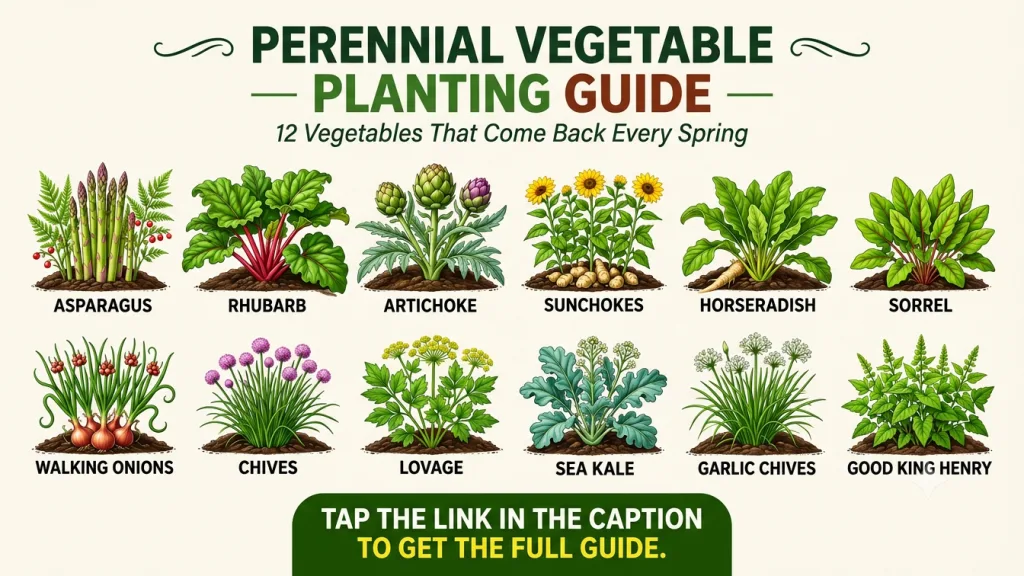
Several classic vegetables fall into this group. Each has its own needs, so it helps to know what you are planting before you dig.
- Asparagus: A long-lived favorite that rewards patience. Crowns are usually left to establish for two to three years before a full harvest.
- Rhubarb: Produces tart stalks in spring. Only the stalks are eaten, because the leaves contain compounds that are not safe to consume.
- Globe artichoke: A striking plant with edible flower buds that thrives in sunny, well-drained spots.
- Sorrel: Offers tangy leaves early in the season and is easy to keep in a sunny corner.
- Egyptian walking onion: Produces small bulbs at the top of its stalks and regrows reliably each year.
- Jerusalem artichoke: A hardy tuber that can spread vigorously, so it is best given its own space.
- Perennial kale and sea kale: Provide greens over many seasons with proper care.
- Chives and lovage: Compact perennial herbs that add flavor to everyday cooking.
Choosing the Right Spot
Most perennial vegetables need a permanent location because they stay in place for years. Before planting, look for a spot with good sunlight, well-drained soil, and enough room for the plant to reach its full size. Avoid areas where water collects after rain, since soggy soil can lead to root problems.
Preparing the Soil
Healthy soil is the foundation of a long-lived perennial bed. Work in plenty of compost before planting, and loosen the soil deeply so roots can spread easily. Adding a layer of mulch helps retain moisture and keeps weeds down. Some gardeners also use homemade compost tea as a gentle soil-care routine, which supports the soil life that plants depend on.
Planting and Early Care
Follow the spacing guidance for each plant, since crowded perennials compete for light and nutrients. Water regularly during the first growing season while roots establish. Keep young plants free of weeds, because competition is strongest when plants are small.
Seasonal Maintenance
Perennial vegetables reward a simple seasonal routine:
- In early spring, clear away old growth and check for new shoots.
- Refresh mulch and add compost to feed the bed gradually.
- During the growing season, water deeply during dry spells and watch for pests.
- In late autumn, tidy the bed and protect crowns or roots from harsh cold if your climate requires it.
Harvesting Without Harming the Plant
Harvest with restraint, especially in the first years. Taking too much too soon can weaken a young plant. Once a perennial is well established, you can gather more generously, while still leaving enough foliage for the plant to recover and store energy for next season.
Getting Started This Season
Begin with two or three plants that suit your climate and cooking habits, rather than trying to grow everything at once. Keep a simple garden journal to note planting dates, harvest times, and how each plant performs. Over time, your perennial bed will become one of the most dependable parts of your garden.