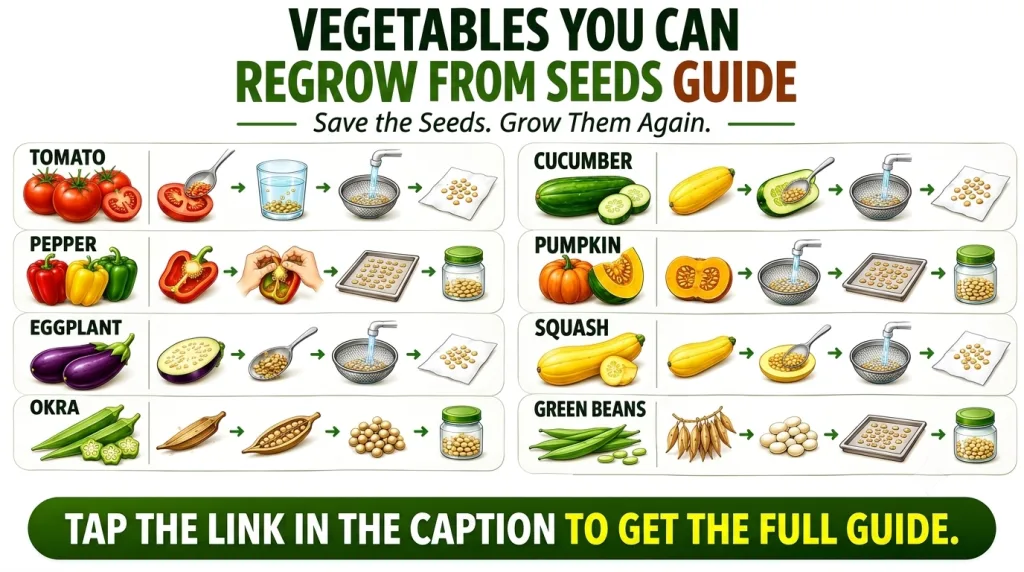
Saving seeds from your own vegetables is one of the most rewarding habits a gardener can build. It saves money, connects you to the plants you grow, and helps you keep favorite varieties going season after season. This guide walks through the basics of seed saving and explains how to collect, dry, and store seeds from eight popular vegetables: tomatoes, peppers, eggplant, okra, cucumbers, pumpkins, squash, and green beans.
Why Save Seeds From Your Vegetables?
Seeds from your own garden let you adapt plants to your local conditions over time. Many gardeners find that plants grown from saved seeds become more familiar with their climate, soil, and watering habits. Seed saving also gives you access to heirloom and open-pollinated varieties that are often hard to find in stores.
Start With the Right Plants
For the best results, choose open-pollinated or heirloom vegetables. Plants grown from hybrid seeds may not produce fruit that looks or grows like the parent plant. Label each plant clearly so you can track which seeds came from where, and let a few of your strongest plants mature fully for seed collection.
How to Save Seeds From Each Vegetable
Tomatoes
Choose a ripe, healthy fruit from a vigorous plant. Scoop the seeds and gel into a jar, add a small amount of water, and let the mixture ferment for two to three days at room temperature. This step helps separate viable seeds from the gel. Stir daily, then rinse thoroughly and dry the seeds on a ceramic plate or paper towel.
Peppers and Eggplant
Peppers and eggplants need to ripen fully on the plant before you harvest seeds. For peppers, wait until the fruit turns its final color and begins to soften. For eggplant, let the fruit become overripe, then cut it open and scoop out the seeds. Rinse the seeds to remove pulp and dry them completely before storage.
Cucumbers
Leave a cucumber on the vine until it turns yellow and feels soft. Cut it open, scoop out the seeds with their surrounding gel, and rinse them well. Dry the seeds on a flat surface away from direct sun for about a week.
Okra and Green Beans
These plants are among the easiest to save from. Leave okra pods on the plant until they dry out and turn brown. For green beans, let pods stay on the plant until they are dry, papery, and rattle when shaken. Shell the seeds by hand and check that they are hard and fully dry.
Pumpkins and Squash
Pumpkins and squash can cross-pollinate with related plants, so keep varieties separated if you want seeds that stay true to type. Choose a fully mature fruit, scoop out the seeds, wash away the pulp, and spread them to dry for one to two weeks.
How to Store Your Seeds
Once seeds are completely dry, store them in labeled paper envelopes or small glass jars. Keep the containers in a cool, dry, and dark place such as a drawer or cupboard away from heat and humidity. Adding a small food-safe desiccant packet can help control moisture. Properly dried and stored seeds often remain usable for several years, though germination rates gradually decline over time.
Tips for Success
- Save seeds only from healthy, disease-free plants.
- Write the plant name, variety, and harvest date on every envelope.
- Test older seeds by sprouting a few before planting a full row.
- Keep seeds from different varieties of the same crop well apart to reduce cross-pollination.
Bringing Seed Saving Into Your Routine
Seed saving becomes easier with practice. Start with one or two easy crops like beans or okra, then expand as you gain confidence. Over time, your collection of saved seeds can become a valuable resource for your garden, your neighbors, and your future plantings. Happy growing!