Growing strawberries is one of the most rewarding projects in a home garden. Sweet, juicy berries straight from your own plants taste far better than anything from the store. Yet many gardeners find their plants producing fewer berries than expected, or struggling from the start. The good news is that most strawberry problems come from a handful of common mistakes, and each one has a simple fix.

Mistake 1: Planting Strawberries Too Deep
When strawberry crowns are buried under soil, the plant can rot or fail to establish strong roots. The crown is the central part of the plant where leaves and roots meet, and it should sit level with the soil surface.
The fix: Dig the hole just wide and deep enough for the roots to spread out, then set the crown at soil level. Gently firm the soil around the roots and water well.
Mistake 2: Overwatering or Poor Drainage
Strawberries like consistent moisture, but soggy soil invites root rot and fungal diseases. Heavy clay soil that holds water for long periods can cause problems even when watering seems reasonable.
The fix: Water at the base of the plants in the morning so the foliage dries during the day. Check the top inch of soil before watering. If your soil drains slowly, mix in compost to improve its texture, or grow strawberries in raised beds or containers with drainage holes.
Mistake 3: Not Enough Sunlight
Strawberries need plenty of sun to produce good flowers and fruit. Plants grown in shade often look leafy but yield small, sparse berries.
The fix: Choose a spot that receives at least six to eight hours of direct sunlight each day. If your garden is shady, container growing lets you move plants to brighter locations as the seasons change.
Mistake 4: Overcrowding the Bed
Packing plants too closely limits airflow and increases the risk of mold and pests. Crowded plants also compete for nutrients and water, which reduces the size and number of berries.
The fix: Space plants roughly 12 to 18 inches apart, depending on the variety. Remove old or runner plants that crowd the main bed so that each plant has room to grow.
Mistake 5: Letting Fruit Rest on Bare Soil
Berries touching wet soil can rot quickly and attract slugs or other pests. Dirt splashed onto fruit during rain can also spread disease.
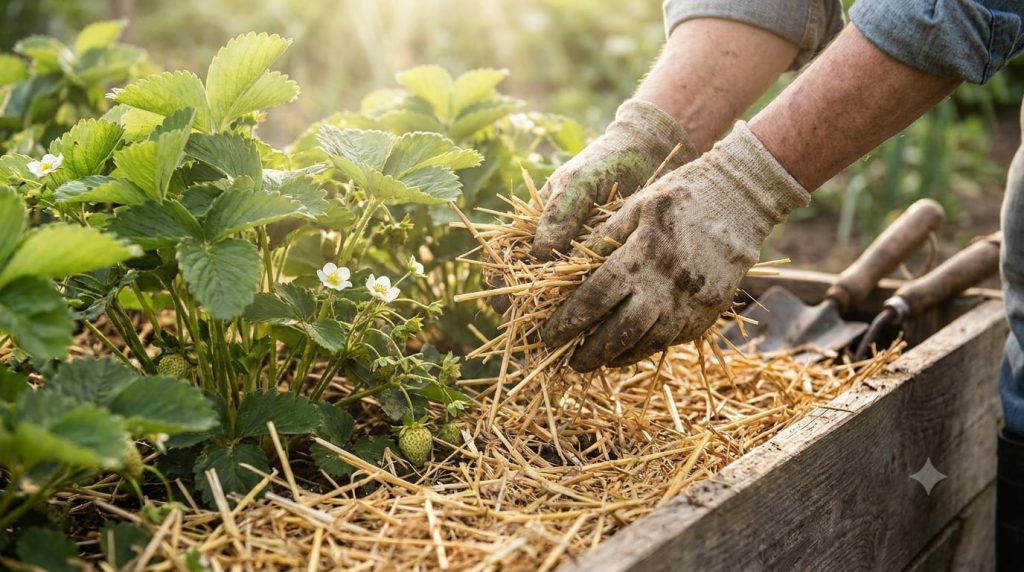
The fix: Spread a layer of straw, pine needles, or another clean organic mulch around the plants. Mulch keeps berries clean, helps retain soil moisture, and suppresses weeds.
Mistake 6: Using Fertilizer Without Balance
Too much nitrogen can produce lush green leaves with very few flowers and berries. Strawberries need a balanced supply of nutrients, especially phosphorus and potassium, to set and ripen fruit.
The fix: Start with healthy soil enriched with well-rotted compost. A simple organic fertilizer or compost tea can support steady growth, applied according to the product directions. Avoid heavy feeding late in the season, and always keep in mind that gentle, regular feeding works better than large doses.
A Simple Checklist for Healthier Strawberries
- Plant crowns at soil level.
- Water the soil, not the leaves, and let the top layer dry slightly between waterings.
- Provide at least six hours of direct sunlight.
- Keep plants spaced for good airflow.
- Mulch under the plants to protect the fruit.
- Feed gently with balanced organic nutrients.
Final Thoughts
Strawberries reward attentive care. By avoiding these six common mistakes, you give your plants the conditions they need to grow strong roots, produce abundant flowers, and yield sweet, healthy berries. Start with one improvement this season, observe how your plants respond, and build from there.