If you grew up around papaya trees, you probably saw the fruit being loved and the leaves quietly ignored.
Yet in many traditional cultures, the leaf is the real medicine cabinet: dried for tea, ground into powder, or juiced into a bright green tonic.
Most people never realize this bitter leaf can gently support digestion, liver function, and overall resilience when used in small, consistent amounts.
What Papaya Leaf Does Inside Your Body
Papaya leaf is rich in enzymes, chlorophyll, and plant antioxidants that work together in a few key ways:
- Supports digestion. Natural enzymes like papain help break down proteins, which can ease the feeling of heaviness after a rich meal.
- Helps the liver process waste. The leaf’s bitter compounds stimulate digestive juices and gently nudge the liver to do its detox work more efficiently.
- Provides antioxidant protection. Flavonoids and vitamin C – like compounds help neutralize everyday oxidative stress.
- Supports immunity. By caring for the gut and liver, papaya leaf indirectly supports immune balance, since much of our immune system sits in the digestive tract.
Think of it as a strong, green “maintenance drink,” not a miracle cure.

Simple Ways to Prepare Papaya Leaf
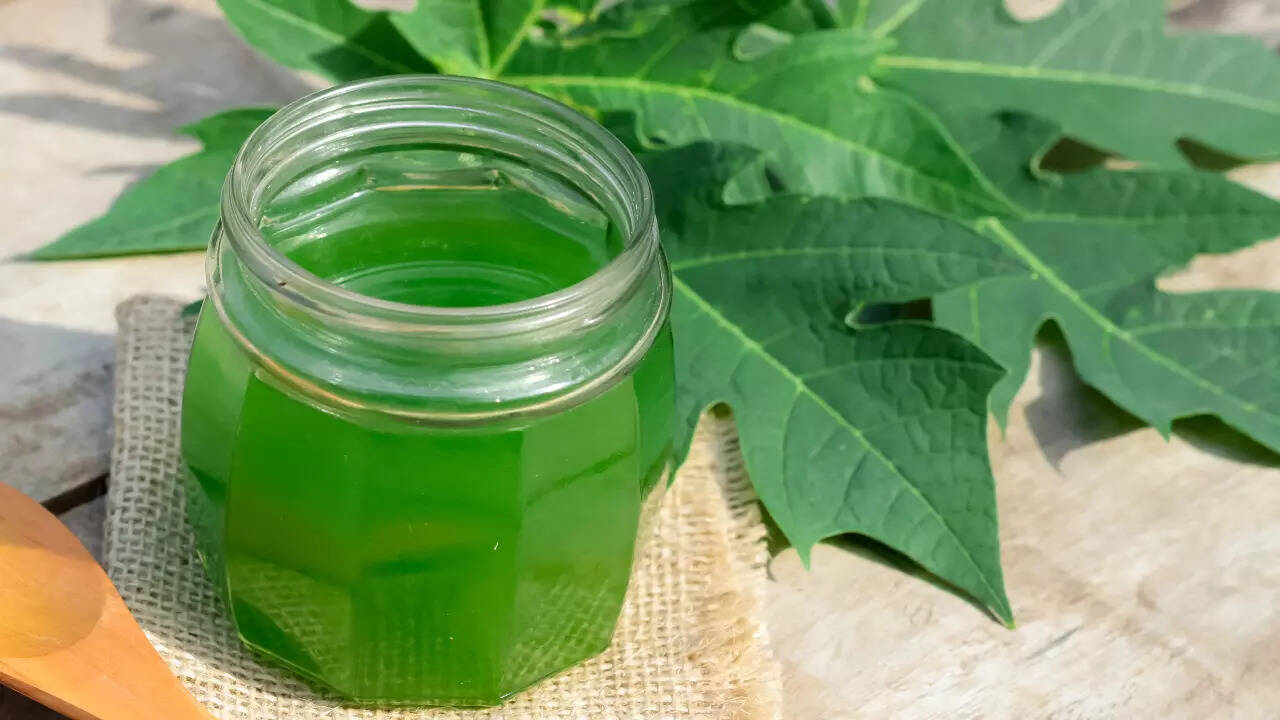
You can use fresh leaves, dried leaves, or powdered papaya leaf – all of which are shown in the image.
Papaya Leaf Tea (Fresh or Dried)
Ingredients
- 1 small fresh papaya leaf (or 1 tablespoon dried, crushed leaf)
- 2 cups water
- Optional: a slice of ginger, honey, or a squeeze of lemon
How to prepare
- Rinse the leaf well and cut it into small pieces if fresh.
- Bring 2 cups of water to a boil.
- Add the papaya leaf, reduce heat, and simmer for 10 – 15 minutes.
- Turn off the heat, cover, and let it steep another 5 minutes.
- Strain into a cup. Sweeten lightly if needed; the tea is naturally bitter.
Start with ½ cup once a day, then slowly work up to 1 cup if your body tolerates it well.

Papaya Leaf Powder
Papaya leaf powder is simply dried leaves ground to a fine green powder.
How to use
- Stir ¼ teaspoon into warm water, herbal tea, or a smoothie.
- Increase up to ½ teaspoon once daily if you feel comfortable with the taste and your digestion.
Go low and slow. The powder is concentrated, so you do not need much.
Fresh Papaya Leaf Juice
This version is stronger and more bitter, but also very potent.
Simple method
- Wash 1–2 small fresh leaves, remove the tough stem.
- Blend with ½ cup of water until smooth.
- Strain through a fine sieve or cloth to get a dark green juice.
- Start with 1–2 tablespoons mixed into another juice or water.
Because this is intense, reserve it for occasional use unless guided by a practitioner.
When to Drink Papaya Leaf
You can adjust timing based on your goal:
- For digestion: Take a small amount (tea or powder) after a heavy meal.
- For general support: Drink ½ – 1 cup of mild tea in the morning, at least 30 minutes before breakfast.
- For short “reset” phases: Some people like a 5 – 7 day papaya leaf tea routine after holiday eating or travel, then take a break.
Listen to your body. If you feel cramping, nausea, or discomfort, reduce the amount or stop.
Why It Works
Traditional systems like Ayurveda and folk medicine in tropical regions have long used papaya leaf as:
- A bitter tonic to wake up digestion and appetite.
- A supportive drink during times of stress or seasonal change.
Modern research is exploring its enzyme content, antioxidant activity, and potential immune-supporting effects. While early findings are promising, it is still considered a supportive food remedy, not a replacement for medical treatment or prescribed medication.
Safety Notes & Who Should Avoid Papaya Leaf
Papaya leaf is powerful, and more is not always better.
- If you are pregnant, trying to conceive, or breastfeeding, avoid papaya leaf unless your healthcare provider specifically approves it.
- If you have a papaya or latex allergy, skip it completely.
- If you take blood thinners, diabetes medications, or have a bleeding disorder, talk to your doctor first. Papaya leaf may interact with how your blood clots or how your blood sugar behaves.
- If you have a history of stomach ulcers or very sensitive digestion, use only very mild tea, or avoid.
- Do not drink strong papaya leaf juice every day for long periods without guidance. Give your body breaks.
Herbal remedies should always sit next to, not in place of, proper medical care.
Save this guide if you want to try papaya leaf tea or powder later.