When Was the Last Time You Cleaned Your Desk Fan?
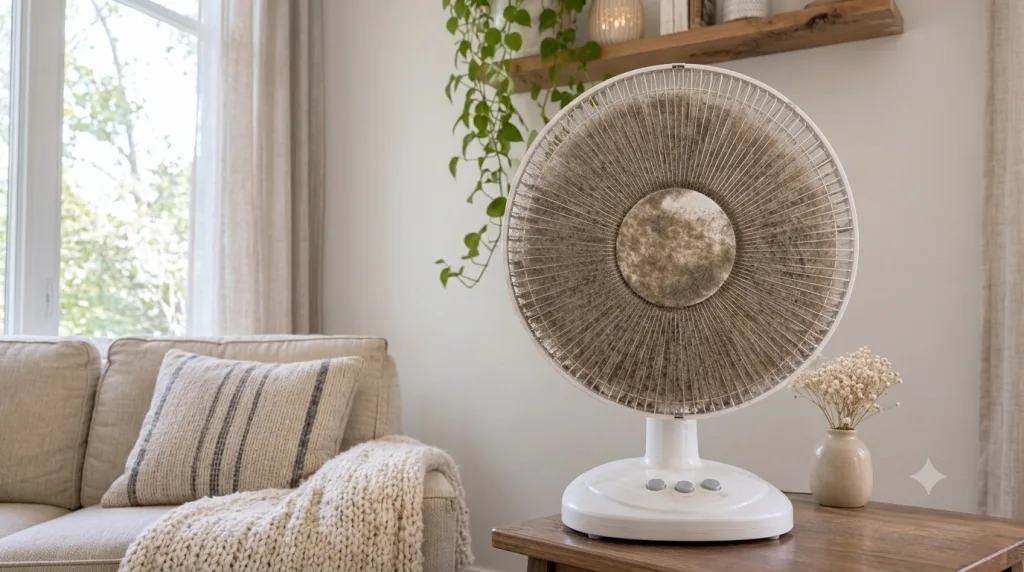
Most of us scrub the kitchen counters and vacuum the living room during spring cleaning, but the appliances we use every day often get overlooked. A desk fan is a perfect example. It runs for hours, pulls air across the room, and quietly collects dust, pet hair, and lint on its grille and center cap. Before you know it, the fan is spreading the same dust it was supposed to help clear.
Why Fans Get So Dirty
A fan works by drawing air through its housing. Every breath of air carries tiny particles, and those particles stick to the metal wires and plastic blades. Static electricity makes the problem worse, because it pulls dust toward the fan’s surfaces. Indoor dust is made up of skin flakes, fabric fibers, and pollen, so a dirty fan can also make allergy symptoms feel worse.
What You Need
- Dry microfiber cloth
- Soft brush or old toothbrush
- Vacuum with a brush attachment
- Mild dish soap and warm water
- Cotton swabs for tight corners
Step-by-Step: How to Clean a Desk Fan
- Unplug the fan. Never clean a fan while it is connected to power.
- Remove the grille. Most desk fans twist or snap off. Take a photo first so you remember how it goes back together.
- Vacuum loose dust. Use the brush attachment on the fan cage, the blades, and the motor housing.
- Brush away caked lint. A dry toothbrush loosens the stubborn grime in the wire mesh.
- Wipe with soapy water. Dampen a cloth with warm water and a drop of dish soap. Wring it out well so no water drips into the motor.
- Dry completely. Let every part air dry for several hours, or wipe it with a dry microfiber cloth until no moisture remains.
- Reassemble and test. Put the grille back on, plug the fan in, and run it on low for a minute to check the airflow.
Safety Notes
Keep water away from the motor and the electrical plug. If the fan has a damaged cord or a burning smell, stop using it and have it inspected or replaced. Do not use harsh chemical sprays on plastic, because they can make the surface brittle over time.
Make It a Quick Habit
Cleaning your fan once a month during the warm season keeps buildup under control and makes deep cleaning much faster. Pair it with a quick check of ceiling fans, range hood filters, and air vents. These small tasks add up to cleaner air and a home that feels fresh all year.
Share Your Best Cleaning Secret
Have a trick your grandmother swore by for dusty appliances or stubborn lint? Share it in the comments below, and save this guide for your next deep clean.