That stubborn brown-orange ring at the waterline is one of the most common bathroom frustrations. It builds up slowly, looks worse every week, and often resists a quick swipe with regular bowl cleaner. The good news is that two everyday pantry items, white vinegar and baking soda, can often loosen it with very little effort.
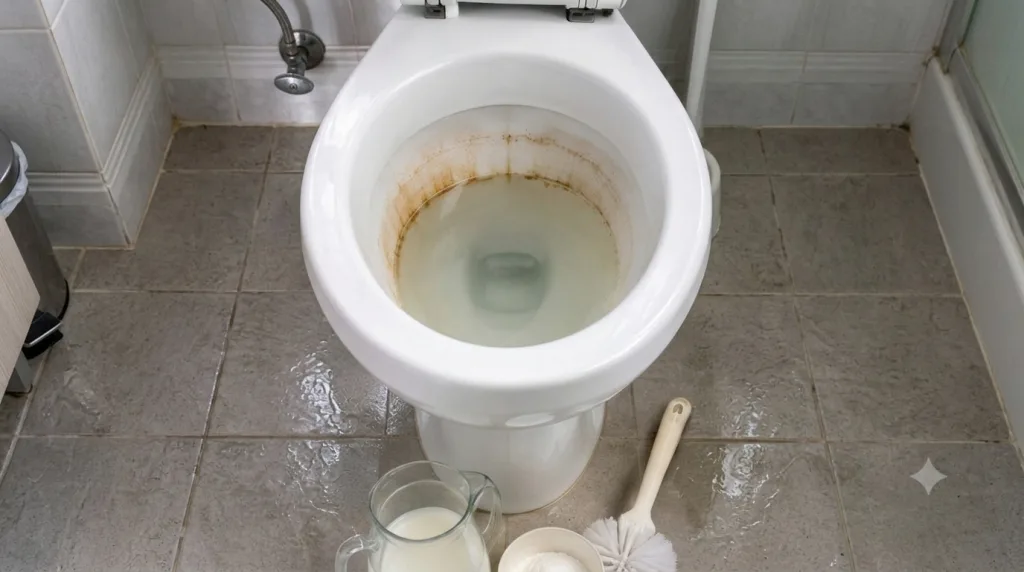
What Causes the Brown Ring in the Toilet Bowl?
Hard water contains dissolved minerals, mainly calcium and magnesium. Each time the toilet flushes, a thin film of water is left clinging to the bowl, especially at the waterline. As that water evaporates, the minerals stay behind and gradually build up. Over time, they mix with iron and other small particles in the water, which is why the ring often turns brown or orange rather than white.
Because this is mineral buildup rather than simple dirt, it usually needs a gentle acid to dissolve it and a little scrubbing to lift it away.
What You Need
- A cup of plain white vinegar
- A few tablespoons of baking soda
- A toilet brush with firm bristles
- Rubber gloves, if you prefer to keep your hands covered
Step-by-Step: How to Remove the Ring
- Pour the vinegar. Pour about one cup of white vinegar directly over the ring at the waterline. Try to get it right on the mark so the acid stays in contact with the buildup.
- Add the baking soda. Sprinkle baking soda over the vinegar-soaked ring. The two ingredients react and fizz, which helps loosen the mineral deposits.
- Let it sit. Leave the mixture for about thirty minutes. Avoid flushing during this time so the solution stays where it is needed.
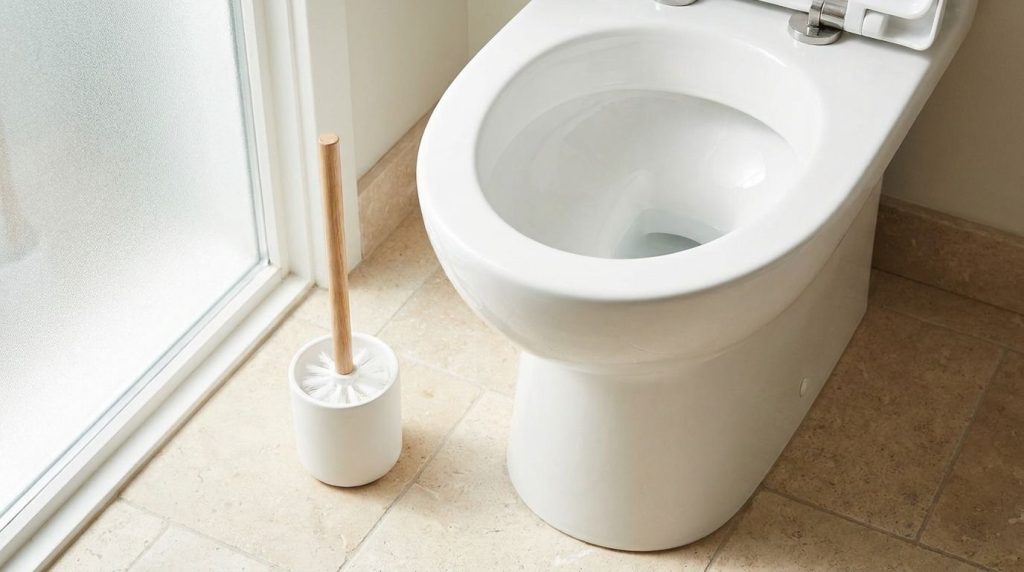
- Scrub the waterline. Use the toilet brush for a few firm strokes along the ring. In most cases, the buildup lifts away easily and leaves clean white porcelain behind.
- Flush and check. Flush once to rinse, then look closely. If a faint mark remains, repeat the process with a little more time.
Tips for Stubborn Rings
Some rings have been building up for months, so they may need a second round. Try these simple adjustments if the first attempt only partly works:
- Leave the mixture for a longer period, such as overnight, for very thick buildup.
- Use a pumice stone or a non-scratch scrubbing pad only on porcelain, and test a small hidden spot first.
- Repeat the process once or twice rather than scrubbing harder, which can wear the surface over time.
Safety Notes
Never mix vinegar with bleach or bleach-based cleaners. Doing so can release harmful fumes. If you want to use bleach, rinse the bowl thoroughly with water first and wait until it is fully clear before using any other product. Keep the bathroom ventilated while you work.
Keeping the Bowl Ring-Free
Prevention is easier than removal. Wipe the waterline once a week with a little vinegar on a cloth or brush. Flushing after each use and keeping the bowl dry between cleanings also helps reduce mineral buildup. A quick weekly habit can save you from a long scrubbing session later.
Why This Natural Method Works Well
Vinegar and baking soda are inexpensive, widely available and gentle enough for everyday use. They do not require special equipment, and they are easy to store under the sink. For many households, this simple routine is a practical way to keep the toilet bowl looking fresh without relying on heavy-duty products.