Papaya plants grow tall quickly, and once they start carrying fruit their top-heavy shape can make them lean or even snap in a strong breeze. The good news is that a little care at planting time gives your seedling a steady start. Adding a few green leaves to the bottom of the planting hole and setting a sturdy stake beside the stem are two simple steps that protect the young plant from day one.
Why Papayas Need Extra Support
Papayas have soft, hollow stems and a crown of large leaves that catch the wind. As the tree gets taller and begins to produce fruit, the weight shifts higher up, and a loose root ball can rock back and forth. Rocking damages new roots and can leave a gap around the base where water collects. A stake placed early keeps the trunk steady while the roots spread out.
What You Will Need
- A young papaya seedling, about knee high, with one healthy green stem
- A handful of fresh green leaves
- Loose garden soil or a mix of soil and compost
- A sturdy wooden stake, about as tall as the seedling
- A trowel or your hands
Step-by-Step Planting Method
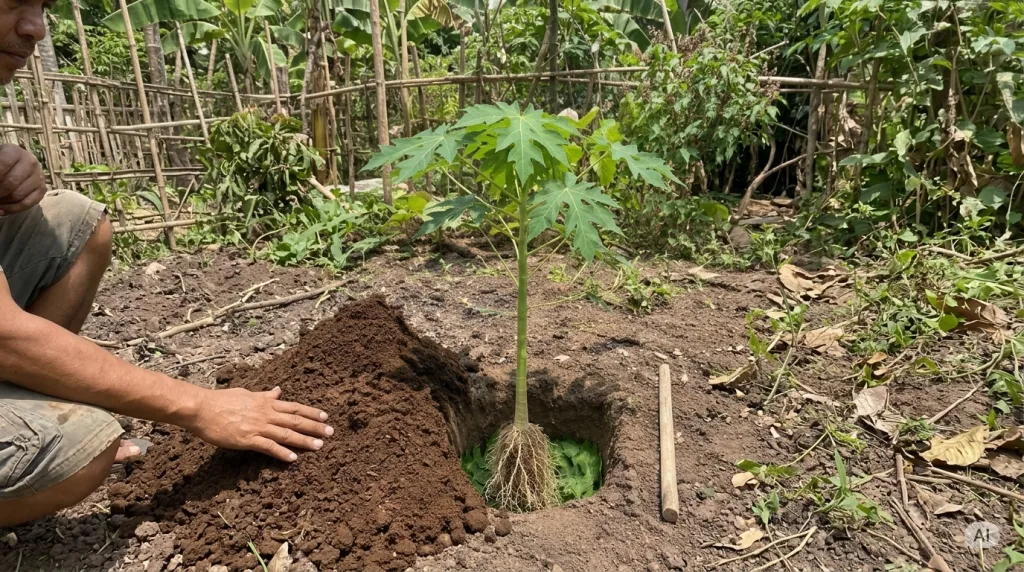
1. Dig a Wide, Round Hole
Make the hole large enough to hold the entire root ball with some room to spare. A wide hole gives the roots space to spread into loose soil.
2. Line the Bottom With Green Leaves
Place a layer of fresh green leaves in the bottom of the hole. As they break down, they feed the soil and help the roots settle in. Use them as a base rather than packing them tightly.
3. Set the Seedling Upright
Stand the plant in the middle of the hole with the root ball resting on the leaves. Check that the stem is straight from more than one side before you move on.
4. Fill and Press the Soil Firmly
Push loose soil into the hole a little at a time. Press it down gently around the root ball and the stem. Keep the plant upright while you work, and fill the hole until the surface is level. Firm soil holds the roots in place, but do not stamp so hard that you damage them.
5. Add the Stake Beside the Stem
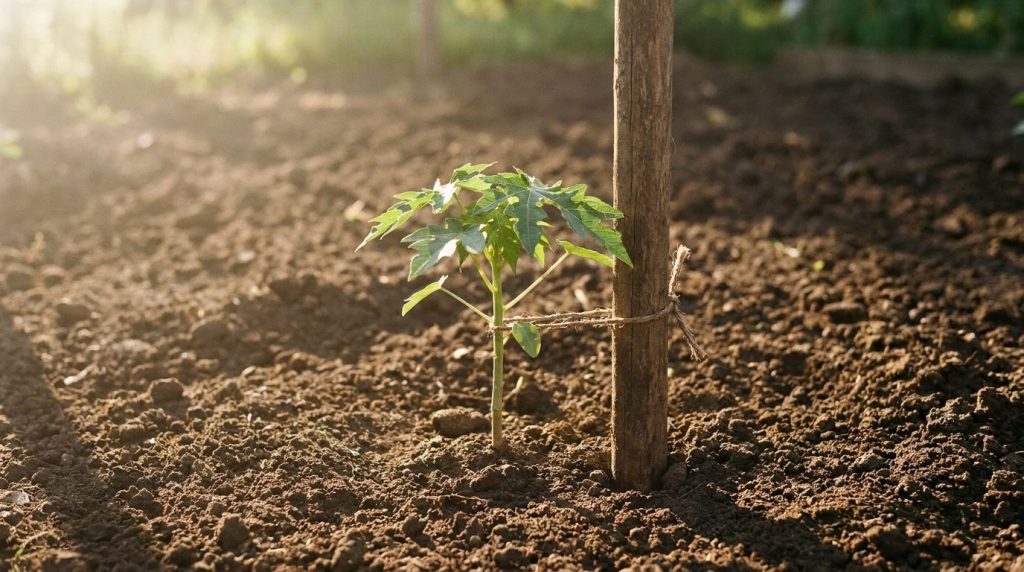
Push the wooden stake straight down into the soil a hand’s width from the stem, until it stands firm and reaches about the height of the seedling. Keep the stake close enough to support the trunk without rubbing against it. Tie the stem loosely to the stake with soft cloth or garden tape if the plant still leans.
Tips for Long-Term Success
- Check the stake and tie after strong winds and adjust them if the plant has shifted.
- Water the soil around the base rather than the leaves to keep the roots moist and steady.
- Avoid piling soil against the trunk, since this can cause the stem to rot.
- Keep weeds away from the stake so the soil stays loose and easy to check.
Final Thoughts
Planting a papaya with a layer of green leaves, firm soil, and a stake beside the stem is a simple habit that gives your tree the best chance to stand tall. Each step takes only a few minutes, and the result is a steady plant that is ready for the seasons ahead. Have you tried planting fruit trees this way? Share your experience in the comments below.