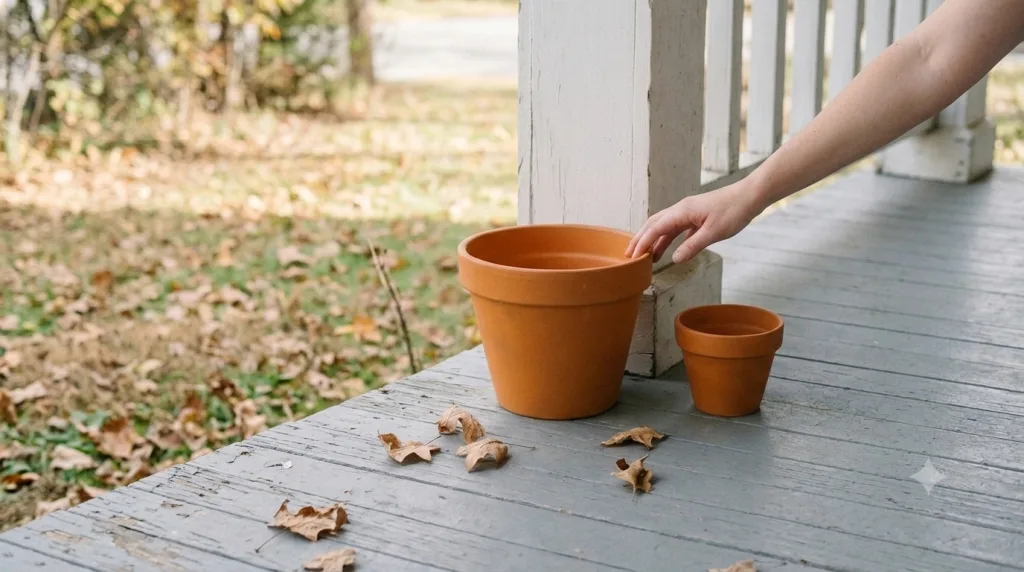
Terracotta pots are one of the best investments a porch gardener can make. They are affordable, they look warm against grey boards, and they hold plants beautifully from spring through fall. But clay has one weakness that catches many people off guard: water. When rain or melted snow collects inside an empty pot and then freezes, the expanding ice can split the clay wall. The good news is that protecting your pots takes only a few minutes and no special tools.
Why Empty Terracotta Pots Crack in Winter
Terracotta is porous, which means it absorbs moisture from the air, rain, and soil. A pot that is left standing upright collects water in its base and around its rim. When temperatures drop below freezing, that water turns to ice and expands by roughly one-tenth of its volume. Inside a rigid clay wall, that pressure has nowhere to go, so hairline cracks form and grow with each freeze and thaw cycle.
The damage often is not visible until spring. A pot that looked fine in November may break apart the first time you lift it in March. Protecting your containers before the cold arrives is far easier than replacing them later.
The Simple Fix: Tip Them on Their Sides
The most effective method is to turn empty pots on their sides so water cannot pool inside. Here is how to do it well:
-
Empty every pot completely, removing any soil, old roots, or standing water.
-
Brush out loose dirt and debris so the clay can dry quickly.
-
Tip the largest pot first and lay it on its side, with the opening facing out.
-
Lay the smaller pots beside it, also rim facing out, so rain drains straight through.
-
Set them on a flat, dry surface, or raise them slightly on bricks or wood scraps for better airflow.
Working from big to small keeps the pots stable and makes the job quicker. Once they are down, leave them alone until spring.
Other Ways to Store Your Pots
-
Store them upside down if you have a covered area, such as a shed or under a porch overhang, and the surface underneath is dry.
-
Bring them indoors to a garage, basement, or shed where temperatures stay above freezing.
-
Stack them carefully with a cloth or paper between each pot to prevent chipping, but only after they are completely dry.
Mistakes to Avoid
-
Leaving soil in the pots, which holds moisture against the clay all winter.
-
Setting pots directly on wet concrete, where they can absorb water from below.
-
Storing damp pots in a sealed bag or container, which traps moisture.
A Quick Winter Checklist
Before the first hard frost, empty your pots, clean them, lay them on their sides, and check that the surface underneath drains well. In spring, inspect each pot for cracks before refilling it with fresh potting mix. A few minutes of effort in autumn can save your favorite containers for many seasons to come.