Few houseplants feel as rewarding as a moth orchid, also called phalaenopsis. When the last blossom fades, many people assume the plant is finished. In most cases, it is not. With a clean cut, a bright spot, and a little patience, your orchid can often send up a new flower spike and bloom again.
Why Orchids Rebloom
Phalaenopsis orchids grow flower spikes from nodes, which are the small bumps along the stem. After the flowers drop, the spike may stay green for months. Some spikes will produce new blooms from a node farther down, while others stop producing flowers. Trimming the old spike gives the plant a clean starting point and helps it focus its energy on new growth.
Step One: Trim the Old Spike
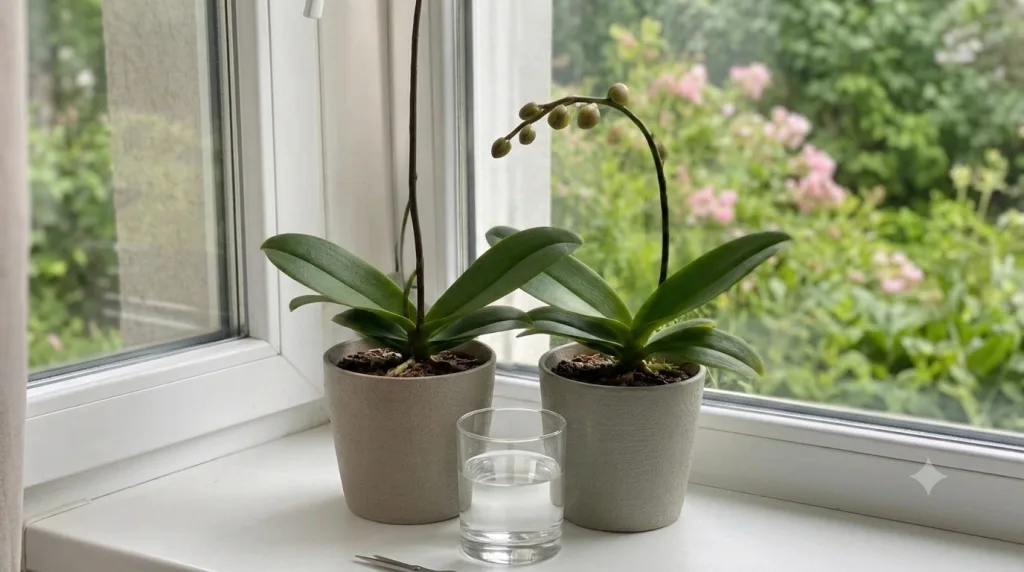
Use clean, sharp scissors or pruning shears. Wipe the blades with rubbing alcohol before you start so you do not spread germs between plants. Look for a node about a third of the way up the spike, and cut just above it. If the spike is still green, leave a short section above the cut. If it has turned brown and dry, cut it close to the base.
- Choose a node that looks plump and firm.
- Cut just above it at a slight angle.
- Set the cut piece aside so it does not stay on the sill.
Step Two: Place the Plant in the Right Light
Phalaenopsis orchids like bright, indirect light. An east-facing window or a spot a few feet back from a south or west window usually works well. Direct afternoon sun can scorch the leaves, while dim corners rarely support blooming. Rotate the pot now and then so all sides get even light.
Step Three: Keep Temperatures Steady
Orchids do well with daytime temperatures around 70 to 80°F. A drop of about 10 to 15°F at night often encourages flower spikes to form. Keep the plant away from heating vents, cold drafts, and drafty doors. Gentle, consistent conditions are more useful than extreme changes.
Step Four: Water Only When the Bark Is Nearly Dry
Overwatering is the most common problem with orchids. The bark mix should dry out between waterings. Check the bark with your finger. When it feels almost dry, pour a small amount of room-temperature water slowly over the bark around the base of the plant. Let the excess drain away, and never leave the pot sitting in water. For most homes, this means watering about once a week, though the schedule will change with light, heat, and humidity.
How Long Does It Take?
Patience matters. A new spike can take several weeks to grow, and buds may need additional time to develop. Results vary from plant to plant, so do not worry if your orchid takes a while. Healthy leaves, firm roots, and steady care are good signs that your plant is on track.
A Simple, Budget-Friendly Routine
You do not need special products to help an orchid rebloom. A pair of clean scissors, a bright window, a glass of water, and a little consistency will cover most of what it needs. This approach is practical, affordable, and easy to fit into a busy week.
Once you see that first fresh spike and its row of closed buds, you will understand why so many plant lovers keep their orchids for years. With a little care, your plant can give you another season of beautiful blooms.