Simplify Healthy Eating: Your Easy Hand Portion Guide
Navigating the world of healthy eating can sometimes feel overwhelming, especially with endless advice about calorie counting, macronutrient ratios, and strict diet plans. But what if we told you there’s a simpler, more intuitive way to manage your meals? Introducing the hand portion guide – a practical, visual method that helps you eat well without complicated calculations.
At Wellness Daily, we believe in making healthy living accessible to everyone. This guide leverages the natural tools you always have with you: your hands! It’s about understanding appropriate portion sizes for different food groups using simple, easy-to-remember hand measurements.
Why Choose the Hand Portion Method?
- No Calorie Counting: Forget tedious tracking apps and calorie diaries. This method removes the need for precise measurements, making meal planning stress-free.
- Intuitive and Natural: Your hands are proportional to your body size, making this a personalized guide that adapts to your individual needs.
- Promotes Mindful Eating: By focusing on visual cues rather than numbers, you can develop a better understanding of what a balanced plate looks like.
- Flexible and Adaptable: It works for almost any meal, whether you’re cooking at home, eating out, or preparing meals for the week.
Your Simple Hand Portion Guide
Let’s break down how your hands can help you gauge the right amount of food for each major food group:
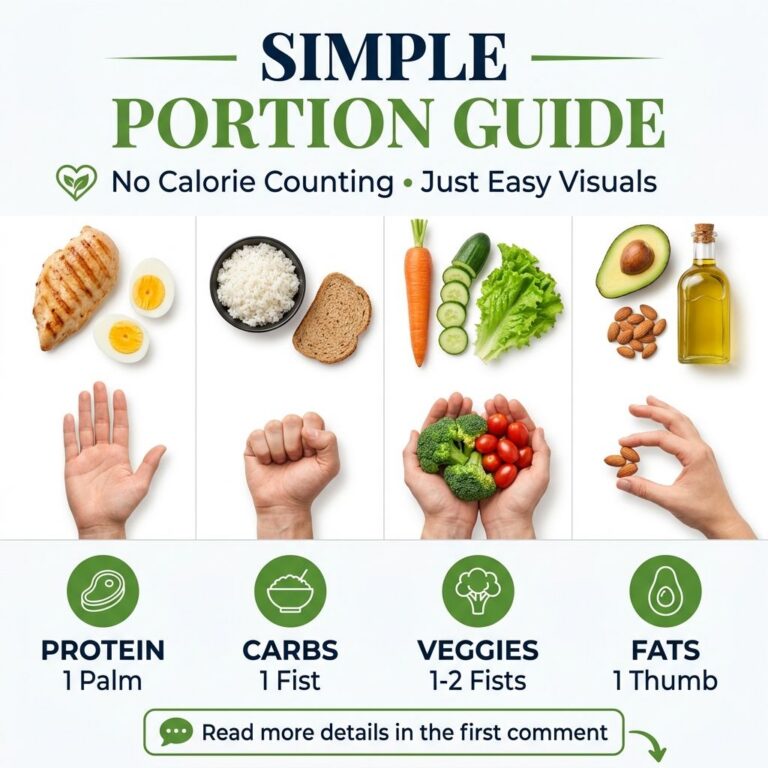
1. Protein: Your Palm
Protein is essential for building and repairing tissues, supporting muscle health, and keeping you feeling full and satisfied. Good sources include lean meats, poultry, fish, eggs, beans, and tofu.
- Portion Size: A serving of protein is roughly the size and thickness of your palm.
- What it looks like: Think of a piece of chicken breast, a fish fillet, or a serving of lentils that fits within your palm.
2. Carbohydrates: Your Cupped Fist
Carbohydrates provide your body with energy. It’s best to choose complex carbohydrates like whole grains, fruits, and starchy vegetables for sustained energy release.
- Portion Size: A serving of carbohydrates, such as rice, pasta, bread, or potatoes, is about the size of your cupped fist.
- What it looks like: Imagine the amount of cooked rice or a medium-sized baked potato that fits into your clenched fist.
3. Vegetables: Two Cupped Hands
Vegetables are packed with vitamins, minerals, and fiber, and they are generally low in calories. They should make up a significant portion of your meals.
- Portion Size: For non-starchy vegetables like leafy greens, broccoli, carrots, or cucumbers, aim for a serving that fills both of your cupped hands.
- What it looks like: A generous handful of salad, a pile of steamed green beans, or a mix of colorful bell peppers.
4. Healthy Fats: Your Thumb Tip
Healthy fats are crucial for hormone production, nutrient absorption, and overall cell function. Opt for sources like avocados, nuts, seeds, and olive oil.
- Portion Size: A serving of healthy fats, such as a tablespoon of olive oil, a small handful of nuts, or a slice of avocado, is approximately the size of your thumb tip.
- What it looks like: The amount of avocado you might spread on a piece of toast, or a small sprinkle of seeds.
Putting It All Together for Balanced Meals
Using this guide, you can start building balanced meals more easily. For example, a typical meal might include:
- One palm-sized portion of protein (e.g., grilled salmon).
- One cupped fist of carbohydrates (e.g., brown rice or quinoa).
- Two cupped hands of non-starchy vegetables (e.g., a large mixed green salad or steamed broccoli).
- A thumb-tip portion of healthy fats (e.g., a drizzle of olive oil on your salad).
Important Considerations
While this hand portion guide is a fantastic tool for simplifying healthy eating, remember a few key points:
- It’s a General Guide: This method provides a useful estimation. Individual needs may vary based on activity level, age, gender, and specific health goals.
- Listen to Your Body: Pay attention to your hunger and fullness cues. This guide is meant to support, not replace, intuitive eating.
- Focus on Quality: The type of food you choose matters just as much as the portion size. Prioritize whole, unprocessed foods.
- Consult a Professional: If you have specific dietary needs, health conditions, or require personalized nutrition advice, always consult with a healthcare professional or a registered dietitian. This information is for educational purposes only and should not be considered medical advice.
Embracing this simple hand portion guide can be a game-changer for your healthy eating journey. It empowers you to take control of your meals with confidence and ease, making wellness a sustainable part of your daily life.