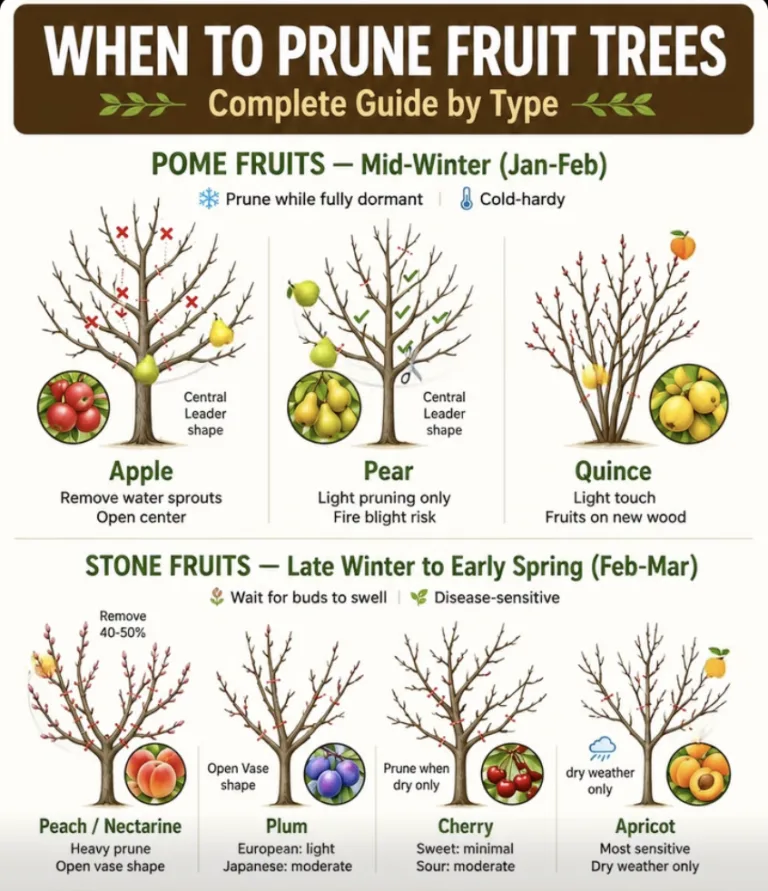
Pruning is one of the most important jobs for any fruit tree owner. Done at the right time, it encourages healthy growth, improves air circulation, increases fruit production, and helps prevent disease. However, different fruit trees require different pruning schedules, and pruning too early or too late can reduce your harvest.
This guide explains the best time to prune common fruit trees and why timing matters.
Why Pruning Fruit Trees Is Important
Proper pruning provides several key benefits:
- Encourages stronger branch structure
- Improves sunlight penetration
- Increases fruit quality and size
- Reduces the risk of fungal diseases
- Removes dead, damaged, or diseased wood
- Makes harvesting easier
- Extends the lifespan of the tree
The goal isn’t to remove as many branches as possible—it’s to help the tree grow more efficiently.
Best Time to Prune Pome Fruits
Recommended Time: Mid-Winter (January–February)
Pome fruits include:
- Apples
- Pears
- Quinces
These trees are cold-hardy and should be pruned while they are fully dormant.
Apple Trees
Apple trees respond well to winter pruning because the tree’s structure is easy to see without leaves.
Focus on:
- Removing dead or crossing branches
- Eliminating water sprouts
- Opening the canopy to improve airflow
- Maintaining a strong central leader
A well-shaped tree receives more sunlight, resulting in sweeter and healthier fruit.
Pear Trees
Pear trees generally need lighter pruning than apples.
Avoid removing too much wood because heavy pruning may encourage vigorous upright shoots and can increase susceptibility to fire blight.
Instead:
- Thin crowded branches
- Remove damaged limbs
- Maintain the central leader
Quince Trees
Quince trees require only gentle pruning.
Remove:
- Dead wood
- Weak branches
- Branches growing toward the center
Since quince fruits mainly develop on newer growth, avoid excessive pruning.
Best Time to Prune Stone Fruits
Recommended Time: Late Winter to Early Spring (February–March)
Stone fruits include:
- Peach
- Nectarine
- Plum
- Cherry
- Apricot
Unlike apples and pears, these trees are more sensitive to disease and are best pruned when buds begin to swell and dry weather is expected.
Peach and Nectarine Trees
Peaches produce fruit on one-year-old wood, making annual pruning essential.
Many growers remove 40–50% of the previous year’s growth each season.
Use an open vase shape, which allows sunlight to reach the center of the tree and improves fruit quality.
Plum Trees
Plums vary depending on the variety.
European Plums
- Require light pruning
- Naturally develop balanced shapes
Japanese Plums
- Grow more vigorously
- Benefit from moderate thinning to prevent overcrowding
Always remove damaged or crossing branches.
Cherry Trees
Cherry trees should only be pruned during dry weather to reduce the risk of bacterial and fungal diseases.
General recommendations include:
- Sweet cherries: minimal pruning
- Sour cherries: moderate pruning
Focus on removing damaged wood and improving airflow rather than heavy shaping.
Apricot Trees
Apricots are among the most disease-sensitive fruit trees.
Prune only during warm, dry conditions to reduce the chance of fungal infections.
Remove:
- Dead wood
- Weak branches
- Crowded growth
Avoid pruning immediately before rainy weather.
General Fruit Tree Pruning Tips
No matter which fruit tree you’re growing, follow these best practices:
- Use clean, sharp pruning tools.
- Disinfect tools between trees to prevent disease spread.
- Remove dead, diseased, or broken branches first.
- Cut just outside the branch collar to promote faster healing.
- Avoid removing more than one-third of the canopy in a single year (except peaches, which tolerate heavier pruning).
- Improve airflow by thinning crowded branches.
- Remove branches that grow inward or rub against one another.
Common Pruning Mistakes
Many gardeners accidentally reduce their harvest by making these mistakes:
Pruning Too Early
Cuts made before extreme cold can expose trees to winter injury.
Pruning During Wet Weather
Moist conditions increase the risk of fungal and bacterial infections, especially in cherries and apricots.
Over-Pruning
Removing too much growth can reduce flowering, delay fruit production, and encourage excessive leafy shoots instead of fruit.
Ignoring Tree Shape
Maintaining the appropriate structure—such as a central leader for apples or an open vase for peaches—helps maximize sunlight and supports healthy fruit production.
Seasonal Pruning Calendar
January–February
- Apples
- Pears
- Quinces
February–March
- Peaches
- Nectarines
- Plums
- Cherries
- Apricots
Always choose a dry day with temperatures safely above freezing when possible.
Final Thoughts
Pruning isn’t just about making fruit trees look tidy—it’s one of the most effective ways to keep them healthy and productive for years to come. By understanding the specific needs of pome fruits and stone fruits, you can encourage stronger growth, reduce disease problems, and enjoy larger, higher-quality harvests season after season.
Remember, every cut should have a purpose. A thoughtful pruning routine, combined with proper watering, fertilizing, and pest management, will help your fruit trees thrive and reward you with delicious homegrown fruit year after year.