Unlock Your Strongest Core: The Ultimate 28-Day Ab Workout Challenge for Strength & Definition
Are you ready to sculpt a stronger, more resilient core? Do you dream of that feeling of confidence that comes with a toned midsection, not just for aesthetics, but for a powerful foundation that supports your entire body and active lifestyle? At Remedies Wellness, we believe in empowering you with practical, effective strategies for real, sustainable results. That’s why we’re thrilled to introduce our 28-Day Ab Workout Challenge – your blueprint to building serious core strength, enhancing endurance, and fostering consistent workout habits right from your home!
Forget the quick fixes and unrealistic promises. This challenge isn’t about guaranteeing a ‘six-pack’ in a mere 28 days (because visible abdominal muscles, while a great goal, depend on a multitude of factors like body fat percentage, nutrition, genetics, sleep, and overall activity level). Instead, this is about laying the groundwork for a truly powerful core. We’re focusing on targeted, effective exercises that will strengthen your rectus abdominis, obliques, and transverse abdominis, improving your posture, boosting athletic performance, and giving you that internal strength you crave.
Over the next four weeks, we’ll guide you through a progressive series of bodyweight ab exercises, designed to challenge you safely and effectively. You’ll learn proper technique, understand which muscles you’re engaging, and discover how to integrate core training into a holistic healthy lifestyle. Let’s dive in and transform your core from the inside out!

Table of Contents
- Why Core Training Matters
- Understanding Your Core Muscles
- Essential Core Exercises for Your 28-Day Challenge
- Beginner Modifications: Building Your Foundation
- Your 28-Day Core Challenge: Weekly Training Plan
- Fueling Your Core: Nutrition for Optimal Results
- Common Mistakes to Avoid on Your Core Journey
- The Power of Rest: Recovery for a Stronger Core
- Frequently Asked Questions (FAQs)
- Final Thoughts: Embrace Your Strongest Self
- Disclaimer
Why Core Training Matters
When you think of ‘core workout,’ many people immediately visualize a ‘six-pack.’ While that’s a common aspiration, the importance of a strong core extends far beyond aesthetics. Your core is essentially the powerhouse of your body, connecting your upper and lower halves. It’s involved in almost every movement you make, from bending down to tie your shoes to lifting heavy objects at the gym.
Here’s why dedicating time to core strengthening is non-negotiable for anyone pursuing a healthy, active lifestyle:
- Improved Posture: A strong core helps stabilize your spine, preventing slouching and promoting an upright, confident posture. This can alleviate strain on your back and neck.
- Reduced Back Pain: Many instances of lower back pain are linked to a weak core. Strengthening these muscles provides better support for your spine, significantly reducing discomfort.
- Enhanced Athletic Performance: Whether you’re running, cycling, weight training, or playing sports, a robust core translates to better balance, stability, power transfer, and efficiency of movement. It’s the foundation for all functional strength.
- Injury Prevention: A stable core protects your spine and joints from excessive strain during physical activity and daily tasks. It helps absorb impact and maintain proper body alignment.
- Better Balance and Stability: Your core muscles are crucial for maintaining balance, especially as you age. Strong core muscles help prevent falls and improve overall coordination.
- Functional Strength for Daily Life: From carrying groceries to playing with kids, everyday movements become easier and safer with a strong core. It truly enhances your quality of life.
Understanding Your Core Muscles
To effectively train your core, it helps to understand the key muscle groups involved. Your core is a complex network, not just the ‘abs’ you see in the mirror. Here are the primary players:
- Rectus Abdominis: This is the muscle responsible for that ‘six-pack’ appearance. It runs vertically down the front of your abdomen and its main function is spinal flexion (bending forward) and stabilizing the trunk.
- Obliques (Internal and External): Located on the sides of your waist, these muscles are crucial for rotation, lateral flexion (side bending), and protecting your spine. They create that V-shape at the lower abdomen.
- Transverse Abdominis (TVA): Often called your body’s natural ‘corset,’ the TVA is the deepest abdominal muscle. It wraps around your spine and pelvis, providing stability, compressing abdominal contents, and playing a vital role in breathing and proper posture. Training the TVA is key for a truly strong and stable core.
- Erector Spinae: While primarily a back muscle, this group runs along your spine and works in conjunction with your abdominal muscles to provide stability and maintain an upright posture. A balanced core workout includes back strengthening.
Our 28-Day Challenge exercises are strategically chosen to engage all these crucial core muscles, ensuring a comprehensive and effective abdominal workout.
Essential Core Exercises for Your 28-Day Challenge
These six bodyweight ab exercises form the backbone of your 28-Day Core Challenge. Focus on controlled movements, feeling the contraction in your core, and maintaining proper form over speed.
Exercise #1: Heel Touch

How to Perform:
- Lie on your back with your knees bent, feet flat on the floor, hip-width apart.
- Extend your arms straight alongside your body, palms down, or slightly out to the sides.
- Lift your head and shoulders slightly off the floor, engaging your core. Your lower back should remain pressed against the mat.
- Keeping your core tight, slowly reach your right hand towards your right heel.
- Return to the center, then immediately reach your left hand towards your left heel.
- Continue alternating sides in a controlled, rhythmic motion.
Muscles Activated:
- Primary: Obliques (internal and external)
- Secondary: Rectus Abdominis
Recommended Repetitions:
- Beginner: 2-3 sets of 10-12 touches per side
- Intermediate: 3-4 sets of 15-20 touches per side
- Challenge Goal: Aim for 3-4 sets of 20-25 controlled touches per side.
Pro Tip:
Focus on squeezing your obliques and leading with your shoulder, not just your hand. Keep your chin slightly tucked to protect your neck. The movement should be slow and deliberate, not a quick swing.
Exercise #2: Sit-Ups

How to Perform:
- Lie on your back with your knees bent, feet flat on the floor (you can hook them under a stable object or have a partner hold them for stability, though it’s better to try without).
- Place your hands behind your head with elbows wide, or cross them over your chest. Avoid pulling on your neck.
- Engage your core and slowly curl your torso up towards your knees, lifting your head, then shoulders, then upper back off the floor.
- Focus on using your abdominal muscles to lift your body, rather than momentum.
- Once you reach a seated position, slowly lower yourself back down, vertebra by vertebra, in a controlled manner.
Muscles Activated:
- Primary: Rectus Abdominis, Hip Flexors
- Secondary: Obliques
Recommended Repetitions:
- Beginner: 2-3 sets of 8-12 repetitions
- Intermediate: 3-4 sets of 12-15 repetitions
- Challenge Goal: Aim for 3-4 sets of 15-20 controlled sit-ups.
Pro Tip:
Instead of thinking about sitting up, imagine pulling your belly button towards your spine and curling your body. Control the eccentric (lowering) phase to maximize muscle engagement. If you feel strain in your lower back, try reducing your range of motion or switching to crunches.
Exercise #3: Russian Twist

How to Perform:
- Sit on the floor with your knees bent and feet flat. Lean back slightly, maintaining a straight spine and engaging your core.
- Lift your feet off the floor, crossing your ankles if preferred, balancing on your sit bones.
- Clasp your hands together or hold a light weight (like a water bottle) in front of your chest.
- Keeping your core tight and back straight, slowly twist your torso to the right, bringing your hands towards the floor beside your hip.
- Return to the center, then twist to the left.
- Continue alternating sides in a smooth, controlled motion.
Muscles Activated:
- Primary: Obliques (internal and external), Rectus Abdominis
- Secondary: Transverse Abdominis, Hip Flexors
Recommended Repetitions:
- Beginner: 2-3 sets of 8-12 twists per side
- Intermediate: 3-4 sets of 15-20 twists per side
- Challenge Goal: Aim for 3-4 sets of 20-25 controlled twists per side (or 40-50 total twists per set).
Pro Tip:
The rotation should come from your torso, not just your arms. Keep your core braced to protect your lower back. For more intensity, extend your legs further or hold a heavier weight. Avoid arching your back; maintain a slight crunch throughout the movement.
Exercise #4: Leg Raise

How to Perform:
- Lie on your back with your legs straight and arms extended by your sides, palms down, or hands tucked lightly under your glutes for lower back support.
- Engage your core to press your lower back firmly into the floor. This is crucial to prevent arching.
- Keeping your legs straight (a slight bend in the knee is okay if needed), slowly lift them towards the ceiling until they are perpendicular to the floor, or as high as you can without your lower back lifting.
- Slowly lower your legs back down towards the floor, stopping just before they touch the ground to maintain tension in your core.
- Reverse the movement and repeat.
Muscles Activated:
- Primary: Rectus Abdominis (especially lower portion), Hip Flexors
- Secondary: Transverse Abdominis
Recommended Repetitions:
- Beginner: 2-3 sets of 8-10 repetitions
- Intermediate: 3-4 sets of 12-15 repetitions
- Challenge Goal: Aim for 3-4 sets of 15-20 controlled leg raises.
Pro Tip:
The key to this exercise is keeping your lower back pressed into the floor throughout the movement. If your back arches, reduce the range of motion (don’t lower your legs as far) or bend your knees more. Move slowly and deliberately to maximize core engagement and prevent injury.
Exercise #5: Knee Pull-Ins
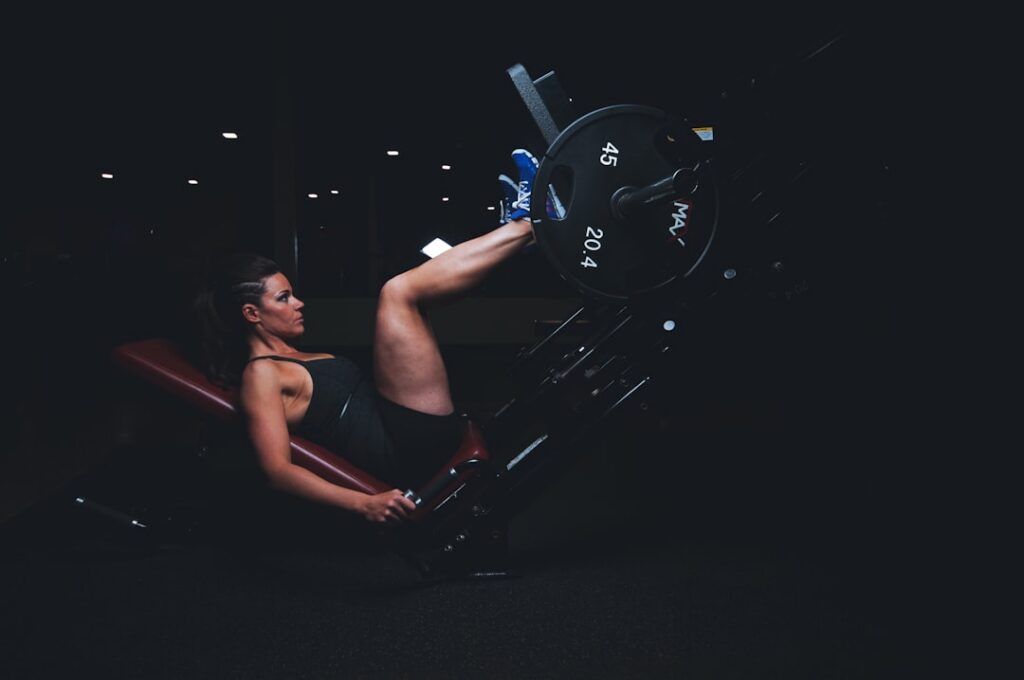
How to Perform:
- Sit on the floor with your hands placed on the floor slightly behind your hips, fingers pointing forward or to the sides. Lean back slightly, engaging your core, and extend your legs straight out in front of you, slightly off the floor.
- Engage your abdominal muscles and simultaneously pull your knees towards your chest while crunching your upper body slightly forward.
- Hold the contraction for a moment.
- Slowly extend your legs back out and lean back slightly to the starting position, maintaining tension in your core.
- Repeat the movement in a controlled manner.
Muscles Activated:
- Primary: Rectus Abdominis (especially lower portion), Obliques, Hip Flexors
- Secondary: Transverse Abdominis
Recommended Repetitions:
- Beginner: 2-3 sets of 10-12 repetitions
- Intermediate: 3-4 sets of 15-20 repetitions
- Challenge Goal: Aim for 3-4 sets of 20-25 controlled repetitions.
Pro Tip:
Focus on squeezing your abs as you pull your knees in. Try to keep your feet off the ground throughout the entire set to maintain constant tension. For an extra challenge, try lifting your hands off the floor and balancing completely on your glutes for the entire set.
Exercise #6: High Crunch

How to Perform:
- Lie on your back with your knees bent, feet flat on the floor, hip-width apart.
- Place your fingertips lightly behind your head, elbows wide, or cross your arms over your chest.
- Engage your core and gently lift only your head and shoulders off the floor, focusing on bringing your rib cage towards your hips. Your lower back should remain pressed against the mat.
- Hold the peak contraction for a second, really squeezing your upper abs.
- Slowly lower your head and shoulders back down in a controlled manner, without letting your head fully rest on the floor until the set is complete.
Muscles Activated:
- Primary: Rectus Abdominis (especially upper portion)
- Secondary: Obliques, Transverse Abdominis
Recommended Repetitions:
- Beginner: 2-3 sets of 10-15 repetitions
- Intermediate: 3-4 sets of 15-20 repetitions
- Challenge Goal: Aim for 3-4 sets of 20-25 controlled repetitions.
Pro Tip:
Avoid pulling on your neck; the movement should come from your core. Exhale as you crunch up and inhale as you lower down. Keep your gaze directed towards the ceiling to maintain a neutral spine. Focus on the quality of the contraction, not just the number of reps.
Beginner Modifications: Building Your Foundation
Everyone starts somewhere! If you find some of these exercises too challenging initially, don’t get discouraged. The key is to build a strong foundation. Here are some modifications to help you get started:
- General Tip: Focus on fewer repetitions and more sets. For example, instead of 3 sets of 15, try 5 sets of 8.
- Heel Touch: Reduce the distance you need to reach. If you can’t touch your heels, aim for your ankles or the sides of your calves.
- Sit-Ups: If full sit-ups are too much, start with **Crunches**. Lie on your back, knees bent, feet flat. Place hands behind head or across chest. Lift only your head and shoulders off the floor, focusing on squeezing your abs, then slowly lower. This minimizes hip flexor involvement and isolates the abs more.
- Russian Twist: Keep your feet on the floor. This provides more stability and reduces the demand on your core while you learn the twisting motion. As you get stronger, try lifting one foot, then both.
- Leg Raise: If keeping your legs straight is too difficult or causes lower back arching, perform **Bent-Knee Leg Raises**. Lie on your back, knees bent at 90 degrees, shins parallel to the floor. Slowly lower your bent legs towards the floor, stopping before your feet touch, and then raise them back up. Alternatively, perform **Single Leg Raises**, lowering one leg at a time.
- Knee Pull-Ins: Instead of fully extending your legs and leaning back, keep your hands on the floor for more support, or even perform them one leg at a time. You can also start by doing regular crunches and then slowly incorporate the leg movement.
- High Crunch: If lifting your head and shoulders together is difficult, focus on lifting just your head and upper shoulders slightly, ensuring your neck remains relaxed. The most important part is engaging your core.
Your 28-Day Core Challenge: Weekly Training Plan
Consistency is king when it comes to core development. This 28-day challenge is designed to progressively build your strength and endurance. We recommend performing this routine 3-4 times per week, with at least one rest day in between, or incorporating it after your main workouts.
Listen to your body. If you’re very sore, take an extra rest day or opt for active recovery (like a brisk walk or gentle stretching).
General Structure:
- Warm-up: 5 minutes of light cardio (marching in place, arm circles, torso twists) and dynamic stretches.
- Workout: Follow the prescribed sets and reps for each exercise.
- Cool-down: 5 minutes of static stretches, focusing on your abs, lower back, and hip flexors.
Progression Strategy:
Over the 28 days, aim to gradually increase the intensity. This can be done by:
- Increasing the number of repetitions within the suggested ranges.
- Adding an extra set to your routine.
- Decreasing rest time between sets (e.g., from 60 seconds to 45 seconds).
- Transitioning from beginner modifications to standard exercise versions.
- Improving your form and control with each movement.
- Holding the contraction for an extra second at the peak of each exercise.
Example Weekly Plan:
Week 1: Focus on Form & Foundation
- Perform each exercise for 2-3 sets, aiming for the lower end of the recommended rep ranges for beginners.
- Rest 60-90 seconds between sets.
- If needed, use beginner modifications liberally.
Week 2: Build Endurance
- Increase to 3 sets for each exercise.
- Aim for the middle to upper end of the recommended rep ranges for beginners/intermediate.
- Reduce rest time between sets to 45-60 seconds.
- Challenge yourself to try standard versions where possible.
Week 3: Increase Intensity
- Perform 3-4 sets for each exercise, aiming for the intermediate rep ranges.
- Reduce rest time to 30-45 seconds between sets.
- Focus on slow, controlled movements and maximizing muscle contraction.
Week 4: Maximize Effort & Consistency
- Perform 4 sets for each exercise, pushing towards the upper end of the intermediate/challenge goal rep ranges.
- Maintain short rest times.
- Integrate pro tips to enhance each exercise.
- Focus on truly engaging your deep core muscles.
Fueling Your Core: Nutrition for Optimal Results
This is where the distinction between a strong core and visible abs becomes critical. You can have the strongest abdominal muscles in the world, but if they’re covered by a layer of body fat, they won’t be visible. Nutrition plays a paramount role in reducing body fat percentage, which is the ultimate factor for achieving a defined midsection.
At Remedies Wellness, we advocate for a balanced, sustainable approach to nutrition, not restrictive dieting. Here’s how to fuel your core development:
- Prioritize Protein: Protein is essential for muscle repair and growth, and it also helps you feel full and satisfied. Include lean protein sources like chicken breast, fish, eggs, lean beef, legumes, and protein powder in every meal.
- Embrace Complex Carbohydrates: These provide sustained energy for your workouts and daily activities. Opt for whole grains (oats, brown rice, quinoa), sweet potatoes, and plenty of fruits and vegetables. Avoid refined sugars and highly processed carbs which can contribute to fat storage.
- Healthy Fats Are Your Friends: Don’t shy away from healthy fats. They are crucial for hormone production, nutrient absorption, and satiety. Think avocados, nuts, seeds, olive oil, and fatty fish.
- Hydration is Key: Drinking plenty of water is vital for metabolic function, muscle performance, and overall health. Aim for at least 8 glasses a day, more if you’re active.
- Calorie Awareness (Not Obsession): To reduce body fat, you generally need to be in a slight calorie deficit (consuming fewer calories than you burn). This doesn’t mean starving yourself, but making mindful choices and tracking your intake if necessary. Focus on nutrient-dense foods that provide high nutritional value for fewer calories.
- Fiber-Rich Foods: Foods high in fiber (fruits, vegetables, whole grains) aid digestion, help regulate blood sugar, and contribute to feelings of fullness, which can support fat loss efforts.
- Limit Processed Foods and Sugary Drinks: These are often calorie-dense and nutrient-poor, contributing to body fat and hindering your progress. Focus on whole, unprocessed foods as much as possible.
- Consistency: Just like with your workouts, consistency in your eating habits will yield the best results over time. Small, sustainable changes add up to big impacts.
Common Mistakes to Avoid on Your Core Journey
Even with the best intentions, it’s easy to fall into common traps that can hinder your progress or even lead to injury. Be mindful of these pitfalls:
- Sacrificing Form for Speed/Reps: Performing exercises incorrectly can lead to ineffective workouts and potential injury, especially to the lower back. Always prioritize perfect form over doing more reps or rushing through movements.
- Holding Your Breath: Proper breathing is crucial. Exhale during the exertion phase (e.g., as you crunch up) and inhale during the recovery phase (as you lower). Holding your breath can raise blood pressure and reduce oxygen flow.
- Ignoring Other Core Muscles: Only focusing on the rectus abdominis (the ‘six-pack’ muscle) and neglecting obliques and the transverse abdominis leads to an imbalanced core. Our challenge aims for comprehensive engagement.
- Over-training: Your core muscles need rest to recover and grow, just like any other muscle group. Working them intensely every single day without proper recovery can lead to burnout, diminished performance, and increased risk of injury.
- Believing in Spot Reduction: You cannot ‘spot reduce’ fat from your belly by doing thousands of crunches. While abdominal exercises strengthen your core, fat loss occurs systemically throughout your body. Nutrition and overall activity are key for reducing body fat.
- Neglecting Warm-ups and Cool-downs: Skipping these crucial steps can lead to muscle stiffness, decreased flexibility, and a higher risk of injury.
- Not Listening to Your Body: Pain is your body’s way of telling you something is wrong. Distinguish between muscle fatigue and sharp pain. If you feel pain, stop the exercise and assess your form or take a break.
The Power of Rest: Recovery for a Stronger Core
Often overlooked, recovery is just as vital as your workouts. It’s during rest that your muscles repair, rebuild, and grow stronger. Neglecting recovery can lead to overtraining, fatigue, poor performance, and even injury. Integrate these recovery tips into your 28-Day Challenge:
- Prioritize Quality Sleep: Aim for 7-9 hours of quality sleep per night. Sleep is when your body undergoes crucial repair processes, including muscle regeneration and hormone regulation.
- Take Rest Days: Follow the recommended training plan that includes rest days. These days allow your muscles to recover and prevent overtraining.
- Stay Hydrated: Water is essential for every bodily function, including nutrient transport to muscles, waste removal, and joint lubrication. Continue to drink plenty of water on rest days.
- Incorporate Active Recovery: On your