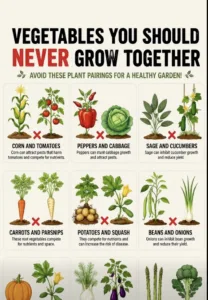
A thriving vegetable garden isn’t just about sunlight, water, and healthy soil—it’s also about choosing the right plant companions. While some vegetables help each other grow, others compete for nutrients, attract the same pests, or even release natural chemicals that slow nearby plants.
If you want bigger harvests and healthier plants, avoid these common pairings.
🌽 1. Corn and Tomatoes
Corn and tomatoes may seem like a natural summer combination, but they share one major problem—they attract many of the same insect pests, including corn earworms and tomato fruitworms.
Corn also grows tall, reducing sunlight and competing with tomatoes for water and nutrients.
Better choice: Grow tomatoes with basil or marigolds instead.
🫑 2. Peppers and Cabbage
Peppers and cabbage have different growing habits and nutrient needs.
Cabbage is a heavy feeder and can compete with peppers for essential nutrients. Both can also attract garden pests that spread quickly between plants.
Better choice: Plant peppers near herbs like basil or oregano.
🌿 3. Sage and Cucumbers
Although sage is a wonderful culinary herb, it isn’t an ideal neighbor for cucumbers.
Many gardeners believe sage can slow cucumber growth, and cucumbers generally prefer companion herbs like dill or oregano instead.
Better choice: Pair cucumbers with dill, nasturtiums, or beans.
🥕 4. Carrots and Parsnips
These root vegetables belong to the same family and often compete for underground space.
They can also attract similar insect pests and soil diseases, increasing the chance of problems during the growing season.
Better choice: Rotate these crops into different beds each year.
🥔 5. Potatoes and Squash
Potatoes require plenty of nutrients, while squash spreads aggressively across the garden.
Growing them together can increase competition for water and nutrients, and crowded conditions may encourage fungal diseases.
Better choice: Give each crop plenty of space.
🧅 6. Beans and Onions
Beans naturally add nitrogen to the soil through beneficial bacteria attached to their roots.
Onions and other alliums can interfere with this process and may reduce bean growth when planted too closely.
Better choice: Plant onions with carrots or lettuce instead.
🌱 Why Companion Planting Matters
Choosing compatible vegetables can provide many benefits:
- ✅ Better plant growth
- ✅ Fewer pests
- ✅ Improved airflow
- ✅ Reduced disease pressure
- ✅ Higher yields
- ✅ Healthier soil
Good garden planning often produces better results than simply planting wherever space is available.
🌼 Remember: Gardening Isn’t Always Black and White
While these pairings are commonly discouraged, results can vary depending on your climate, soil quality, spacing, and gardening methods. Many experienced gardeners successfully grow some of these plants together by providing enough distance and maintaining healthy soil.
Think of these combinations as general guidelines, not absolute rules.
🌿 Final Thoughts
A successful vegetable garden starts with smart planning. Avoiding incompatible plant pairings can help reduce pest problems, improve plant health, and increase your harvest throughout the season.
Before planting this year, take a few minutes to map out your garden—you’ll likely enjoy stronger plants and a more productive harvest.
Which vegetable pairing surprised you the most? Share your experience in the comments and help fellow gardeners grow smarter! 🌱