Every day, we make countless choices about what to eat. These decisions, seemingly small, profoundly impact our energy levels, overall health, and even our future well-being. But with so many options available, how do we know what truly fuels our body and what might be holding us back? The answer often lies in understanding the fundamental difference between processed foods and whole foods.
Not all foods are created equal, and discerning between highly processed options and nutrient-rich whole foods is a cornerstone of a healthy lifestyle. This guide will help you understand the key distinctions and empower you to make more informed choices that support your health journey.
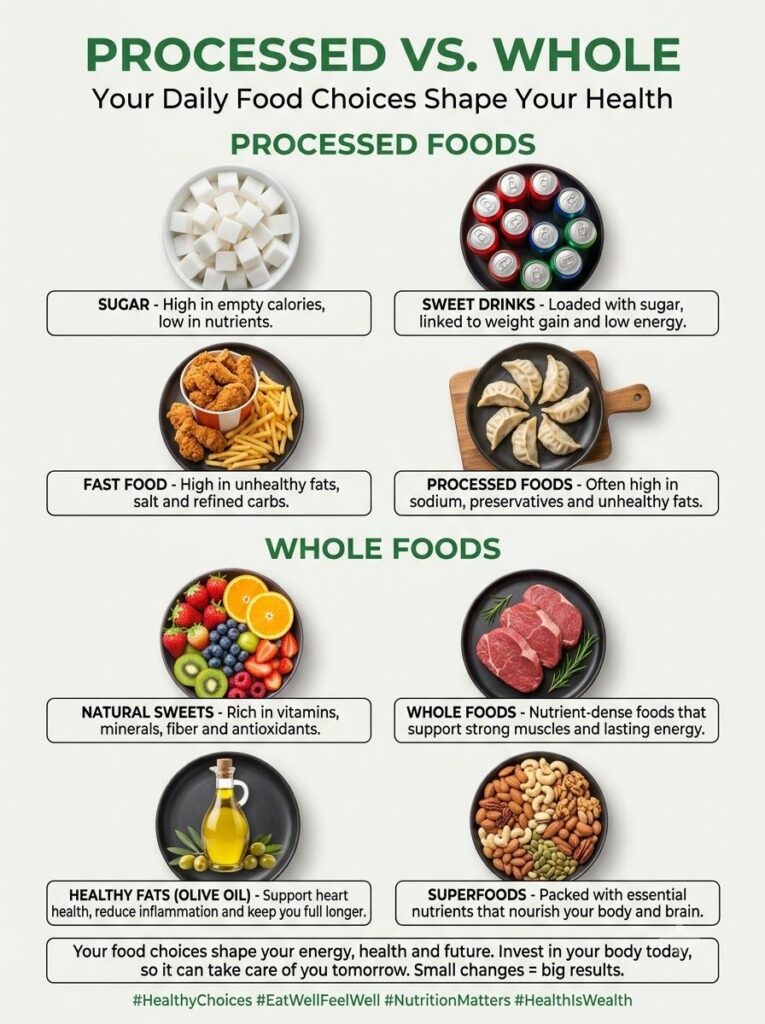
What Are Processed Foods?
Processed foods are any foods that have been altered from their natural state. This can range from minimally processed items like pre-cut vegetables to heavily processed products found in packages and fast-food restaurants. While some processing is necessary for safety and convenience (like pasteurizing milk), it’s the ultra-processed foods that raise health concerns.
Characteristics of Ultra-Processed Foods:
- High in Added Sugars: Often contain significant amounts of added sugars, contributing to weight gain and chronic diseases.
- High in Unhealthy Fats: Typically contain trans fats or unhealthy saturated fats, linked to heart disease.
- High in Sodium: Excessive sodium intake can lead to high blood pressure.
- Low in Fiber: Processing often removes beneficial fiber, crucial for digestion and satiety.
- Artificial Ingredients: Include artificial flavors, colors, preservatives, and sweeteners that offer no nutritional value.
- Long Shelf Life: Designed to last for extended periods, often at the expense of fresh nutrients.
Examples and Their Impact:
- Sweet Drinks (Soda, Juice Concentrates): Packed with sugar, they offer empty calories and contribute to obesity and type 2 diabetes.
- Fast Food (Fried Chicken, Fries): High in unhealthy fats, sodium, and calories, leading to increased risk of heart disease and weight issues.
- Packaged Snacks (Chips, Cookies): Typically low in nutrients and high in unhealthy fats, sugar, and salt, leading to cravings and overeating.
- Processed Meats (Sausages, Deli Meats): Often high in sodium, unhealthy fats, and preservatives, linked to increased risk of certain cancers and heart disease.
Consuming too many processed foods can lead to energy crashes, weight gain, inflammation, and an increased risk of chronic conditions like heart disease, diabetes, and some cancers.
What Are Whole Foods?
Whole foods are foods that are as close to their natural state as possible, meaning they have undergone minimal to no processing. They are rich in essential nutrients, fiber, and beneficial compounds that work synergistically to support optimal health.
Characteristics of Whole Foods:
- Naturally Nutrient-Dense: Packed with vitamins, minerals, antioxidants, and phytochemicals.
- High in Fiber: Naturally rich in dietary fiber, promoting healthy digestion, satiety, and blood sugar regulation.
- Free from Artificial Additives: Contain no artificial colors, flavors, preservatives, or sweeteners.
- Healthy Fats: Provide naturally occurring healthy fats essential for brain health and nutrient absorption.
- Balanced Energy Release: Their complex carbohydrate and fiber content ensures a steady release of energy, preventing spikes and crashes.
Examples and Their Benefits:
- Fruits (Berries, Kiwi, Oranges): Bursting with vitamins, antioxidants, and natural sugars, they boost immunity and provide sustained energy.
- Vegetables (Leafy Greens, Broccoli, Bell Peppers): Rich in fiber, vitamins, and minerals, supporting every bodily function and disease prevention.
- Lean Proteins (Raw Steak, Fish, Chicken, Legumes): Essential for muscle repair, growth, and satiety, providing sustained energy.
- Healthy Fats (Olive Oil, Avocados, Nuts, Seeds): Crucial for hormone production, nutrient absorption, and heart health.
- Whole Grains (Oats, Quinoa, Brown Rice): Provide complex carbohydrates for long-lasting energy and abundant fiber for digestive health.
A diet rich in whole foods supports sustained energy, a healthy weight, improved mood, stronger immunity, and significantly reduces the risk of chronic diseases.
Making the Shift: Practical Tips for Healthier Choices
Transitioning from a diet heavy in processed foods to one rich in whole foods might seem daunting, but even small changes can make a big difference. Here are some practical tips:
-
Prioritize Produce:
Make fruits and vegetables the stars of your meals. Aim to fill half your plate with colorful produce at every meal.
-
Read Labels Carefully:
When you do buy packaged foods, check the ingredients list. Opt for items with short ingredient lists that you recognize and can pronounce. Avoid products with added sugars, unhealthy fats, and artificial ingredients.
-
Cook More at Home:
Preparing meals yourself gives you complete control over the ingredients. Experiment with simple, whole-food recipes.
-
Smart Snacking:
Swap processed snacks like chips and cookies for whole food alternatives such as nuts, seeds, fresh fruit, or Greek yogurt.
-
Hydrate with Water:
Ditch sugary drinks and opt for water, herbal tea, or naturally infused water (with fruits and herbs) instead.
-
Plan Ahead:
Meal prepping or simply planning your meals for the week can help you stick to healthier choices and reduce reliance on convenient, processed options.
Your daily food choices truly shape your health. By understanding the profound difference between processed and whole foods, and by making conscious, informed decisions, you empower yourself to build a healthier, more vibrant future. Start today, one whole food choice at a time!