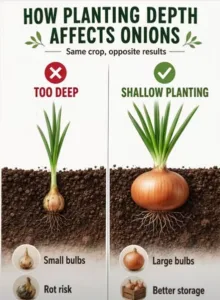
Planting depth may seem like a small detail, but it can make a noticeable difference in how onions grow. When onion bulbs are buried too deeply, they may struggle to expand properly. Shallow planting, however, gives the developing bulb more room to form above the soil surface.
What Happens When Onions Are Planted Too Deep?
Onion plants need loose soil and enough space around the bulb. When they are planted too deeply, the surrounding soil can restrict bulb development.
Common problems may include:
- Smaller onion bulbs
- Slower bulb formation
- Excess moisture around the bulb
- A higher chance of softening or rotting
- More difficult harvesting
The leaves may still look healthy, but the bulb underneath the soil can remain surprisingly small.
Why Shallow Planting Works Better
Onions are different from root vegetables such as carrots. The bulb is designed to expand close to the soil surface rather than deep underground.
With proper shallow planting:
- The bulb has more room to expand
- Air can circulate around the upper part of the onion
- Excess moisture is less likely to remain around the bulb
- Harvesting becomes easier
- Fully developed onions may store better after curing
As the onion grows, it is normal for part of the bulb to become visible above the soil.
How to Plant Onions Correctly
Prepare a sunny garden bed with loose, well-draining soil. Place the onion set or young transplant into the soil with the roots facing downward and the pointed growing tip facing upward.
Cover the roots and the lower section of the bulb gently. Avoid burying the entire bulb under a thick layer of soil.
After planting, water carefully to settle the soil around the roots. Keep the bed consistently moist during early growth, but avoid leaving the onions in soggy soil.
Do Not Cover Expanding Bulbs
Gardeners sometimes add extra soil around onions when the bulbs begin appearing above the ground. However, this can restrict expansion and trap moisture.
Allow the bulb to develop naturally near the surface. Keep the surrounding area free from weeds so the onions do not have to compete for water, nutrients, and sunlight.
Extra Tips for Bigger Onion Bulbs
For better results, give each onion enough space to grow. Crowded onions often compete with one another and may remain smaller.
Onions also benefit from:
- Plenty of direct sunlight
- Loose, fertile soil
- Regular but controlled watering
- Good drainage
- Proper spacing
- Reduced watering as harvest approaches
Growing conditions, onion variety, climate, and planting time can also affect the final bulb size.
Final Thoughts
The difference between a small onion and a large, well-developed bulb may begin with planting depth. Planting onions too deeply can restrict growth and increase moisture-related problems, while shallow planting allows the bulb to expand more naturally.
Remember this simple rule: cover the roots, but do not deeply bury the developing bulb.
Have you ever compared deep-planted onions with shallow-planted ones? Share your experience in the comments! 🧅🌱