Ever woken up feeling a bit puffy, or noticed your rings feel tighter than usual? This common experience is often due to water retention, also known as edema, where excess fluid builds up in your body’s tissues. While many factors can contribute to fluid imbalance, your daily food choices play a significant role. Understanding which foods can exacerbate water retention and which can help alleviate it is key to feeling lighter and more comfortable.
This article will guide you through the dietary culprits that contribute to puffiness and reveal the natural allies that can help your body maintain a healthy fluid balance. Discover how your daily food choices can significantly impact fluid balance and help reduce everyday puffiness.
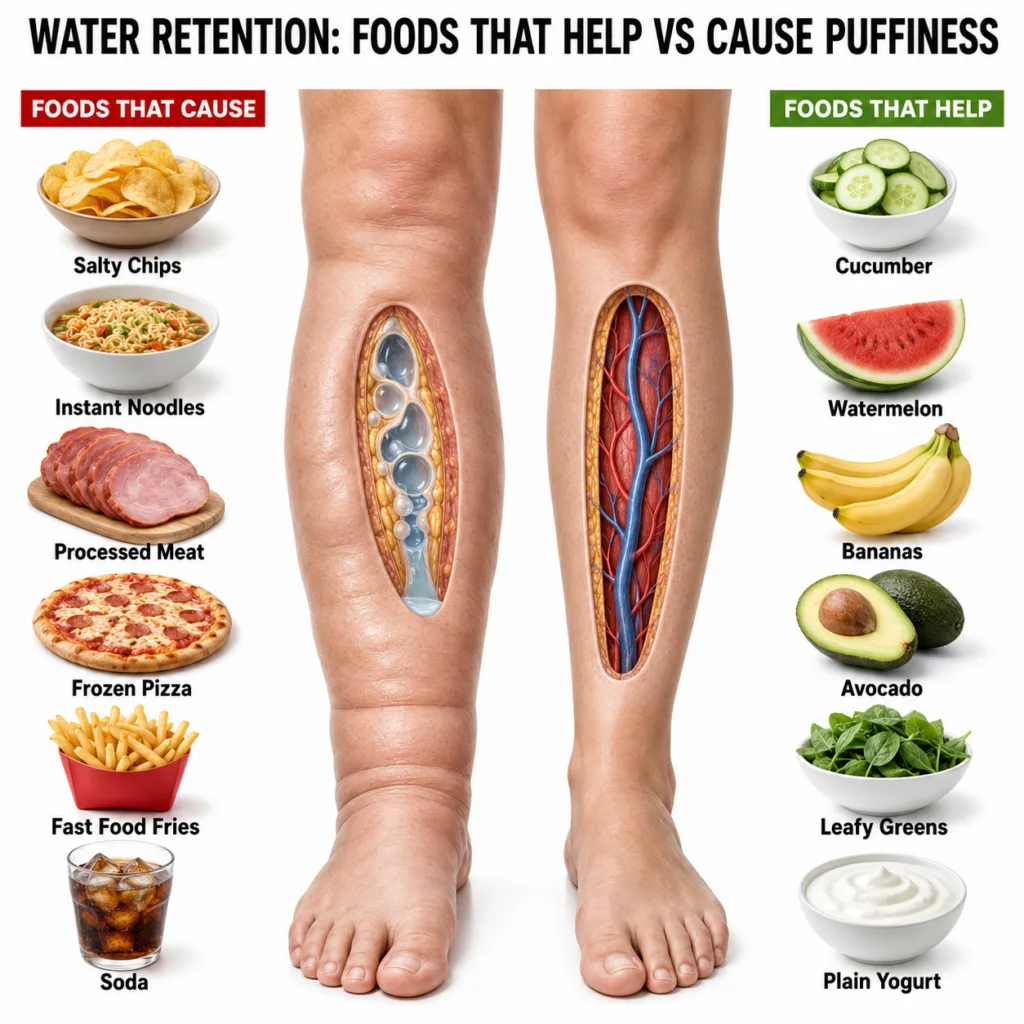
Understanding Water Retention and Its Causes
Water retention occurs when excess fluid accumulates in the circulatory system or within tissues and body cavities. While it’s often harmless and temporary, causing symptoms like swelling, bloating, and discomfort, it can sometimes indicate underlying health issues. Common dietary triggers are often related to high sodium intake, but other factors like hormonal changes, prolonged standing, and certain medications can also contribute.
Why Diet Matters for Fluid Balance
Your kidneys, in conjunction with hormones, meticulously regulate your body’s fluid levels. What you eat and drink directly influences this delicate balance. Certain foods can disrupt this system, leading your body to hold onto more water than necessary.
Foods That Can Cause Water Retention and Puffiness
Many popular convenience foods and snacks are notorious for their high sodium content and other ingredients that can encourage your body to retain water. Limiting these items is often a first step towards reducing puffiness.
1. Salty Chips and Processed Snacks
- The Culprit: High sodium content.
- Why it Causes Retention: Sodium is an electrolyte that plays a crucial role in fluid balance. When you consume too much sodium, your body retains water to maintain a balanced sodium-to-water ratio. This often leads to feelings of bloat and puffiness.
- Better Choice: Opt for low sodium snacks like unsalted nuts or fresh fruit.
2. Instant Noodles and Convenience Meals
- The Culprit: Extremely high sodium and often refined carbohydrates.
- Why it Causes Retention: These meals are designed for quick preparation and often pack a hefty dose of sodium, flavor enhancers, and preservatives, all of which can contribute to fluid retention. The refined carbs can also lead to spikes in insulin, which can affect kidney function and fluid excretion.
- Better Choice: Prepare meals at home using fresh ingredients to control sodium levels.
3. Processed Meats (Sausages, Deli Slices, Bacon)
- The Culprit: High sodium, nitrates, and other preservatives.
- Why it Causes Retention: Beyond the high sodium, processed meats often contain additives that can irritate the gut and contribute to inflammation, potentially affecting fluid regulation.
- Better Choice: Lean, unprocessed proteins like grilled chicken breast, fish, or legumes.
4. Frozen Pizza and Fast Food
- The Culprit: High in sodium, unhealthy fats, and refined carbohydrates.
- Why it Causes Retention: These meals combine multiple retention-triggering elements. The large amounts of sodium and refined carbs can lead to significant fluid shifts and bloating.
- Better Choice: Make homemade pizza with whole-wheat crust and fresh toppings, or choose healthier restaurant options.
5. Sugary Sodas and Sweetened Beverages
- The Culprit: High sugar content (fructose).
- Why it Causes Retention: High intake of refined sugars, especially fructose, can lead to insulin resistance and impact kidney function, potentially affecting the body’s ability to excrete sodium and water effectively.
- Better Choice: Water, unsweetened tea, or sparkling water with a slice of fruit.
Foods That Help Reduce Puffiness and Promote Fluid Balance
Incorporating these nutrient-rich foods into your diet can help your body naturally release excess fluid and reduce uncomfortable puffiness, thanks to their hydrating properties and beneficial electrolytes like potassium and magnesium.
1. Cucumber
- Key Benefits: High water content, silica, potassium.
- How it Helps: Cucumbers are over 95% water, making them excellent for hydration. They also contain potassium, which helps balance sodium levels, and silica, believed to aid in flushing out toxins.
- Quick Tip: Add slices to your water for a refreshing, detoxifying drink.
2. Watermelon
- Key Benefits: High water content, potassium, natural diuretic properties.
- How it Helps: This juicy fruit is packed with water and potassium, crucial for combating sodium-induced retention. Its natural diuretic properties encourage the kidneys to produce more urine, helping to flush out excess fluid.
- Quick Tip: A great snack or addition to healthy breakfast ideas.
3. Bananas
- Key Benefits: Rich in potassium.
- How it Helps: Bananas are a powerhouse of potassium, which counteracts the effects of sodium. A higher potassium intake helps your body excrete more sodium and water, reducing fluid buildup.
- Quick Tip: Enjoy a banana as a quick snack or blended into a smoothie.
4. Avocado
- Key Benefits: Potassium, healthy fats, magnesium.
- How it Helps: Avocados provide a good dose of potassium and magnesium, two minerals vital for maintaining electrolyte balance and promoting healthy fluid levels. The healthy fats also contribute to satiety and overall wellness.
- Quick Tip: Add avocado to salads, sandwiches, or high protein breakfast bowls.
5. Leafy Greens (Spinach, Kale, Lettuce)
- Key Benefits: Magnesium, potassium, water content.
- How it Helps: These nutrient-dense vegetables are excellent sources of magnesium and potassium, both of which support proper fluid balance and muscle function. Their high water content also aids in hydration.
- Quick Tip: Incorporate a variety of leafy greens into your daily meals.
6. Plain Yogurt
- Key Benefits: Probiotics, potassium, protein.
- How it Helps: While not a direct diuretic, plain yogurt provides beneficial probiotics that support a healthy gut. A healthy gut can indirectly improve overall digestion and nutrient absorption, which can influence fluid balance. It also contains potassium and protein.
- Quick Tip: Choose plain, unsweetened yogurt and add fresh fruit for flavor.
General Tips for Reducing Water Retention
- Stay Hydrated: Paradoxically, drinking enough water helps your body avoid retaining fluid. When dehydrated, your body holds onto every drop.
- Limit Sodium Intake: Read food labels carefully. Aim for less than 2,300 milligrams of sodium per day, or even lower if recommended by your doctor.
- Increase Potassium: Ensure your diet includes plenty of potassium-rich foods to balance sodium.
- Magnesium-Rich Foods: Magnesium is another electrolyte that supports fluid balance and can be found in nuts, seeds, and whole grains.
- Regular Exercise: Physical activity helps improve circulation and stimulates sweating, both of which can help reduce fluid buildup.
- Elevate Legs: If you experience swelling in your legs, elevating them can help reduce fluid accumulation.
When to Consult a Healthcare Professional
While dietary changes can often alleviate mild water retention, persistent or severe swelling, especially if accompanied by pain, skin changes, or shortness of breath, should be evaluated by a doctor. It could be a sign of an underlying medical condition.