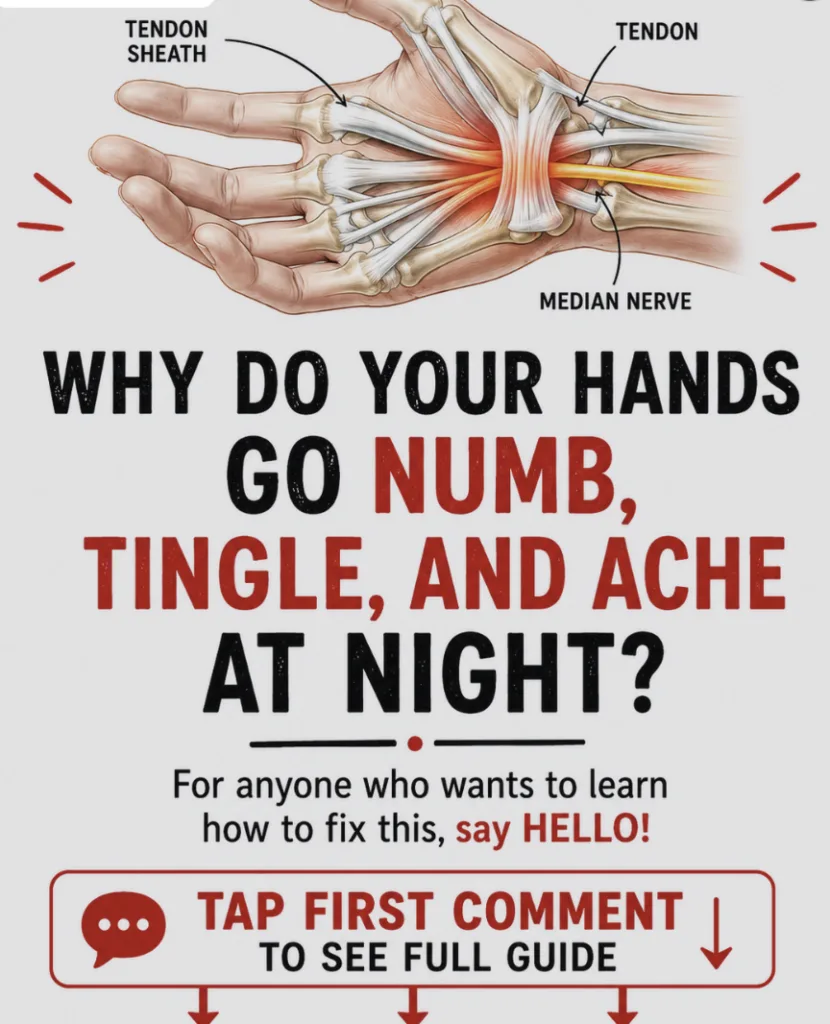
Waking up with numb, tingling, or aching hands can be frustrating. Many people experience this sensation occasionally, while others deal with it almost every night. Although sleeping in an awkward position is a common cause, persistent symptoms may indicate an underlying condition that deserves attention.
Let’s explore the most common reasons behind nighttime hand numbness and what you can do about it.
What Causes Hand Numbness at Night?
Your hands contain many nerves that travel from your neck through your shoulder and arm into your fingers. If one of these nerves becomes compressed or irritated, you may notice:
- Tingling (“pins and needles”)
- Numbness
- Burning sensations
- Weakness
- Hand pain
- Difficulty gripping objects
Symptoms often become more noticeable at night because wrist or arm positions during sleep can increase pressure on these nerves.
1. Carpal Tunnel Syndrome (The Most Common Cause)
One of the leading causes of nighttime hand numbness is carpal tunnel syndrome.
Inside your wrist is a narrow passage called the carpal tunnel, where the median nerve travels. When this tunnel becomes crowded due to inflammation or swelling, the nerve becomes compressed.
Common symptoms:
- Tingling in the thumb, index, middle, and part of the ring finger
- Symptoms that are worse at night
- Waking up and needing to “shake out” your hand
- Weak grip over time
Carpal tunnel syndrome is common among people who perform repetitive hand movements, such as typing, using tools, sewing, or assembly work.
2. Sleeping Position
Sometimes the cause is much simpler.
Sleeping with your wrist bent or lying on your arm for several hours can temporarily compress a nerve and reduce blood flow.
Fortunately, symptoms usually disappear after changing position and moving your hand.
3. Cervical (Neck) Problems
A pinched nerve in the neck caused by arthritis, a herniated disc, or other spinal conditions can send numbness down the arm into the hand.
Unlike carpal tunnel syndrome, neck-related symptoms may also include:
- Neck pain
- Shoulder pain
- Arm weakness
- Symptoms affecting the entire arm
4. Diabetes
People with diabetes may develop peripheral neuropathy, a condition caused by long-term nerve damage.
Symptoms often include:
- Numbness
- Tingling
- Burning pain
- Reduced sensation in both hands and feet
Good blood sugar control can help reduce the risk of nerve damage.
5. Vitamin Deficiencies
Low levels of certain vitamins—especially vitamin B12—can affect healthy nerve function.
Other possible symptoms include:
- Fatigue
- Balance problems
- Memory difficulties
- Tingling in both hands and feet
A healthcare provider can diagnose vitamin deficiencies with a simple blood test.
Simple Tips That May Help
If your symptoms are occasional, these habits may provide relief:
✅ Keep your wrists in a neutral position while sleeping.
✅ Avoid sleeping with your hands underneath your body or pillow.
✅ Stretch your fingers, wrists, and forearms before bed.
✅ Take regular breaks if you use a keyboard or tools for long periods.
✅ Maintain good posture throughout the day.
When Should You See a Doctor?
Seek medical advice if:
- Numbness happens frequently.
- Symptoms last throughout the day.
- Your hand becomes weak.
- You frequently drop objects.
- Pain becomes severe.
- Symptoms affect only one side and are accompanied by sudden weakness or difficulty speaking (seek emergency care immediately).
A healthcare professional may recommend a physical examination, nerve conduction studies, or imaging to determine the exact cause.
Final Thoughts
Occasional hand numbness after sleeping is usually harmless and often related to your sleeping position. However, persistent nighttime tingling or numbness may be a sign of carpal tunnel syndrome, nerve compression, diabetes, vitamin deficiency, or neck problems.
Identifying the underlying cause is the best way to choose the right treatment and prevent symptoms from getting worse.
💬 Comment “GUIDE” and check the first comment for more simple health tips and wrist-friendly exercises!