Most people think their fatigue, bloating, or poor sleep comes from what they eat.
But very often, the real problem is when they eat.
Your metabolism follows a daily rhythm. Hormones, digestion speed, insulin sensitivity, and nervous system activity all change from morning to night. When food timing matches this rhythm, the body feels lighter, calmer, and more energized. When it doesn’t, even healthy foods can work against you.
Most people never realize this because they focus on calories, not timing.
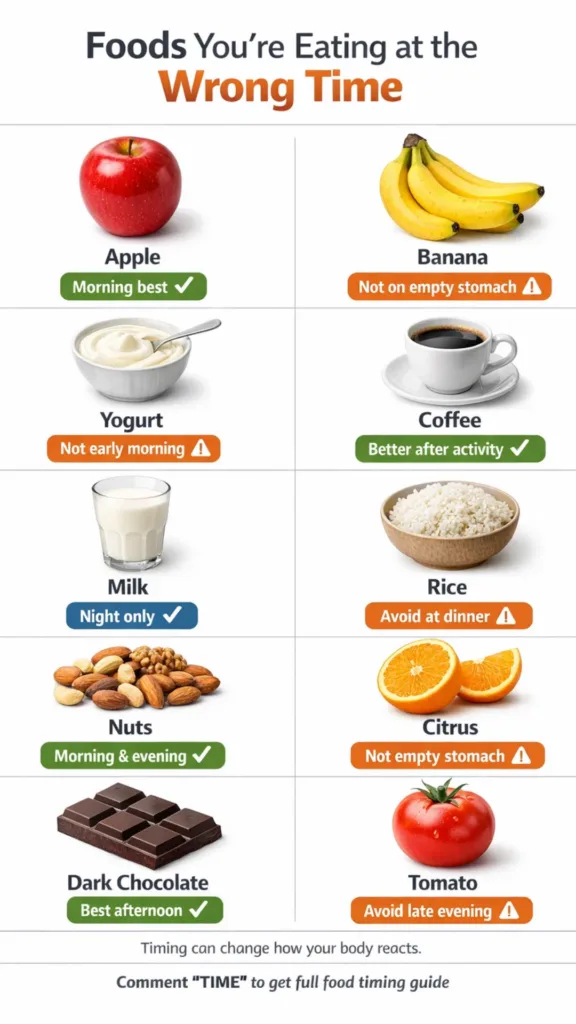
Morning Foods: Set Your Metabolic Signal Early

Morning is when insulin sensitivity is highest and appetite hormones are easiest to regulate.
1. Eggs
Eggs provide a strong protein signal that tells your brain you are nourished. This helps reduce cravings later in the day and supports muscle maintenance.
2. Oats
Oats release glucose slowly. In the morning, this supports stable energy without sharp blood sugar spikes.
3. Bananas
Bananas help with glucose timing. Eaten earlier, their natural sugars are used for fuel instead of stored.
4. Yogurt
Yogurt supports gut signaling. In the morning, digestion is more active and probiotics are better tolerated.
5. Honey
Honey provides rapid fuel. Morning is the best time for quick sugars because cortisol is naturally higher.
6. Blueberries
Blueberries support antioxidant uptake and help protect cells during daily metabolic stress.
7. Chia Seeds
Chia seeds slow digestion and extend fullness when eaten early.
8. Apples
Apples provide a fiber start that buffers glucose and supports digestion for the rest of the day.
9. Whole-Grain Bread
Whole-grain bread works best during the morning carb window, when the body can use carbohydrates efficiently.
10. Nuts
Nuts stabilize energy and help prevent mid-morning crashes.
Lunch Foods: Stability, Not Comfort
Lunch is about maintaining steady blood sugar and preventing the afternoon crash.

11. Brown Rice
Brown rice provides slow carbs that keep energy consistent through the afternoon.
12. Quinoa
Quinoa offers complete carbs with protein, supporting focus and muscle repair.
13. Lentils
Lentils act as a fiber anchor, slowing digestion and stabilizing glucose.
14. Chickpeas
Chickpeas provide resistant starch that feeds gut bacteria and supports satiety.
15. Chicken
Chicken delivers lean protein without heavy digestive load.
16. Tofu
Tofu offers plant protein that digests smoothly at midday.
17. Broccoli
Broccoli supplies essential micronutrients without spiking blood sugar.
18. Carrots
Carrots provide beta-carotene and gentle sweetness that works well with lunch digestion.
19. Olive Oil
Olive oil delays digestion slightly, extending fullness without heaviness.
20. Avocado
Avocado provides satiety fat that prevents overeating later.
21. Beans
Beans act as a glucose buffer and support long-lasting energy.
Dinner Foods: Calm the Nervous System
Dinner should support recovery, not stimulation.

22. Rice
Rice offers gentle carbs that help signal safety and relaxation.
23. Salmon
Salmon provides omega fats that support nervous system calming and repair.
24. Zucchini
Zucchini has a low digestive load and prevents nighttime bloating.
25. Sweet Potatoes
Sweet potatoes release glucose slowly and support serotonin production.
26. Spinach
Spinach provides magnesium, which helps muscles and nerves relax.
27. Mushrooms
Mushrooms support parasympathetic activity, helping the body shift into rest mode.
28. Lentils
Lentils provide steady protein without overstimulation.
29. Kiwi
Kiwi supports sleep signaling and digestion.
30. Chamomile Tea
Chamomile gently calms the nervous system and prepares the body for sleep.
31. Olive Oil
Olive oil supports fat signaling without digestive stress at night.
Foods That Disrupt Sleep When Eaten at Night
Some foods are healthy — just not before bed.

32. Red Meat
Red meat digests slowly and keeps the body alert.
33. Cheese
Cheese is high in saturated fat, which can delay digestion.
34. Fried Foods
Fried foods increase gastric load and discomfort.
35. Sugary Desserts
Sugary desserts cause glucose spikes that interfere with sleep.
36. Chocolate
Chocolate contains caffeine-like compounds.
37. Alcohol
Alcohol disrupts sleep cycles even if it feels relaxing at first.
38. White Bread
White bread causes insulin surges late at night.
39. Soda
Soda overstimulates the nervous system.
Smart Snack Timing: Energy Between Meals
Snacks should stabilize, not spike.

40. Apples
Apples act as a fiber buffer between meals.
41. Nuts
Nuts provide fat stability and prevent energy dips.
42. Berries
Berries support glucose control.
43. Hummus
Hummus offers balanced carbs and fats.
44. Carrots
Carrots provide crunch and fiber without sugar overload.
45. Dark Chocolate
Dark chocolate offers polyphenols when eaten earlier in the day.
46. Seeds
Seeds deliver mineral density for energy support.
47. Cottage Cheese
Cottage cheese provides slow protein.
48. Boiled Eggs
Boiled eggs anchor protein between meals.
49. Pears
Pears offer gentle fiber for digestion.
50. Oats
Oats provide steady energy release.
Protein Timing: Why It Matters More Than Amount
Daytime Protein
Eggs, chicken, fish, lentils, quinoa, and carb-plus-protein meals work best earlier. They support metabolism, muscle repair, and focus.
Night Protein
Yogurt, tofu, beans, and cottage cheese digest more calmly and support overnight recovery.
When You’ll Notice Changes
Most people feel less bloated within 3–5 days.
Sleep quality often improves within one week.
Energy and appetite regulation stabilize within 2 weeks.
Final Takeaway
You’re not overeating.
You’re eating out of rhythm.
Small timing shifts can transform digestion, sleep, and energy – without changing your favorite foods.
Save this guide if you want to try it later. Share this with someone who needs it today.



I would love to save this guide but am unable to.
Hi kindly send details for right diet
Do you have a hard book with this in it