Welcome, fellow garden enthusiasts! Are you dreaming of a bountiful harvest and vibrant blooms, but sometimes feel like your seeds have a mind of their own? You’re not alone! One of the most common challenges new and even experienced gardeners face is getting their seeds to germinate successfully. The secret weapon in your gardening arsenal? Understanding perfect seed planting depth.
It might seem like a small detail, but planting a seed at the correct depth can make all the difference between a thriving seedling and a disappointing empty patch. Join us as we dig into the ultimate guide to mastering seed planting depth for every vegetable!
Why Seed Planting Depth is a Game-Changer
Imagine a tiny seed, packed with potential. For it to sprout and grow into a healthy plant, it needs just the right conditions. Planting depth directly impacts several critical factors:
- Access to Light: Some seeds need light to germinate, while others prefer darkness. Too deep, and light-loving seeds won’t sprout; too shallow, and light-avoiding seeds might struggle.
- Moisture Control: Seeds need consistent moisture to soften their outer shell and initiate germination. Planted too shallow, they dry out quickly. Planted too deep, they might become waterlogged and rot, especially in heavy soils.
- Soil Temperature: The soil at different depths has varying temperatures. Getting the right depth ensures the seed is in a zone conducive to its specific germination temperature needs.
- Root Development: Proper depth allows the emerging seedling to establish a strong root system without expending too much energy pushing through too much soil or being exposed too quickly to the elements.
- Protection from Elements: A little soil cover protects seeds from birds, strong winds, and extreme temperature fluctuations.
The Golden Rule: How Deep is Just Right?
A simple, universal guideline for most seeds is to plant them at a depth of two to three times their diameter. For example, if a seed is 1/4 inch wide, plant it about 1/2 to 3/4 inch deep. This rule helps ensure the seed has enough soil coverage for protection and moisture retention, but not so much that it struggles to push its way to the surface.
Exceptions to the Rule: Tiny Seeds and Large Seeds
- Tiny Seeds (e.g., Lettuce, Carrots, Poppies): These often need light to germinate. Many should be barely covered with a very fine layer of soil or even just pressed lightly onto the soil surface. Think of them as needing a ‘kiss’ of soil, not a deep burial.
- Large Seeds (e.g., Beans, Peas, Corn, Squash): These have more stored energy and can be planted deeper, often 1 to 2 inches, to ensure they have enough moisture and firm anchorage for their future vigorous growth.
A Quick Guide to Common Vegetables
While the ‘two to three times’ rule is helpful, here’s a quick reference for some popular garden vegetables:
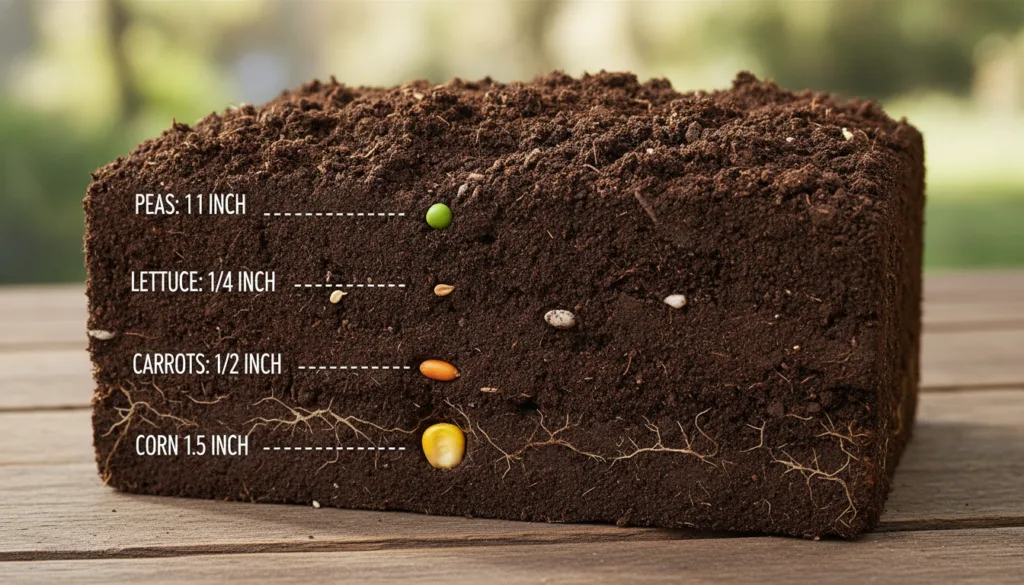
- Beans (Bush & Pole): 1 inch deep
- Beets: 1/2 inch deep
- Broccoli/Cabbage: 1/4 – 1/2 inch deep
- Carrots: 1/4 inch deep (or barely covered)
- Corn: 1 – 1.5 inches deep
- Cucumbers: 1 inch deep
- Lettuce: 1/8 inch deep (or pressed onto surface)
- Onions: 1/4 – 1/2 inch deep
- Peas: 1 inch deep
- Radishes: 1/2 inch deep
- Spinach: 1/2 inch deep
- Squash (Summer & Winter): 1 inch deep
- Tomatoes: 1/4 – 1/2 inch deep
Always check your seed packet for specific recommendations, as varieties can differ!
Tips for Perfect Planting
- Prepare Your Soil: Ensure your soil is loose, well-draining, and free of large clumps. This makes it easier for tiny sprouts to emerge.
- Use a Ruler or Dibber: For precision, especially with smaller seeds, use a ruler or a specialized planting tool (dibber) to ensure consistent depth.
- Label Everything: Once seeds are in the ground, it’s easy to forget what’s where! Label rows or individual plants clearly.
- Water Gently: After planting, water the area gently to settle the soil without disturbing the seeds. A fine spray or mist is ideal.
- Monitor Moisture: Keep the soil consistently moist until germination, but avoid overwatering.
Common Mistakes and How to Fix Them
Planting Too Deep:
- Symptoms: Seeds don’t germinate, or emerge very slowly and weakly.
- Why it happens: The seed uses up all its stored energy trying to push through too much soil before reaching the surface. It might also be too cold or wet for germination.
- Solution: For the next planting, measure carefully. If you suspect seeds are too deep in a tray, you might gently remove some soil, but it’s often best to replant.
Planting Too Shallow:
- Symptoms: Seeds dry out quickly, are eaten by pests, or don’t germinate due to insufficient darkness (for those that need it). Seedlings might emerge, but be leggy and weak, or fall over (damping-off).
- Why it happens: Not enough soil coverage for moisture retention, protection, or correct light/dark conditions.
- Solution: Gently add a thin layer of soil, or replant. Ensure gentle, consistent watering to prevent drying out.
Ready to Grow?
Mastering seed planting depth is a fundamental skill that will elevate your gardening success. By understanding the needs of each tiny seed and applying these simple guidelines, you’ll be well on your way to a flourishing garden filled with healthy, vibrant plants.
Happy planting, and may your garden be ever green!