Did you know that the simple herbs in your kitchen can offer more than just flavor? Many common kitchen herbs hold surprising health secrets, packed with powerful compounds that can quietly boost your well-being. From supporting your immune system to enhancing brain health, these everyday ingredients are true natural wonders.
This guide will explore the hidden health superpowers of six popular kitchen herbs, revealing the key compounds they contain and the incredible benefits they may offer. Get ready to transform your meals and discover how to easily integrate these natural allies into your daily diet.
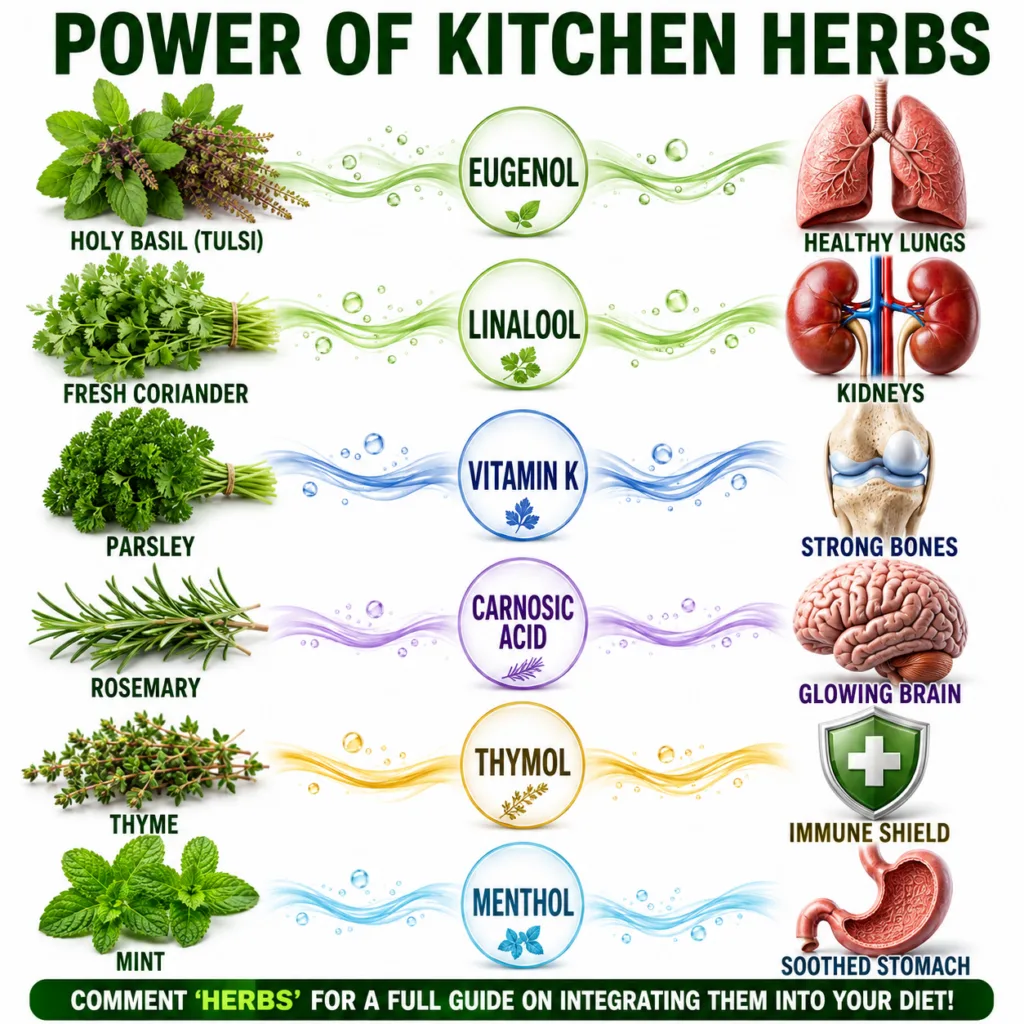
The Wellness Wonders in Your Herb Garden
Let’s dive into the unique contributions each of these powerful kitchen herbs can make to your health.
Holy Basil (Tulsi): Supporting Healthy Lungs
Often revered as the “Queen of Herbs” in Ayurvedic medicine, Holy Basil, or Tulsi, is celebrated for its adaptogenic properties. This potent herb contains Eugenol, a compound known for its potential to help support respiratory health. Eugenol is an aromatic compound also found in cloves, and it contributes to Holy Basil’s distinctive scent and therapeutic qualities.
- How it may help: Holy Basil, particularly due to compounds like Eugenol, is commonly associated with promoting healthy lung function and overall respiratory wellness.
- Integrate it: Enjoy Holy Basil in herbal teas, add fresh leaves to stir-fries, or muddle them into water for a refreshing and health-boosting drink.
Fresh Coriander: A Friend to Your Kidneys
More than just a garnish, fresh coriander (also known as cilantro) is packed with beneficial compounds. One notable compound is Linalool, which contributes to its unique aroma and may play a role in supporting kidney health. Linalool is a naturally occurring terpene alcohol found in many flowers and spice plants.
- How it may help: Regular consumption of fresh coriander may contribute to overall kidney function and help support the body’s natural detoxification processes.
- Integrate it: Sprinkle fresh coriander over curries, tacos, and salads. It’s also a staple in many salsas and can be blended into refreshing green smoothies or chutneys.
Parsley: For Strong Bones
Often underestimated, parsley is a powerhouse of nutrients, especially when it comes to bone health. It is an excellent source of Vitamin K, a crucial nutrient for maintaining strong and healthy bones. Vitamin K plays a vital role in bone metabolism and calcium regulation.
- How it may help: Adequate Vitamin K intake, supported by herbs like parsley, is essential for bone density and strength, potentially reducing the risk of fractures.
- Integrate it: Use parsley generously as a garnish for almost any savory dish, chop it into salads like tabbouleh, blend it into green juices, or mix it into marinades and sauces.
Rosemary: Fueling a Glowing Brain
The fragrant herb rosemary is not just for seasoning; it’s also a potential ally for brain health. It contains Carnosic Acid, a powerful antioxidant and anti-inflammatory compound. Research suggests carnosic acid may help protect brain cells from damage and support cognitive function.
- How it may help: Carnosic acid in rosemary is associated with supporting a ‘glowing brain’ by potentially enhancing memory, focus, and overall cognitive vitality.
- Integrate it: Infuse olive oil with rosemary, add sprigs to roasted vegetables and meats, or steep it in hot water for an aromatic and beneficial tea.
Thyme: Your Immune Shield
Thyme is a humble herb with mighty immune-boosting properties. Its primary active compound, Thymol, is a potent antiseptic and antifungal agent. This compound makes thyme a valuable herb for supporting your body’s natural defenses.
- How it may help: Thymol-rich thyme may act as an ‘immune shield,’ helping to protect against common ailments and supporting a robust immune system.
- Integrate it: Add fresh or dried thyme to soups, stews, and roasted chicken. It also makes a soothing herbal tea, especially during cold and flu season.
Mint: Soothing Your Stomach
Few herbs are as refreshing and stomach-friendly as mint. The invigorating aroma and cooling sensation come from Menthol, its primary active component. Menthol has long been recognized for its ability to help soothe digestive discomfort.
- How it may help: Mint, with its menthol content, is widely used to calm an upset stomach, alleviate indigestion, and promote overall digestive comfort.
- Integrate it: Brew fresh mint tea after meals, add mint leaves to fruit salads, smoothies, or infused water for a delicious and digestive aid.
Simple Ways to Boost Your Health with Herbs
Incorporating these potent kitchen herbs into your diet is simpler than you might think. Here are some general tips to maximize their benefits:
- Fresh is Best: Whenever possible, opt for fresh herbs to get the maximum concentration of beneficial compounds.
- Grow Your Own: A small herb garden on your windowsill or patio ensures a constant supply of fresh, organic herbs.
- Smoothie Boost: Add a handful of parsley, mint, or coriander to your morning smoothie for an instant nutritional upgrade.
- Flavorful Infusions: Steep herbs like Holy Basil, rosemary, or thyme in hot water for a soothing and medicinal tea.
- Garnish Generously: Don’t just use herbs sparingly as a garnish; make them a significant part of your meal, adding them towards the end of cooking to preserve their volatile compounds.
Frequently Asked Questions About Kitchen Herbs
Are dried herbs as effective as fresh herbs?
While fresh herbs often have a higher concentration of volatile oils and certain vitamins, dried herbs still retain many beneficial compounds, though sometimes in a more concentrated form. For some applications, dried herbs can be equally effective, but for raw use (like in salads or smoothies), fresh is generally preferred.
Can I consume these herbs daily?
Yes, most kitchen herbs are safe for daily consumption as part of a balanced diet. However, if you have any pre-existing medical conditions or are taking medications, it’s always wise to consult with a healthcare professional.
What is the best way to store fresh herbs?
To keep fresh herbs vibrant, treat them like a bouquet of flowers. Trim the stems, place them in a glass of water, and cover loosely with a plastic bag. Store them in the refrigerator, changing the water every few days. Hardier herbs like rosemary and thyme can be wrapped in a damp paper towel and stored in an airtight container.
Final Thoughts
The power of kitchen herbs truly lies in their everyday accessibility and remarkable health benefits. By understanding the unique compounds within Holy Basil, coriander, parsley, rosemary, thyme, and mint, you can intentionally enhance your diet and support various aspects of your health – from healthy lungs to a glowing brain and a soothed stomach. Start experimenting with these botanical allies today and unlock a world of natural wellness right from your kitchen.