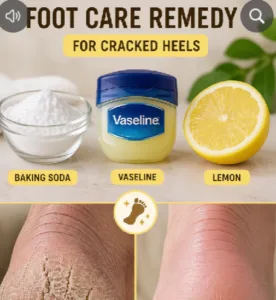
Cracked, rough heels are common, especially when the skin on the feet becomes very dry and thick. The image above suggests a DIY combination of Vaseline, baking soda, and lemon. While these ingredients are often featured in home-remedy posts, they need to be used carefully—particularly lemon and baking soda, which can irritate already cracked skin.
Here’s a safer way to approach this popular foot-care routine.
Why Do Heels Become Dry and Cracked?
The skin around the heel naturally experiences a lot of pressure. When it becomes dry and loses flexibility, standing and walking can cause the thickened skin to split.
Common contributors include dry weather, frequent hot showers, walking barefoot or wearing open-back shoes, prolonged standing, and not moisturizing the feet regularly.
For many people, the most useful part of a cracked-heel routine isn’t an acidic or abrasive ingredient—it’s consistent moisturization and occlusion.
What You’ll Need
For the version shown in the image:
- Vaseline (petroleum jelly)
- A small amount of baking soda
- Fresh lemon
- Warm water
- A basin for soaking your feet
- A clean towel
- Cotton socks
However, you don’t actually need to combine all three ingredients. In particular, Vaseline can be used by itself, and that’s the gentler option for cracked or sensitive heels.
Step 1: Soak Your Feet
Fill a basin with comfortably warm—not hot—water.
Soak your feet for approximately 10–15 minutes. This softens the thick, dry outer layer of skin and prepares your heels for moisturizing.
Avoid excessively long or hot soaks because they can ultimately dry the skin further.
Step 2: Gently Remove Loose, Dead Skin
After soaking, you can gently massage the heel with a washcloth or use a pumice stone designed for foot care.
The key word is gently.
Don’t aggressively scrape the heel, and never cut hardened skin with scissors, razors, or blades. If your heel is already bleeding or has deep fissures, skip exfoliation altogether.
What About Baking Soda?
Baking soda is frequently promoted online as a DIY exfoliant. However, it is alkaline and may disrupt the skin barrier or cause irritation, especially when used repeatedly.
If you still choose to try it, use only a small amount occasionally and don’t scrub aggressively.
For severely dry or cracked heels, I’d skip baking soda and concentrate on moisturizing instead.
What About Lemon?
This is the part of the viral recipe that deserves the most caution.
Lemon juice is acidic and can sting and irritate cracked skin. Citrus juice on skin can also cause reactions when the area is subsequently exposed to sunlight.
Therefore, do not apply lemon juice to open cracks, bleeding heels, cuts, irritated skin, or sensitive skin.
For treating cracked heels, lemon isn’t necessary. A moisturizing routine is generally the better choice.
Step 3: Dry Your Feet
After soaking, rinse your feet if necessary and pat them completely dry with a clean towel.
Pay particular attention to the spaces between your toes.
Step 4: Apply Vaseline
Now comes the most useful part of this routine.
Apply a generous layer of plain petroleum jelly over the dry heel and other rough areas of the foot.
Petroleum jelly is an occlusive moisturizer. Rather than adding large amounts of water to the skin itself, it forms a protective layer that reduces moisture loss.
That’s why heels can feel noticeably softer after using it consistently.
Step 5: Wear Cotton Socks Overnight
For an easy overnight treatment, apply petroleum jelly before bed and put on a pair of clean cotton socks.
Leave it on overnight.
In the morning, remove the socks and wash your feet normally if desired.
Repeat regularly until your heels feel softer. Continued moisturizing can also help prevent the dryness from returning.
A Simpler Version I Prefer
Instead of mixing lemon, baking soda, and Vaseline together, try this:
Warm-water soak → gentle exfoliation if appropriate → dry feet → generous layer of Vaseline → cotton socks overnight.
It’s simpler and avoids exposing already compromised skin to potentially irritating lemon juice and baking soda.
For very thick heel skin, a commercially formulated foot cream containing ingredients such as urea or lactic acid may also be more appropriate than a homemade acidic scrub.
Important Safety Tips
Never use lemon or baking soda on deeply cracked, bleeding, inflamed, infected, or painful skin.
Stop immediately if any product causes burning, swelling, significant redness, or worsening irritation.
Deep cracks, persistent pain, bleeding, warmth, swelling, pus, or other signs of infection should be evaluated by a healthcare professional. People with diabetes, poor circulation, or reduced sensation in their feet should be especially cautious about self-treating foot wounds and should seek professional guidance.
Final Thoughts
The dramatic before-and-after pictures commonly used for DIY foot remedies shouldn’t be interpreted as guaranteed results. Vaseline can help reduce moisture loss and soften dry skin, but lemon and baking soda aren’t essential—and they may make irritated or cracked skin worse.
For most uncomplicated dry heels, the best routine is also one of the simplest:
Soften. Moisturize. Protect. Repeat. 🦶✨
Consistency usually matters far more than adding extra DIY ingredients.