What you eat before bed plays a crucial role in your sleep quality and digestion. While a late-night snack can feel comforting, certain foods can secretly sabotage your ability to drift off and stay asleep, leading to restless nights and digestive discomfort. Your evening meal choices greatly affect sleep quality and overall health.
Understanding which foods to reconsider can make a significant difference in achieving a truly restful night. Our infographic highlights nine common culprits that might be disrupting your nightly routine. Let’s explore which foods to avoid before bed and why.
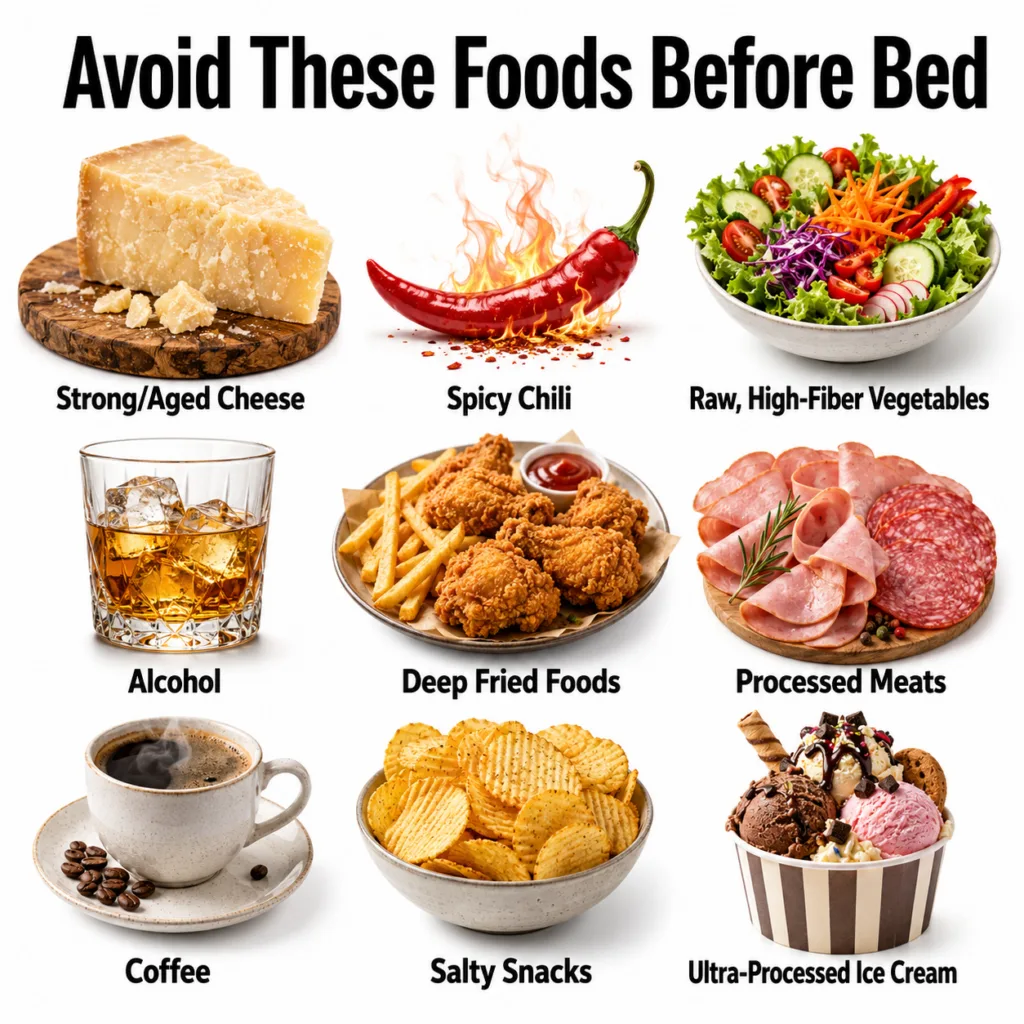
The Culprits: 9 Foods to Avoid Before Bed
Here’s a closer look at the foods that might be ruining your sleep and digestion, along with the reasons why you should keep them off your late-night menu.
1. Strong/Aged Cheese
While delicious, strong and aged cheeses, like cheddar or parmesan, contain high levels of tyramine, an amino acid that can make your brain feel more alert. Tyramine can increase the release of norepinephrine, a stimulant neurotransmitter that can keep you awake. The high-fat content in many cheeses can also take longer to digest, potentially causing discomfort and indigestion.
2. Spicy Chili and Foods
Spicy foods are notorious for causing heartburn and indigestion, especially when consumed close to bedtime. The capsaicin in chili peppers can also raise your core body temperature, which is counterproductive to falling asleep, as your body naturally cools down when preparing for rest.
3. Raw, High-Fiber Vegetables
While raw vegetables are incredibly healthy, their high fiber content can be a double-edged sword before bed. For some individuals, consuming a large amount of raw, fibrous vegetables like broccoli, cauliflower, or raw salads close to bedtime can lead to bloating, gas, and discomfort, making it difficult to relax and sleep.
4. Alcohol
Many believe alcohol helps them sleep, but it actually disrupts the sleep cycle. While it may induce initial drowsiness, alcohol can lead to fragmented sleep, frequent awakenings, and a reduction in restorative REM sleep. It also acts as a diuretic, potentially causing you to wake up for bathroom breaks.
5. Deep Fried Foods
Foods that are deep-fried, such as fried chicken or French fries, are loaded with unhealthy fats. These fats are difficult for your body to digest, especially when you’re lying down. This can lead to acid reflux, heartburn, and general stomach upset that keeps you tossing and turning.
6. Processed Meats
Processed meats like bacon, sausage, and deli slices are often high in sodium, nitrates, and saturated fats. The high sodium content can lead to dehydration and increased thirst, interrupting sleep. Nitrates can affect blood flow and sleep patterns, and the heavy fat content can cause digestive distress similar to fried foods.
7. Coffee
This one might seem obvious, but the effects of caffeine can linger much longer than you think. Caffeine is a powerful stimulant that blocks adenosine, a chemical that promotes sleep. Its half-life means that even a cup consumed several hours before bed can still be active in your system, preventing you from falling asleep easily or getting deep rest.
8. Salty Snacks
Potato chips, pretzels, and other salty snacks can lead to increased thirst and dehydration. Drinking excessive amounts of water to quench this thirst before bed can result in frequent trips to the bathroom throughout the night, fragmenting your sleep.
9. Ultra-Processed Ice Cream
Ice cream, especially ultra-processed varieties, is often high in sugar and unhealthy fats. The sugar can cause a spike in blood sugar, followed by a crash, which can disrupt sleep hormones. The fat content, much like deep-fried foods, can slow digestion and lead to discomfort.
Tips for Better Nighttime Eating Habits
- Eat Dinner Earlier: Aim to finish your main meal at least 2-3 hours before bedtime to give your body ample time to digest.
- Choose Lighter Options: If you must snack, opt for easily digestible, nutrient-dense foods like a small banana, a handful of almonds, or a warm glass of herbal tea.
- Hydrate Mindfully: Drink plenty of water throughout the day, but taper off your intake a couple of hours before bed to avoid nighttime bathroom visits.
- Listen to Your Body: Pay attention to how different foods affect your sleep and adjust your diet accordingly.
Frequently Asked Questions About Nighttime Eating
Q: What are the best foods to eat before bed for good sleep?
A: Opt for light, easily digestible foods like bananas (magnesium), almonds (magnesium, melatonin), walnuts (melatonin), warm milk (tryptophan), or herbal tea (chamomile). These can help promote relaxation without overloading your digestive system.
Q: How long before bed should I stop eating?
A: Ideally, you should aim to finish eating your last substantial meal at least 2 to 3 hours before you plan to go to sleep. This allows your body sufficient time for digestion and prevents discomfort.
Q: Can eating late at night cause weight gain?
A: While the timing of meals alone isn’t the only factor in weight gain, eating large, calorie-dense meals close to bedtime, especially those high in unhealthy fats and sugars, can contribute to weight gain. Your metabolism slows down as you prepare for sleep, and excess calories are more likely to be stored as fat.
Q: What if I feel hungry before bed?
A: If you genuinely feel hungry, choose a small, sleep-friendly snack. Think something like half a banana, a few whole-wheat crackers, or a small handful of unsalted nuts. Avoid anything heavy, spicy, fatty, or sugary.
Final Thoughts
Prioritizing your sleep health involves more than just a comfortable mattress and a dark room. The foods you choose to consume, especially in the hours leading up to bedtime, have a profound impact on your ability to rest and digest properly. By making conscious choices to avoid foods like spicy chili, deep-fried snacks, and excessive caffeine or alcohol, you can significantly improve your chances of enjoying a peaceful night’s sleep and waking up feeling refreshed. Your body, and your sleep quality, will thank you.