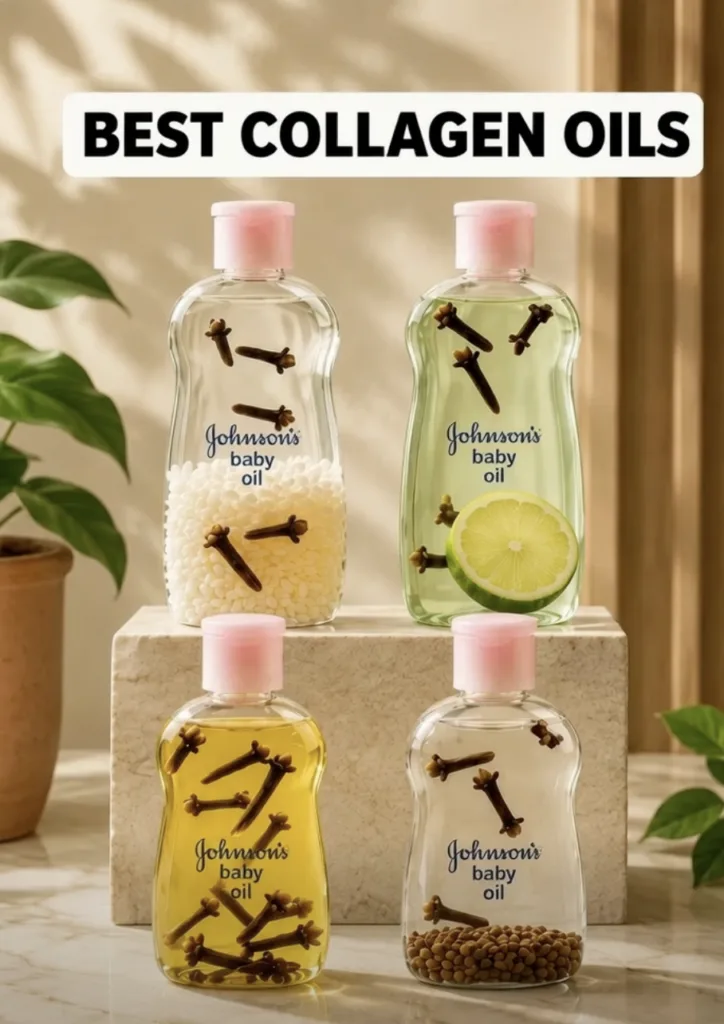
 Baby oil is commonly used to help lock moisture into the skin, especially when applied after a shower while the skin is still slightly damp. Recently, DIY beauty recipes combining baby oil with ingredients such as rice, cloves, lime, and fenugreek have become popular on social media.
Below are four versions inspired by these viral recipes, with a safer way to prepare and use each one.
One important note before starting: these mixtures are sometimes promoted online as “collagen oils,” but oils applied to the skin do not replace or rebuild collagen directly. Their main cosmetic benefit is moisturizing and helping the skin feel smoother and softer.
1. Rice & Clove Baby Oil
This is one of the most visually popular DIY infusions. Rice is traditionally used in many homemade beauty preparations, while cloves give the oil a distinctive warm aroma.
Ingredients
- 100 ml baby oil
- 1 tablespoon dry white rice
- 2–3 whole cloves
- 1 clean, completely dry glass bottle or jar
How to Make It
Make sure the rice and container are completely dry. Moisture should not be introduced into an oil-only preparation.
Place the rice and whole cloves into the clean bottle. Pour in the baby oil and close tightly.
Allow it to sit for about 24–48 hours in a cool, dark location.
For a more predictable skin-care preparation, strain out the rice and cloves before applying the oil rather than leaving botanicals in the bottle indefinitely.
How to Use
After showering, pat your skin until it is still slightly damp.
Place a few drops of the infused oil in your palms, rub your hands together and gently massage it over dry areas such as the arms, legs, elbows and knees.
There is no need to rinse it off.
2. Clove-Infused Baby Oil
If you want the simplest recipe, this version uses only baby oil and a very small quantity of whole cloves.
Ingredients
- 100 ml baby oil
- 2–3 whole cloves
Preparation
Put the whole cloves into a clean, dry container.
Add the baby oil, close the container and leave it for approximately 24 hours.
Strain the cloves out before regular use.
Avoid adding clove essential oil directly unless you know how to formulate a skin-safe dilution. Concentrated clove essential oil can be quite irritating.
How to Apply
Use a small amount after bathing and massage it gently onto the body.
This blend can work nicely as a massage-style body oil, particularly on dry elbows, knees and legs.
Avoid the face and other sensitive areas.
3. Fenugreek & Baby Oil Blend
Fenugreek seeds are another ingredient frequently featured in traditional DIY beauty preparations.
Ingredients
- 100 ml baby oil
- 1 teaspoon dried fenugreek seeds
- Optional: 1–2 whole cloves
Step-by-Step Recipe
First, check that the fenugreek seeds are completely dry.
Add them to a clean glass container, followed by one or two cloves if desired.
Pour the baby oil over the ingredients and seal the container.
Leave it in a cool, dark place for 24–48 hours, then strain carefully.
How to Use
Apply a small amount to damp body skin after your shower.
Massage for about 1–2 minutes until you have an even, thin layer.
Pay particular attention to areas that tend to become dry.
For very dry skin, you can apply a fragrance-free moisturizer first and use a small amount of oil over it to help seal in moisture.
4. Lime-Inspired Baby Oil
This is the recipe where I would make an important change from the viral image.
I don’t recommend putting fresh lime slices or lime juice into a body oil and then applying it to skin.
Fresh citrus plus sunlight can cause significant skin reactions in some people. Citrus juice also introduces water into an oil preparation, making homemade storage less straightforward.
If you’re primarily interested in the fresh citrus aesthetic or scent, it’s safer to use a professionally formulated body oil designed for topical use rather than putting fresh lime into baby oil.
So for this particular viral recipe, I would not reproduce the lime-and-clove bottle literally for skin application.
The Best Way to Apply Body Oil
Whichever non-citrus version you choose, timing makes a big difference.
Take a normal shower and gently pat your skin with a towel. Don’t completely dry it.
While the skin is still slightly damp, place a few drops of oil in your palms and spread a thin layer over the body.
The oil primarily acts as an occlusive layer, helping reduce moisture loss.
If your skin is especially dry, try:
Damp skin → moisturizer → thin layer of oil.
You don’t need a heavy coating.
How Often Can You Use It?
If your skin tolerates the ingredients, a simple body oil can be used after bathing. However, with homemade botanical infusions, I recommend starting only 2–3 times per week.
Watch your skin rather than trying to follow a strict viral challenge such as “7 days” or “20 days.”
If irritation develops, stop using it.
Always Patch Test First
Before applying any homemade mixture over your body, test a tiny amount on a small area of intact skin.
Wait and monitor the area before wider use.
This is particularly important with cloves, since clove-derived compounds can irritate sensitive skin.
Stop immediately if you experience burning, persistent redness, swelling or itching.
Also avoid applying these mixtures to broken skin, freshly shaved skin, around the eyes, or other sensitive areas.
Which Recipe Should You Try First?
For someone simply looking for softer-feeling body skin, plain baby oil is actually the simplest option.
If you enjoy DIY beauty recipes and tolerate them well, the rice or fenugreek versions provide an interesting variation. Keep the botanical quantities small, strain the finished oil, and patch test before widespread use.
And remember: the goal of these recipes should be moisturizing and making dry skin feel smoother, rather than promising collagen replacement, permanent skin whitening, wrinkle removal or other dramatic transformations.
Simple formulas + consistent moisturizing usually beat complicated viral recipes. 🌿✨