Unlock the Secret to Egg Freshness!
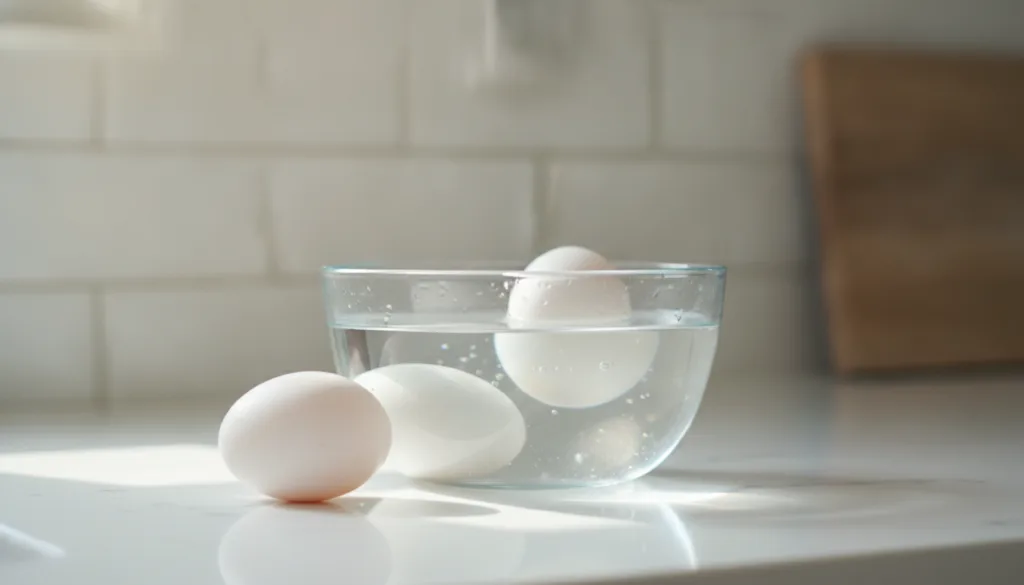
Have you ever stood in front of your refrigerator, wondering if those eggs are still good to eat? It’s a common dilemma, and nobody wants to crack open a rotten egg or, worse, use one that’s past its prime in a recipe. Luckily, there’s a simple, reliable, and quick trick to determine the freshness of your eggs without even breaking the shell: the water test!
What You’ll Need
Performing the egg float test couldn’t be easier. All you need are two things:
- A bowl deep enough to fully submerge an egg.
- Cold water.
How to Perform the Egg Float Test
- Fill the Bowl: Pour cold water into your bowl, ensuring it’s deep enough to cover an egg completely.
- Gently Place Eggs: Carefully place each egg into the water, one by one.
- Observe the Results: Watch how the eggs behave in the water.
Why Does the Egg Float Test Work?
The secret behind the egg float test lies in the egg’s natural structure. Every egg has a small air cell, usually located at the wider end. As an egg ages, its porous shell allows air to slowly enter and moisture to escape. This process causes the air cell inside the egg to grow larger over time.
- Fresh Eggs: Have a very small air cell, making them dense enough to sink to the bottom of the water and lie flat on their side.
- Older Eggs (but still good): Have a slightly larger air cell. These eggs may stand upright at the bottom, or float at an angle, but will still touch the bottom of the bowl. They are usually fine for consumption, especially for baking or hard-boiling, but should be used soon.
- Spoiled Eggs: Have a large air cell, making them buoyant enough to float completely to the surface. A fully floating egg is a clear sign that it is old and should not be eaten.
Understanding the Results: What to Do
1. Sinks to the Bottom and Lies Flat
Result: Your egg is very fresh! You can confidently use this egg for any purpose, from scrambling to poaching to baking.
2. Sinks but Stands Upright or Tilts
Result: Your egg is a bit older, perhaps a week or two old, but still perfectly safe to eat. These eggs are actually ideal for hard-boiling because the slightly larger air cell makes them easier to peel. They are also great for baking or frying.
3. Floats to the Surface
Result: This egg is definitely past its prime and should be discarded. The large air cell indicates significant aging, and there’s a high chance it’s spoiled. Do not consume floating eggs.
Beyond the Float Test: Other Freshness Indicators
While the float test is highly reliable, it’s always a good idea to use your other senses too, especially if an egg is borderline:
- Smell: A truly spoiled egg will have a distinct, unpleasant sulfurous odor (like rotten eggs!). Even if an egg passes the float test but smells off when cracked, discard it.
- Appearance: When cracked, a very fresh egg will have a firm, high yolk and a thick, somewhat gel-like albumen (egg white) that stays close to the yolk. As eggs age, the yolk may flatten, and the white becomes thinner and more watery.
Tips for Storing Eggs to Maximize Freshness
Proper storage can significantly extend the life of your eggs:
- Refrigerate: Always store eggs in their original carton in the coldest part of your refrigerator, typically on an inside shelf rather than in the door. The carton helps protect them from absorbing odors and temperature fluctuations.
- Pointy End Down: Storing eggs pointy end down helps keep the yolk centered and the air cell at the top, which can further prolong freshness.
- Avoid Washing: Do not wash eggs before storing them, as this can remove their natural protective coating and make them more susceptible to bacteria.
Reduce Food Waste, Eat Fresher!
The egg float test is a wonderful, simple kitchen hack that empowers you to make informed decisions about your food. By quickly assessing egg freshness, you can reduce food waste, save money, and ensure you’re always cooking with quality ingredients.
Give this test a try the next time you’re unsure about your eggs. It’s a game-changer for any home cook!
Disclaimer: This article provides general information and is not a substitute for professional medical advice or treatment. Always consult with a qualified healthcare professional for any health concerns or before making any decisions related to your health or diet. For food safety concerns, always refer to guidelines from reputable food safety organizations.