The Simple Water Test: How to Easily Check Your Egg’s Freshness
Eggs are a staple in many kitchens, prized for their versatility and nutritional value. But how often have you found yourself staring at an egg carton, wondering if those eggs in the back of your fridge are still good to eat? Uncertainty about egg freshness can lead to unnecessary food waste or, worse, potential food safety concerns. Thankfully, there’s a surprisingly simple and effective method you can use right in your kitchen to determine an egg’s freshness: the water test.
The Science Behind the Sink or Float Test
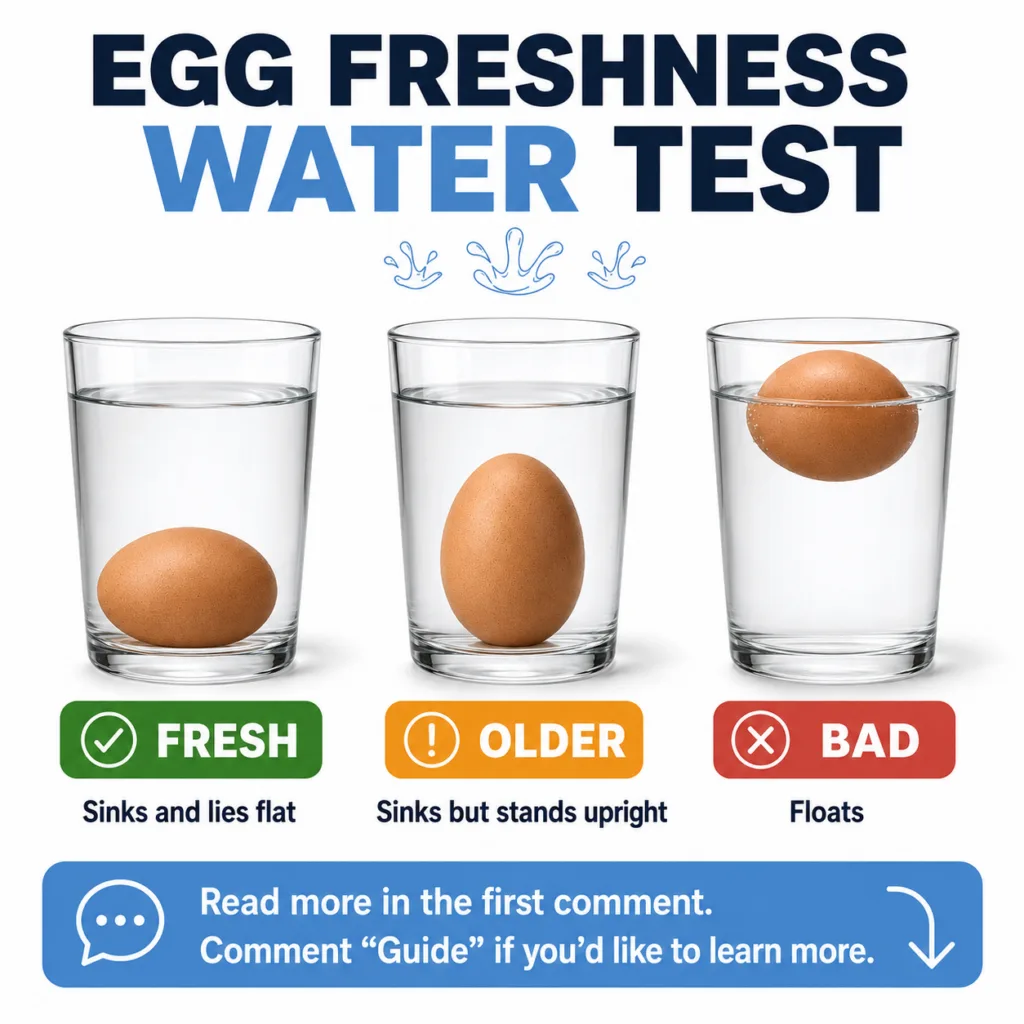
This clever trick isn’t magic; it’s basic science. An eggshell is porous, meaning it has tiny holes that allow air to pass through. As an egg ages, the air cell inside, usually located at the larger end of the egg, gets larger. This happens because moisture evaporates through the shell, and air replaces the lost moisture. The larger the air cell, the more buoyant the egg becomes.
- Fresh Egg: Has a small air cell and is dense, causing it to sink and lie flat.
- Older Egg: Has a slightly larger air cell, making it less dense, so it stands upright.
- Bad Egg: Has a significantly large air cell, causing it to float to the surface.
How to Perform the Egg Water Test
Performing this test is incredibly easy and requires only two things you already have in your kitchen:
What You’ll Need:
- A clear glass or bowl
- Cold water
- Your eggs in question
The Process:
- Gently place the egg (or eggs, one at a time) into the glass or bowl filled with cold water.
- Observe how the egg behaves.
Interpreting the Results
Once you’ve placed your egg in the water, watch closely for one of these three outcomes:
1. Sinks to the Bottom and Lies Flat: FRESH!
This is the ideal outcome! If your egg sinks to the bottom and rests horizontally on its side, it indicates that the air cell is very small, meaning the egg is fresh and perfect for all your cooking needs.
2. Sinks but Stands Upright at the Bottom: OLDER, But Still Good
If the egg sinks but stands on its pointed end at the bottom, it means its air cell has expanded somewhat. This egg is older, but it’s likely still perfectly fine to eat, especially if cooked thoroughly. You might find it easier to peel hard-boiled eggs that are a bit older, so these are great candidates for that!
3. Floats to the Surface: TOSS IT!
An egg that floats to the surface and stays there is a clear sign that it has a large air cell, indicating it’s quite old and has likely gone bad. While the water test is a great indicator, always trust your senses too. If a floating egg also has a foul odor when cracked, it’s definitely time to discard it.
Why This Simple Test Matters
Knowing how to test egg freshness empowers you in several ways:
- Food Safety: While the water test doesn’t detect all issues, it’s a good first line of defense against consuming significantly spoiled eggs.
- Reducing Food Waste: Instead of throwing out eggs you’re unsure about, this test can confirm if they’re still perfectly edible, saving you money and reducing waste.
- Optimal Cooking: Fresh eggs are best for poaching, frying, and baking where a firm yolk and tight whites are desired. Slightly older eggs are often preferred for hard-boiling because the increased air space makes them easier to peel.
Beyond the Water Test: Other Freshness Indicators
While the water test is reliable, it’s always good to use your other senses too:
- Smell: A strong, sulfuric odor is the most obvious sign of a rotten egg.
- Appearance: Crack the egg onto a flat plate. A fresh egg will have a firm, raised yolk and thick, compact whites that don’t spread much. Older eggs will have flatter yolks and thinner, runnier whites.
- Sound: Shake the egg gently near your ear. If you hear a sloshing sound, it means the whites are watery and the egg is likely older.
Tips for Extending Egg Freshness
- Refrigerate Promptly: Always store eggs in their original carton in the coldest part of your refrigerator, not in the door. The carton helps protect them from absorbing odors and temperature fluctuations.
- Store Pointed End Down: Storing eggs with the pointed end down helps keep the yolk centered and the air cell at the top, which can contribute to longer freshness.
Conclusion
The egg water test is a practical, quick, and reliable method to ensure your eggs are safe and suitable for your culinary creations. Next time you’re questioning the age of your eggs, remember this simple trick – it’s a true kitchen lifesaver!
Disclaimer: This article provides general information and is not a substitute for professional medical advice or treatment. Always consult with a healthcare professional for any health concerns.