In our fast-paced world, many of us often feel disconnected from the natural wisdom that sustained our ancestors. We seek quick fixes for common ailments, from dry skin to digestive discomfort, often overlooking the potent remedies found in nature’s simplest gifts. But what if a humble fruit, revered for centuries, held the key to unexpected well-being?
Traditional coconut oil, extracted through time-honored methods, offers a profound connection to nature’s healing embrace. This isn’t just any oil; it’s a testament to patience and craftsmanship, yielding a product rich in properties often diminished by modern processing.
Most people never realize this works because the true power lies not just in the coconut itself, but in the respectful, traditional preparation that unlocks its deepest potential.
Ingredients for Traditional Coconut Oil
- 6-8 mature, fresh coconuts (look for heavy, firm coconuts with no cracks)
- 4-6 cups of clean water
- Large pot or wok
- Strainer or cheesecloth
- Clean glass jars for storage
- Heat source (traditional wood fire or modern stovetop)
How to Prepare
- Crack and Grate: Carefully crack open the coconuts and scoop out the white flesh. Grate the coconut flesh into fine shreds.
- First Milk Extraction: Place the grated coconut into a large bowl. Add about 2-3 cups of warm water. Squeeze the coconut vigorously with your hands for 5-7 minutes to extract the rich coconut milk.
- Strain and Repeat: Strain the mixture through a cheesecloth or fine mesh strainer into a clean pot, separating the milk from the pulp. Set the milk aside. Repeat this process with the remaining pulp and another 2-3 cups of warm water to extract more milk.
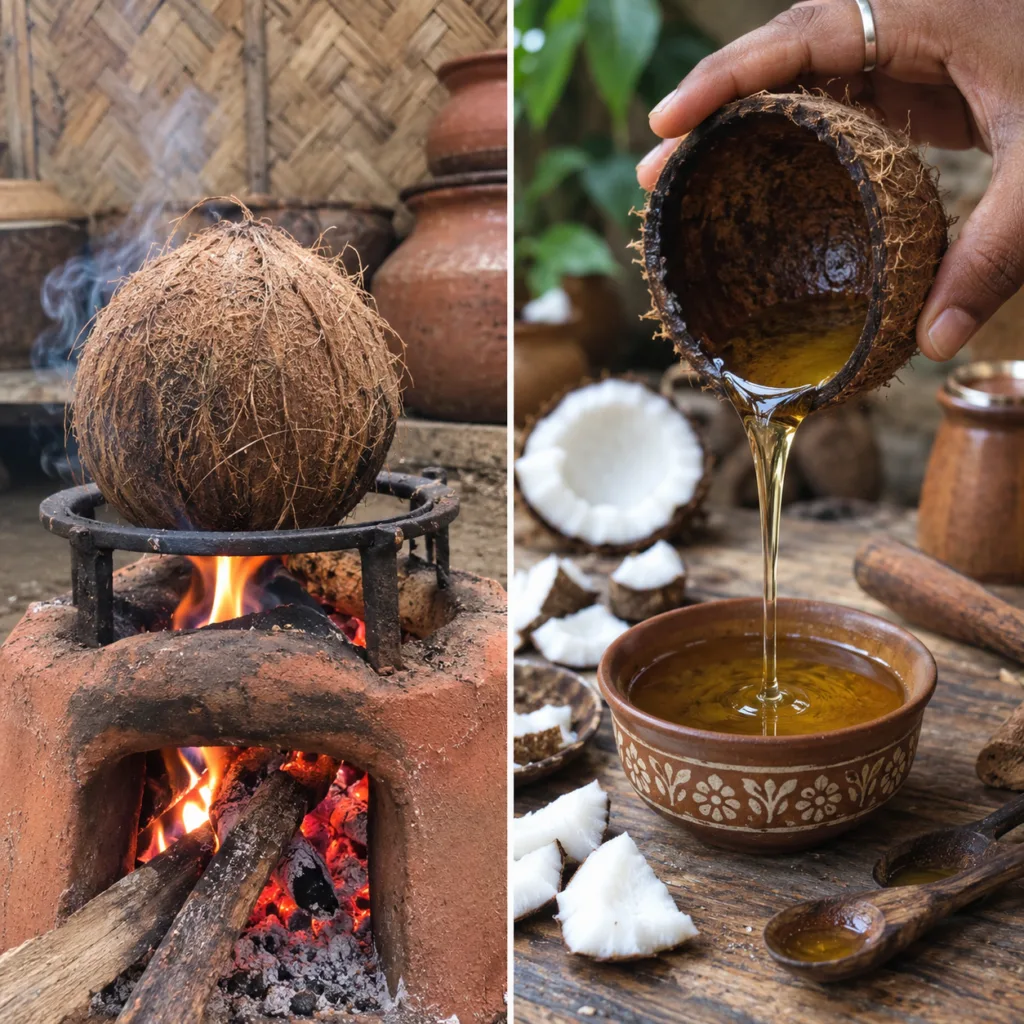
- Simmering the Milk: Place the pot with the combined coconut milk over medium heat. Bring it to a gentle simmer, stirring occasionally to prevent sticking. As it heats, the water will evaporate, and the oil will begin to separate from the solids.
- Oil Separation: Continue to simmer gently for approximately 1.5 to 2 hours. You will observe the solids (curds) settling at the bottom and a clear, golden oil forming on the surface. Reduce heat to low as the oil becomes more prominent to avoid burning.
- Harvesting the Oil: Once the curds turn golden brown and the oil is clear, carefully spoon or ladle the pure coconut oil into clean, dry glass jars. Allow it to cool completely before sealing.
How to Use + Best Time to Take
Traditional coconut oil can be embraced in various ways:
- Morning Boost: A teaspoon taken orally on an empty stomach may support metabolism and provide sustained energy throughout the day.
- After Meals: For digestive comfort, a small amount can be consumed to aid in nutrient absorption.
- Before Bed: Applied topically, it nourishes and moisturizes skin overnight, promoting a healthy glow.
- Hair Mask: Warm a small amount and apply to hair and scalp for deep conditioning before shampooing.
- Skin Elixir: Use daily as a natural moisturizer for the face and body, especially beneficial for dry or irritated skin.
Why It Works (Science Insight)
The efficacy of traditional coconut oil lies in its unique composition, particularly its high concentration of medium-chain triglycerides (MCTs). Among these, lauric acid stands out, making up a significant portion. Lauric acid is known to be easily absorbed and converted into energy, rather than being stored as fat, supporting metabolic function.
Furthermore, traditional extraction methods, especially low-heat processes, help preserve the natural antioxidants present in the oil. These compounds are crucial in combating oxidative stress in the body, which can contribute to inflammation and cellular damage. The anti-inflammatory properties can indirectly support gut health and overall well-being. Its moisturizing qualities come from its rich fatty acid profile, creating a protective barrier on the skin and hair, locking in moisture.
Who Benefits Most
- Individuals seeking natural solutions for dry, sensitive, or aging skin.
- Those looking for a natural boost to their energy levels and metabolism.
- People interested in supporting their digestive health with natural fats.
- Anyone wanting to incorporate traditional, minimally processed ingredients into their wellness routine.
Quick Notes / Safety / Simple Adjustments
- Quality Matters: Always use mature, fresh coconuts for the best yield and quality of oil.
- Storage: Store homemade coconut oil in a cool, dark place. It can solidify at room temperature below 76°F (24°C), which is normal.
- Allergy Awareness: While rare, some individuals may have an allergy to coconut. Perform a patch test before extensive topical use.
- Moderation is Key: When consuming orally, start with a small amount (e.g., 1/2 teaspoon) and gradually increase as your body adjusts.
- Adjusting Heat: If using a stovetop, maintain a consistent low-to-medium heat to prevent the oil from burning, which can diminish its beneficial properties.