Feeling a bit heavy, bloated, or swollen? You’re not alone. Fluid retention, also known as edema, is a common issue that can leave you feeling uncomfortable and sluggish. While it can be caused by various factors, including hormonal changes, prolonged standing, or certain medications, your diet plays a surprisingly significant role in how your body manages its fluid balance. The good news? Simple, smart food swaps can make a big difference, helping you feel lighter, more energized, and better hydrated.
This article will explore how dietary choices impact fluid retention and provide practical food swaps you can implement today for a healthier, more balanced you.
What is Fluid Retention and Why Does It Happen?
Fluid retention occurs when excess fluid builds up inside your body, often in your tissues and body cavities. This can lead to swelling, particularly in the hands, feet, ankles, and legs. While sometimes a symptom of an underlying health condition, often it’s a temporary issue influenced by:
- High Sodium Intake: Too much salt in your diet causes your body to hold onto water to maintain a balanced concentration of sodium.
- Dehydration: Ironically, not drinking enough water can make your body try to conserve the fluid it has, leading to retention.
- Lack of Movement: Prolonged inactivity can cause fluid to pool in your lower extremities.
- Hormonal Fluctuations: Changes in hormones, particularly for women during their menstrual cycle or pregnancy, can influence fluid balance.
- Nutrient Imbalances: Deficiencies in certain vitamins and minerals, like potassium and magnesium, can affect fluid regulation.
The Power of Smart Food Swaps
The good news is that many instances of fluid retention can be alleviated through conscious dietary choices. By swapping out high-sodium, processed foods for fresh, nutrient-dense options, you can help your body naturally regulate fluid levels and reduce bloating.
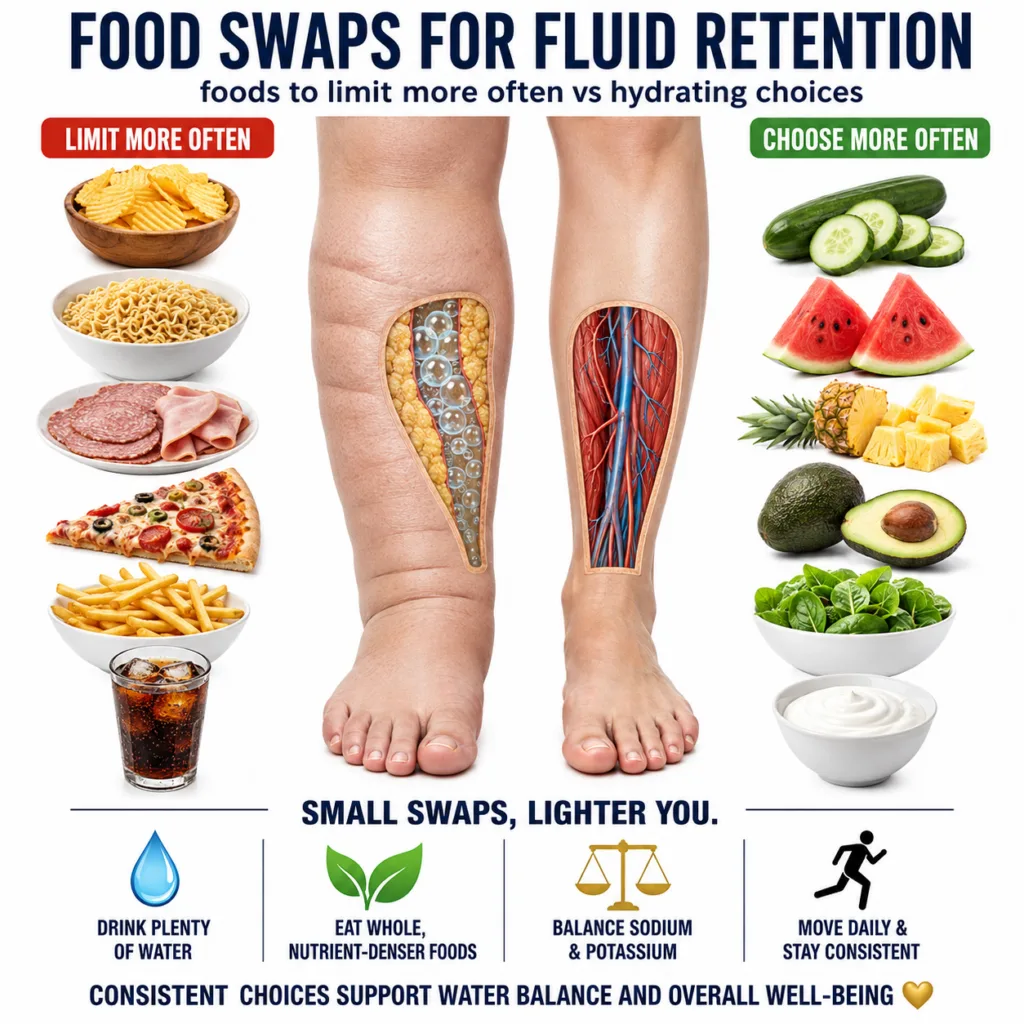
Foods to Limit More Often
These foods are often high in sodium, unhealthy fats, and refined carbohydrates, which can contribute to fluid retention and inflammation:
- Potato Chips and Salty Snacks: Loaded with sodium, these are classic culprits for causing your body to hold onto water.
- Instant Noodles: A quick meal often comes with a hefty dose of sodium and preservatives.
- Deli Meats: Processed meats like ham, turkey, and salami are preserved with high levels of salt.
- Pizza: While delicious, many pizzas, especially frozen or fast-food varieties, are packed with sodium and refined carbs.
- French Fries: Deep-fried and heavily salted, they are a double whammy for fluid retention.
- Soda and Sugary Drinks: High sugar content can lead to inflammation and disrupt your body’s electrolyte balance.
Foods to Choose More Often
Embrace these hydrating, nutrient-rich foods that naturally help your body flush out excess fluid and maintain balance:
- Cucumber: Extremely high in water content and contains beneficial electrolytes.
- Watermelon: Another hydrating powerhouse, rich in water and electrolytes.
- Pineapple: Contains bromelain, an enzyme that can help reduce inflammation and support digestion, plus it’s hydrating.
- Avocado: A good source of potassium, which helps balance sodium levels, and healthy fats.
- Spinach: Packed with magnesium and potassium, essential minerals for fluid balance.
- Yogurt: Contains probiotics for gut health and can be a source of potassium and protein.
Beyond Food: Holistic Tips for Fluid Balance
While food swaps are crucial, a holistic approach will yield the best results. Consider these additional tips to support your body’s fluid balance:
Drink Plenty of Water
It might seem counterintuitive, but staying well-hydrated is key to preventing fluid retention. When you’re dehydrated, your body holds onto every drop it can get. Regular water intake signals to your body that it doesn’t need to hoard fluid.
Eat Whole, Nutrient-Dense Foods
Focus on a diet rich in fruits, vegetables, lean proteins, and whole grains. These foods provide essential vitamins, minerals, and fiber that support overall health and proper bodily functions, including fluid regulation.
Balance Sodium & Potassium
Sodium and potassium work together to regulate fluid balance in your cells. While reducing sodium intake is important, increasing foods rich in potassium (like bananas, sweet potatoes, spinach, and avocados) can help counterbalance the effects of sodium and encourage your body to release excess water.
Move Daily & Stay Consistent
Regular physical activity helps improve circulation and prevents fluid from pooling in your extremities. Even light activities like walking, stretching, or cycling can make a significant difference. Consistency is key!
Small Swaps, Lighter You
Managing fluid retention doesn’t have to be complicated. By making conscious and consistent food swaps and adopting healthy lifestyle habits, you can significantly reduce discomfort and improve your overall well-being. Start with a few simple changes, listen to your body, and enjoy feeling lighter, more energetic, and perfectly balanced.